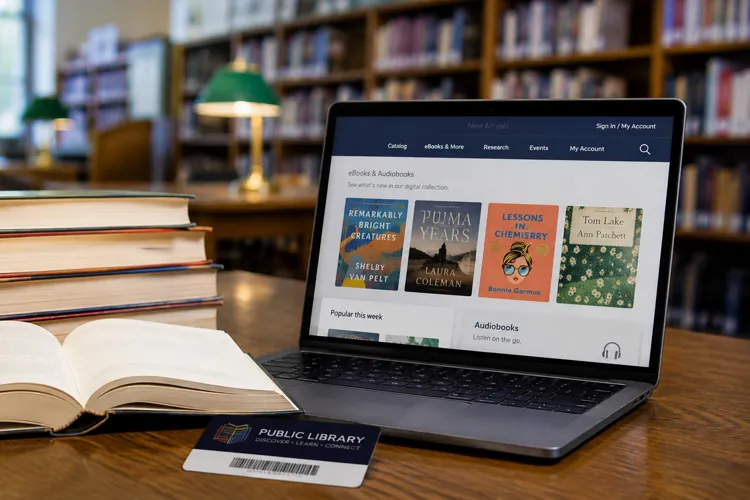

A $38–$50 library card can replace several subscriptions, including ebooks, audiobooks, movies, magazines, and online courses.
Many top libraries sell non-resident cards, and you may already qualify for free access through statewide or reciprocal programs.
Check Libby before buying a book, and teens ages 13–21 can get free digital access through the Books Unbanned program.
Most Americans think they're limited to the library in their hometown. That assumption could be costing you hundreds of dollars every year.
Across the country, several of the nation's largest public library systems allow non-residents to purchase library cards, giving them access to enormous digital collections of ebooks, audiobooks, magazines, streaming movies, newspapers, online courses, research databases, and much more.
For avid readers, audiobook fans, students, and lifelong learners, the right library card can replace several monthly subscriptions for less than the cost of a single streaming service.
While not every library offers non-resident memberships, and policies continue to evolve, the ones that do can be among the best bargains in America.
Libraries aren't just about books anymore
If your last visit to a public library was years ago, you're in for a surprise.
Today's major library systems often include:
Hundreds of thousands of ebooks and audiobooks through Libby and OverDrive
Streaming movies and documentaries through Kanopy and Hoopla
Digital magazines and newspapers
Language-learning courses
Business and investment databases
Career training and LinkedIn Learning
Genealogy resources
Homework help and tutoring
Consumer research tools
Music, comics, and educational videos
In many cases, all you need is a library card and your phone to gain access to all of this.
So, instead of paying $15 every month for Audible, another $12 for Kindle Unlimited, and additional subscriptions for magazines or online learning, one library card can unlock many of those same resources for a fraction of the cost.
Why do libraries sell cards to non-residents?
Public libraries are funded primarily by local taxpayers.
Because non-residents don't contribute through local property taxes, some library systems offer optional paid memberships that help offset the cost of providing access to their collections.
For many readers, the math still works in a big way. A $50 annual membership costs less than four months of Audible, yet provides access to thousands of audiobooks, ebooks, magazines, and educational resources.
Five of the best non-resident library cards in the country
Charlotte Mecklenburg Library (North Carolina)
Annual fee: $45 per household ($35 for adults 62+)
If there were an award for overall library value, Charlotte Mecklenburg would be difficult to beat.
Unlike many libraries that charge per individual, this membership covers an entire household.
Members get access to a laundry list of resources. These include Libby, Hoopla, Kanopy, LinkedIn Learning, newspapers, business databases, genealogy tools, language-learning resources, and more than 100 online services.
For families, this may be the best bargain on the list.
Queens Public Library (New York)
Annual fee: $50
Queens has long been one of the most popular choices among heavy ebook and audiobook users.
One big reason is convenience. Unlike some libraries that require an in-person visit, Queens allows eligible non-residents to purchase digital access online.
Members receive access to ebooks, audiobooks, magazines, streaming media, research databases, and one of the country's strongest multilingual collections.
If your primary goal is digital borrowing, Queens deserves a close look.
Los Angeles Public Library
Annual fee: Free for California residents; $50 for non-California residents (requires an in-person application).
California residents have access to one of the country's best-kept secrets. Even if you live hundreds of miles from Los Angeles, you can qualify for a free Los Angeles Public Library card simply by living in California.
The library's enormous digital collection includes more than 1.5 million ebooks and audiobooks, plus newspapers, research databases, educational resources, and much more.
Out-of-state residents can also purchase a card, although they must generally apply in person.
Fairfax County Public Library (Virginia)
Annual fee: $50 for one year, $75 for two years, or $100 for three years.
Fairfax definitely rewards long-term users. While the one-year option is competitive, the three-year membership lowers the annual cost to roughly $33 per year.
Members receive access to Libby, digital magazines, research databases, and one of the country's larger digital collections.
If you know you'll use your library heavily for years, the multi-year option can be an excellent value.
Broward County Library (Florida)
Annual fee: $38
Broward quietly offers one of the least expensive non-resident memberships available.
Its All Access Card includes OverDrive ebooks, audiobooks, Hoopla movies and music, research databases, and genealogy resources.
Five tips that can save you even more
Search Libby before buying a book. Libby is a very popular reading app that connects with most large public libraries. So, before clicking "Buy Now" on Amazon, be sure to search Libby to see if the book is available.
Many bestsellers, cookbooks, travel guides, business books, and biographies are already available. Even if the book currently has a waitlist, waiting a few days to "check it out" online could easily save you $20.Stack multiple library cards inside Libby. Many people don't realize Libby allows users to add multiple library cards to your account. That means you can search several library systems at once, dramatically increasing your chances of finding a book immediately instead of joining a months-long wait list. Heavy readers often combine their hometown library with one paid non-resident card for maximum selection.
Replace several subscriptions at once. Think about what you're already paying for. Things like Audible, Kindle Unlimited, digital magazine subscriptions, streaming documentaries, language-learning apps, and career training can all add up quickly.
One library card may replace several of them quite easily. Even eliminating one monthly subscription could easily pay for the annual membership.Don't ignore the research databases. Many people focus only on books. That's a mistake.
Libraries frequently offer premium research resources covering investing, small business, consumer products, legal information, career planning, and academic research. Buying many of these services separately can cost hundreds of dollars each year.Compare wait times—not just collections. A library with the biggest catalog isn't always the best choice. Sometimes a slightly smaller library has far fewer borrowers waiting for the same bestseller. That means you'll spend less time on hold and more time reading.
A free library card for teens — even if they live across the country
One of the best library programs in the country isn't aimed at adults at all.
It's called Books Unbanned, and it's an initiative that was launched by the Brooklyn Public Library in 2022 to help young people access books that may be unavailable in their schools or local libraries because of censorship efforts.
Through the program, teens aged 13-21, anywhere in the United States, can apply for a free digital library card that provides access to ebooks, audiobooks, and other digital resources. Obviously, this includes many frequently challenged and banned books.
Since launching, the program has expanded into a coalition that includes several partner libraries, including Boston Public Library, LA County Library, Long Beach Public Library, San Diego Public Library, and Seattle Public Library.
Pro tip: If you have a teenager in your family, don't assume your local library is their only option. Eligible teens may qualify for a free Books Unbanned card that gives them a huge selection of free eBooks and audiobooks. It's easily one of the most overlooked free library resources in the country.