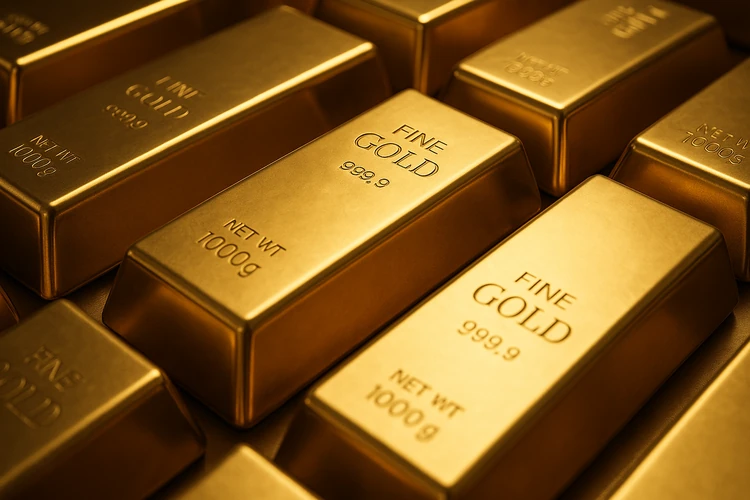

Gold initially surged sharply on safe-haven demand when the Iran conflict began, briefly topping record highs above $5,300 an ounce.
Prices have since fallen roughly 10%–12% from their peak, as investors reacted to inflation, interest-rate expectations, and liquidity needs.
Analysts are divided but generally see continued volatility with an upward bias, driven by geopolitical risk, central bank buying, and inflation pressures.
Gold’s price action since the outbreak of the Iran conflict in late February 2026 has been unusually volatile, showing how competing macro forces can pull the metal in opposite directions.
At the onset of the conflict, markets behaved as expected: investors rushed into gold as a safe haven. Prices jumped above $5,300 an ounce in a matter of hours as geopolitical risk spiked.
But that rally proved short-lived.
Within weeks, gold began to reverse course. By late April, prices had dropped roughly 10%–12% from their highs, including an 11% decline from the start of the war—one of the sharpest pullbacks in years.
Several forces drove the reversal:
Rising interest-rate expectations: Higher yields reduce the appeal of non-yielding assets like gold.
Inflation dynamics tied to oil: Surging crude prices raised fears central banks would delay rate cuts.
Investor positioning and liquidity needs: Some investors sold gold to raise cash during market stress.
The result has been a market caught between safe-haven demand and macro headwinds. As one recent analysis put it, gold is “squeezed” between geopolitical support and rate pressures.
Why gold hasn’t behaved like a typical war trade
Historically, gold tends to rise during conflicts — and it did initially. But this time, the reaction has been more complex.
Three key factors explain the divergence:
- Inflation and oil prices complicate the story. The Iran conflict has driven a surge in oil prices — up nearly 50% since the war began — which feeds inflation and pushes interest rates higher. That dynamic can actually hurt gold in the short term, even as geopolitical risk rises.
- Strong U.S. dollar pressure. A stronger dollar has weighed on gold prices, making the metal more expensive for international buyers.
- Profit-taking after a historic rally. Gold had already surged more than 60% in 2025, so some of the recent decline reflects normal consolidation after extreme gains. In other words, gold’s recent decline isn’t a rejection of its safe-haven role — it’s the result of competing macro forces overwhelming that effect in the short term, according to market analysts.
Despite recent weakness, most analysts remain constructive on gold over the medium term — though they expect continued volatility.
Bullish case: Geopolitical risk and structural demand
Many forecasts still point higher:
Goldman Sachs sees gold reaching around $5,400 per ounce by the end of 2026.
Other major banks have issued targets as high as $6,000–$6,300, citing persistent geopolitical tensions and currency debasement trends.
Central bank buying and global uncertainty are expected to remain key supports.
Some economists go further, arguing the Iran conflict could be part of a broader commodity “supercycle,” lifting gold alongside energy and metals.
Neutral to cautious: Near-term consolidation
Other analysts see a more muted near-term picture:
Some technical strategists say gold is in a sideways or corrective phase, recommending a “sell-on-rise” approach for traders.
Rising yields and a strong dollar could continue to cap gains in the coming months.
Key swing factor: How the conflict evolves
The biggest variable remains geopolitics:
Escalation (e.g., oil supply disruptions) could drive gold significantly higher as inflation and risk spike.
De-escalation or peace could ease inflation fears and reduce safe-haven demand, pressuring prices.
As always, it’s wise to consult with a trusted and objective financial advisor before making major investment decisions.