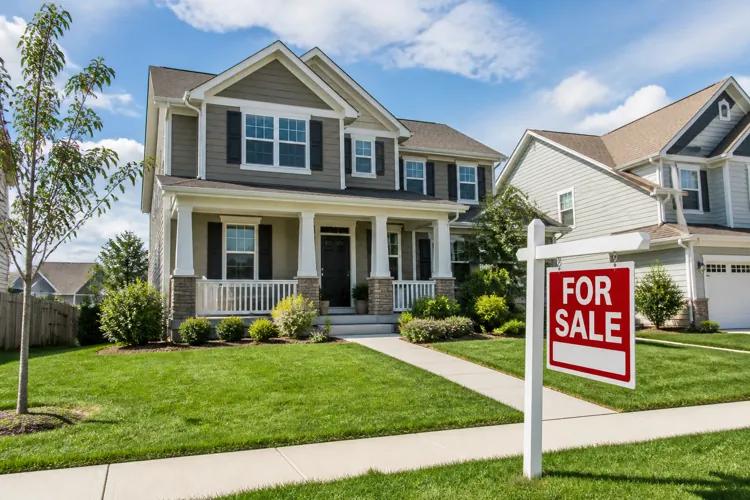

The number of U.S. homebuyers fell to an estimated 1.36 million in July, the lowest level in Redfin records dating to 2013.
Sellers outnumbered buyers by roughly 600,000, giving buyers more negotiating leverage — although high costs continue to keep many would-be purchasers on the sidelines.
Miami, Fort Lauderdale, and Austin ranked among the strongest buyers’ markets, while only five of the 50 largest metropolitan areas favored sellers.
The number of Americans looking to buy a home fell to a record low in July, widening the gap between buyers and sellers, and strengthening the negotiating position of those who can still afford to make a purchase.
An estimated 1.36 million homebuyers were in the market during the month, down 1% from June and 8% from a year earlier, according to a Redfin analysis of records dating to 2013.
At the same time, the number of sellers stood at approximately 1.96 million. That left 600,314 more sellers than buyers — a 44% difference and the second-largest imbalance in Redfin’s records. The gap was slightly narrower than the record 45% registered in December 2025 but substantially larger than the 30% difference recorded a year earlier.
Redfin classifies a housing market as favoring buyers when sellers outnumber buyers by more than 10%. By that measure, the national market has been a buyers’ market since May 2024.
A boost for buyers
The shift gives active buyers more homes to consider and potentially greater room to negotiate on prices, repairs, and other contract terms. But Redfin cautioned that the advantage applies only to people able to overcome persistent affordability barriers.
High home prices and mortgage rates have discouraged prospective buyers, while layoffs and broader economic and political uncertainty have added to their hesitation. Severe winter storms across much of the country may also have reduced activity in January.
Sellers have begun pulling back as well. Their number declined 1% from December — the largest monthly fall since June 2023 — and reached its lowest point since February 2025. The seller pool nevertheless remained 2% larger than it was a year earlier.
Some owners are removing properties after receiving little interest, while others are deciding not to list after watching nearby homes remain on the market or sell below their asking prices, Redfin said.
Regional variations
Market conditions vary considerably by region. Of the 50 largest U.S. metropolitan areas included in the analysis, 39 were buyers’ markets and six were considered balanced. Just five favored sellers.
Newark, New Jersey, was the strongest sellers’ market, with an estimated 31% fewer sellers than buyers. It was followed by Nassau County, New York, at 29% fewer; Milwaukee and Montgomery County, Pennsylvania, each at 26% fewer; and New Brunswick, New Jersey, at 17% fewer.
The strongest buyers’ markets were concentrated in the South. Miami had 159% more sellers than buyers, followed by Fort Lauderdale at 128%, Austin at 124%, Nashville at 120%, and San Antonio at 114%.
Many Sun Belt markets experienced rapid population growth during the pandemic, prompting builders to increase construction. That additional supply is now meeting a smaller buyer pool after several years of rising housing costs. Florida also faces elevated insurance premiums, condominium association fees, and risks from natural disasters, factors that may be encouraging some homeowners to sell.
Price trends reflected the regional differences. Median sale prices rose an average of 5% from a year earlier across the five sellers’ markets, compared with 3% in balanced markets and just 1% in buyers’ markets.
The figures suggest the housing market is increasingly offering leverage to purchasers — but largely because affordability pressures have reduced the number of people able or willing to participate.