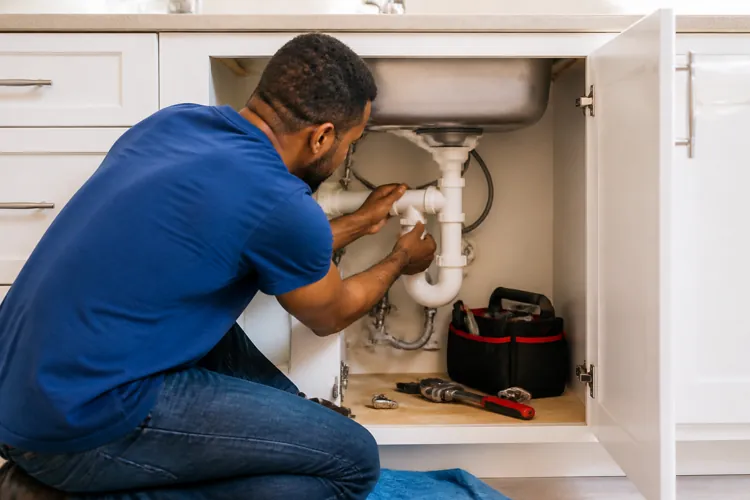

The average homeowner spends $1,852 fixing a costly DIY home improvement mistake.
Plumbing, electrical and HVAC projects can quickly become more expensive when a small mistake snowballs into a larger problem.
Online tutorials can be helpful, but homeowners who relied on them reported a higher injury rate than those who sought professional help.
DIY home improvement projects can be a great way to save money — until something goes wrong.
A project that starts with good intentions and a YouTube tutorial can quickly turn into a costly repair, especially when a mistake involves plumbing, electrical work or other jobs that require specialized skills. And sometimes, homeowners may not realize they've made a mistake until the damage is already done.
A new survey from SupplyHouse found that the average homeowner spends $1,852 fixing or replacing something after a DIY home improvement mistake. In fact, 58% of homeowners said they ended up spending more than they would have if they had hired a professional or done the project correctly the first time.
ConsumerAffairs spoke with Jay Yglesias, Product Support Lead at SupplyHouse, who explained which common mistakes can become especially expensive — and when homeowners should think twice before tackling a project themselves.
How the study was conducted
SupplyHouse surveyed 1,007 U.S. homeowners in July 2026 about their home improvement mistakes, including what went wrong, how much repairs cost, why they attempted the projects themselves, and whether anyone was injured.
The company also analyzed 2025 data from the Consumer Product Safety Commission’s National Electronic Injury Surveillance System (NEISS) to identify the home improvement tools and materials most often involved in emergency-room-treated injuries. The study also compared DIY parts costs with professional installation prices for 14 common home improvement projects.
Key findings
The survey found that DIY mistakes can get expensive quickly. The average homeowner spent $1,852 fixing or replacing something after a costly home improvement mistake, while 58% said they ultimately spent more than a professional job or a successful first attempt would have cost. Saving money was the original motivation for 38% of homeowners tackling their costliest project.
Yglesias explained which home improvement projects carry the highest risk for non-professionals.
“Take, for example, refrigeration and various forms of heating,” he said. “Heating can include venting and a number of other things. Doing electrical work carries shock risk. Permitting and other considerations can greatly affect the cost-benefit analysis of various DIY projects.
“Our electrical panel comparison, which is part of our research study, helps homeowners understand various risk-reward tradeoffs. We found that there is very little financial difference between doing electrical repairs yourself and the cost of the most inexpensive electrical service call. The financial difference between these repairs is only $34.”
The survey also found that 41% of homeowners had trusted their own instincts or a YouTube or TikTok tutorial over a licensed professional. Meanwhile, 18% said they had hidden, covered up or quietly hired someone to fix a botched project before anyone else in the household noticed.
There was a safety concern, too: 15% of homeowners said they had been injured while attempting a home improvement project. The federal injury data found that ladders were associated with the most estimated ER visits, at more than 81,000 per year, followed by nails, screws, or tacks at more than 40,000.
The snowball effect
Yglesias shared some of the common ways that DIY projects go awry for consumers.
“Oftentimes, people will end up costing themselves more money by taking on projects that have to do with plumbing, electrical work, or HVAC and suffer from the snowball effect,” Yglesias told ConsumerAffairs. “One small error can become a larger, costlier issue in what started out as a simple DIY fix.
“There's also the issue in DIY projects that underlying causes are either unknown or not addressed. Now the homeowner is paying twice: once for the original materials, and again for the professional called in to fix or finish the job.”
Watch out for online tutorials
There are times where watching a quick video on YouTube or TikTok can help you complete a house project seamlessly. However, there are other times where watching a video can lead you astray.
“Online tutorials can be useful, but may deceive the user,” Yglesias said. “Online videos cannot tell you about bad shutoff valves or explain other issues with your home, which could put you at risk.
“Users of such online videos reported an injury rate of 22% while those who deferred to professional assistance reported an injury rate of 11%. For situations that carry an increased risk, one should consider their level of experience and if they have the right equipment to compensate.”