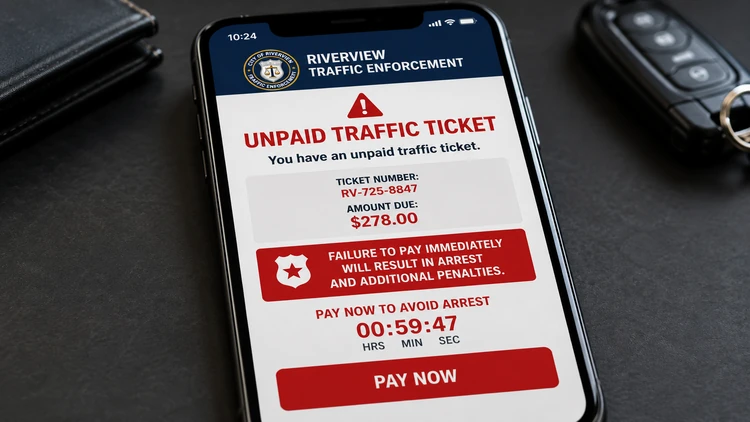

NHTSA is warning drivers about a surge in scam text messages falsely claiming recipients owe unpaid traffic tickets or tolls.
The scams use fake court notices, urgent threats, and QR codes to steal financial and personal information.
Federal officials say consumers should never pay traffic fines through unsolicited text messages and should verify any notice directly with local courts or state agencies.
The upcoming Memorial Day weekend marks the unofficial start of the summer driving season. The National Highway Traffic Safety Administration (NHTSA) is taking that opportunity to warn consumers nationwide about a growing wave of impersonation scams targeting drivers through text messages that appear to come from courts, DMVs, or traffic agencies.
According to NHTSA, scammers are sending fake notices claiming recipients owe money for unpaid tolls, parking tickets, or traffic violations. The messages often threaten immediate consequences — including suspended licenses, court action, damaged credit, or additional fines — unless payment is made quickly.
Many of the scams include QR codes or links directing consumers to fraudulent payment websites designed to capture credit card numbers, banking information, and other personal data. Cybersecurity experts say the use of QR codes makes the scams more convincing and harder for automated security systems to detect.
Surfacing in multiple states
The scam campaign appears to be spreading rapidly across the country. Reports have surfaced in multiple states, including Virginia, New York, Texas, California, and New Jersey. In Richmond, Va., earlier this year, local prosecutors warned residents about fake court notices demanding payment for supposed toll or parking violations.
Federal and state officials stress that legitimate courts and motor vehicle agencies generally do not request payments through unsolicited text messages. Consumers who receive suspicious notices are urged not to click links, scan QR codes, or respond to the sender. Instead, they should independently contact the appropriate court or agency using verified phone numbers or official government websites.
The Federal Trade Commission (FTC) recently said it has seen a spike in reports involving fake traffic violation notices. In some versions, scammers use official-looking seals, case numbers, and judge names to create a sense of urgency and legitimacy.
Consumers who believe they may have provided financial information to scammers should immediately contact their bank or credit card issuer, monitor their accounts for fraudulent activity, and report the incident to the FTC or FBI Internet Crime Complaint Center.