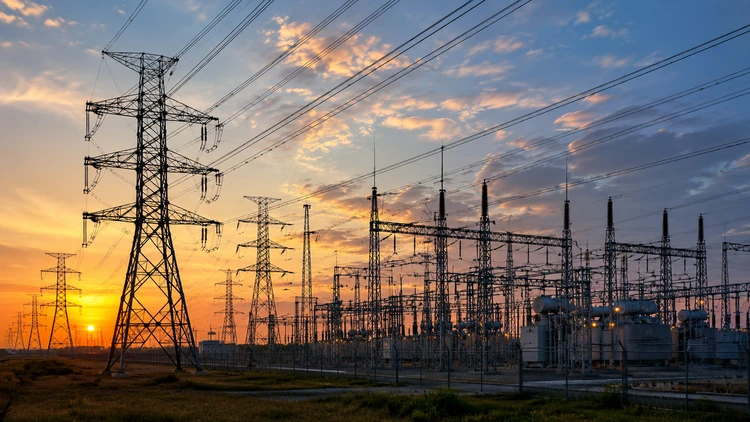

A new study warns that electricity bills could rise as much as 57% by 2030, as utilities expand power generation and transmission to support fast-growing data centers.
Researchers say artificial intelligence is accelerating demand for electricity, with data centers projected to consume a sharply larger share of the U.S. power grid within the next decade.
Consumer advocates and energy experts are increasingly questioning whether residential customers will end up subsidizing infrastructure needed by major technology companies.
The rapid expansion of AI-driven data centers could significantly increase household electricity costs over the next several years, according to a new study that projects power bills may climb by as much as 57% by 2030.
The report focuses attention on growing concerns about the strain that massive computing facilities are placing on the nation’s electric grid, as companies race to build infrastructure to support artificial intelligence, cloud computing, and cryptocurrency operations.
Researchers found that utilities across the country are already investing billions of dollars in new power plants, substations, and transmission lines to meet soaring electricity demand from data centers. Those costs are often passed on to residential ratepayers through higher monthly utility bills.
The issue is especially pronounced in states that have become major data-center hubs, including Virginia and Texas, where utilities are seeing unprecedented requests for new grid connections.
Reshaping power demand forecasts
Industry analysts say the AI boom is dramatically reshaping electricity demand forecasts nationwide. The International Energy Agency projects that electricity use by data centers worldwide will more than double by 2030, with AI systems becoming the largest driver of growth. In the United States, data centers could account for nearly half of all electricity-demand growth by the end of the decade.
Some forecasts are even more alarming. A federally mandated watchdog overseeing the PJM Interconnection — the nation’s largest regional power grid — recently warned that data-center growth has already contributed to wholesale electricity price spikes exceeding 75% in parts of the eastern United States.
Consumer advocates argue that ordinary households could end up bearing the financial burden for infrastructure built primarily to serve large technology companies.
“Utilities are expanding the grid to accommodate these massive facilities, and those costs don’t simply disappear,” energy analysts have warned in recent months. Several studies and policy reports have suggested that residential customers may ultimately subsidize upgrades required by hyper-scale computing operations.
Demand rising faster than expected
The study also notes that energy demand from AI servers is rising far faster than earlier projections anticipated. Berkeley Lab estimates that U.S. data-center electricity use more than doubled between 2017 and 2023 and could reach as much as 12% of total U.S. electricity consumption by 2028.
Critics of the current regulatory framework say utilities and state regulators have been slow to address who should pay for the growing energy appetite of the tech sector. Some lawmakers are now pushing for greater transparency in utility agreements with technology companies and exploring policies that would require large data-center operators to shoulder more of the infrastructure costs.
Despite the concerns, utilities and economic development officials continue to court data-center investment because of the jobs, tax revenue, and local economic activity the facilities can generate.
Still, experts warn that balancing economic growth with grid reliability and affordability will become increasingly difficult as AI adoption accelerates nationwide.