
A new study found that older adults' day-to-day impressions of their mental sharpness closely matched their actual cognitive performance.
Researchers used smartwatches to collect real-time reports and brief cognitive tests multiple times a day over two weeks.
The findings suggest that asking older adults how mentally sharp they feel may provide meaningful information alongside traditional cognitive testing.
Everyone has moments when they misplace their keys, forget a name, or struggle to focus. For older adults, those lapses can sometimes raise concerns about whether they're simply having an off day or if something more serious is happening.
A new study from researchers at the University of California, Davis suggests those day-to-day impressions of mental sharpness may be more reliable than previously thought.
“Our goal is to understand how people perceive their cognition, or ability to think, and how that compares with how they actually perform using objective test measures,” UC Davis Health neuropsychologist Sarah Tomaszewski Farias said in a news release.
“We found that people’s moment-to-moment impressions of their cognitive abilities were closely aligned with their actual performance. This could help lead to possible earlier detection of cognitive decline and Alzheimer’s risk than standard cognitive testing,” she said.
Using smartwatches to capture real-life thinking
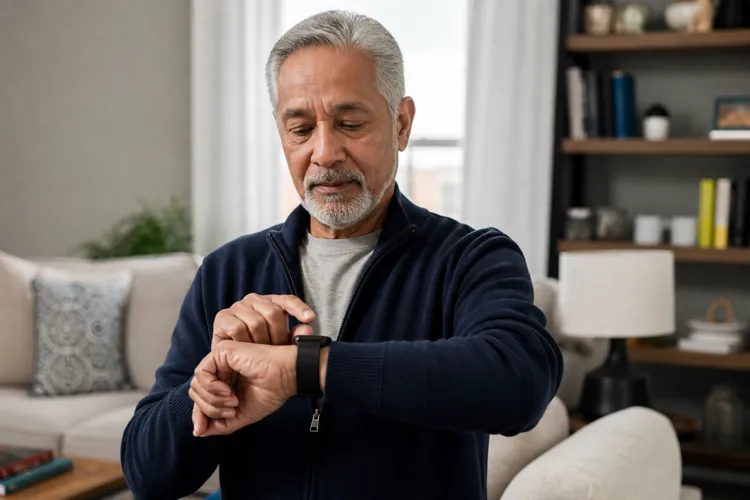
To study cognition outside of a laboratory, the research team equipped community-dwelling older adults with smartwatches for a two-week period.
Several times each day, the watches prompted participants to answer a simple question about how mentally sharp they felt at that moment. They also completed brief cognitive exercises on the smartwatch that measured aspects of thinking such as attention and working memory.
This approach, known as ecological momentary assessment, allowed researchers to compare people's perceptions of their cognitive abilities with their actual performance in real time instead of relying on memories of how they had felt days or weeks earlier. By collecting repeated measurements throughout daily life, the researchers were able to capture natural fluctuations in cognition that might be missed during a single office visit.
What the findings could mean for consumers
The study found that when participants reported feeling mentally sharper, they generally performed better on the cognitive tasks they completed shortly afterward. Likewise, when they felt less mentally sharp, their performance tended to reflect those perceptions.
In other words, older adults' day-to-day judgments about their thinking were meaningfully aligned with their actual cognitive functioning.
For consumers, the findings suggest that self-reported changes in mental sharpness shouldn't automatically be dismissed. While a person's own impressions cannot diagnose memory disorders or replace formal cognitive evaluations, they may offer useful information when combined with objective testing.
The researchers say incorporating these kinds of real-time self-assessments into routine monitoring could eventually help clinicians gain a more complete picture of cognitive health as it changes from day to day.