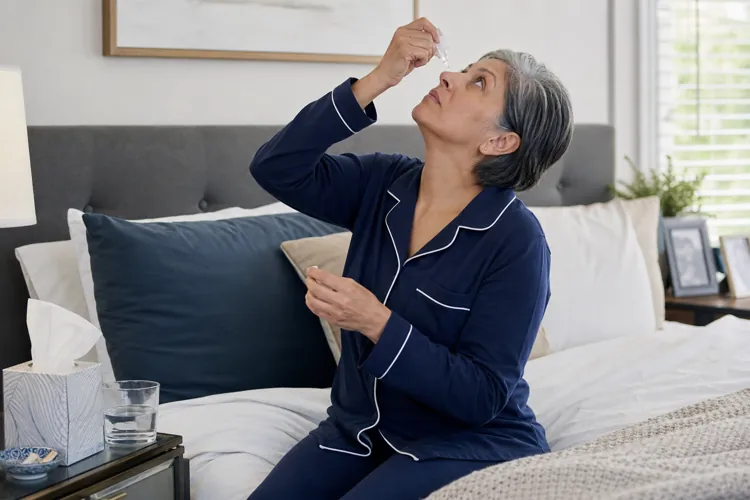

More than 2.5 million bottles of prescription steroid eye drops have been recalled nationwide after the U.S. Food and Drug Administration (FDA) identified a potential contamination issue.
The recall affects Prednisolone Acetate Ophthalmic Suspension, USP, 1%, manufactured by Lupin Pharmaceuticals Inc., because of the possible presence of a foreign substance.
The FDA has classified the recall as Class II, meaning use of the affected product could cause temporary or medically reversible adverse health consequences, with the risk of serious harm considered remote.
Consumers who use prescription steroid eye drops should check their medicine cabinets after the U.S. Food and Drug Administration (FDA) reported a nationwide recall affecting more than 2.5 million bottles of Prednisolone Acetate Ophthalmic Suspension, USP, 1%.
According to the FDA's enforcement report, Lupin Pharmaceuticals Inc. recalled the products after discovering the possible presence of a foreign substance in the eye drops. The affected medication is supplied as a 1% ophthalmic suspension in 5 mL, 10 mL, and 15 mL bottles.
The FDA designated the action as a Class II recall on June 30. A Class II recall means use of or exposure to the product may cause temporary or medically reversible adverse health effects, while the likelihood of serious adverse health consequences is considered remote.
Used to treat inflammation
Prednisolone acetate is a prescription corticosteroid eye drop commonly used to reduce inflammation caused by allergies, eye injuries, surgery, and certain infections. Because the medication is applied directly to the eye, any contamination can pose a risk to patients.
The recall covers approximately 2.53 million bottles distributed nationwide. FDA records indicate the affected products were manufactured at Lupin's facility in Pithampur, India, and include dozens of lot numbers with expiration dates extending into 2028. Consumers and healthcare providers should consult the FDA's enforcement report to determine whether a specific bottle is included in the recall.
The FDA's enforcement report identifies the reason for the recall as the "presence of foreign substance." The agency has not publicly disclosed additional details about the nature of the material, and Lupin Pharmaceuticals had not publicly commented on the recall at the time of publication.
What to do
Patients who believe they have an affected bottle should contact their pharmacist or healthcare provider before discontinuing a prescribed medication, especially if it is being used to control inflammation following eye surgery or to treat another serious eye condition. Anyone experiencing unusual eye pain, redness, swelling, vision changes, or signs of infection after using the product should seek medical attention promptly.
The recall comes only months after another large eye drop recall involving more than three million over-the-counter products because of concerns about sterility, underscoring continuing scrutiny of ophthalmic drug manufacturing.