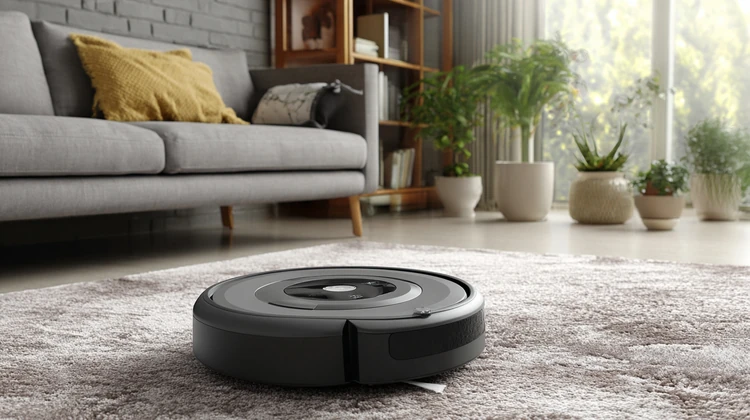
• Roomba maker seeks Chapter 11 protection as competition and tariffs squeeze margins
• Company plans to go private under ownership of its main manufacturer
• iRobot says customers should not see disruptions to products or support
iRobot, the maker of the Roomba robotic vacuum cleaner, filed for Chapter 11 bankruptcy protection on Sunday, saying it plans to go private after being acquired by Picea Robotics, its primary manufacturing partner.
The Bedford, Massachusetts–based company filed in Delaware bankruptcy court as it struggles with intensifying competition from lower-priced rivals and rising costs linked to new U.S. tariffs. iRobot had warned in March that its ability to continue operating as a going concern was in doubt.
Competition and tariffs erode profits
iRobot generated about $682 million in revenue in 2024, but mounting pressure from Chinese competitors such as Ecovacs Robotics has weighed heavily on profitability, according to court filings. While iRobot remains a market leader in the United States and Japan, competitors have forced the company to cut prices and invest heavily in technology upgrades to stay relevant.
Those challenges have been compounded by U.S. tariffs, particularly a 46% levy on imports from Vietnam, where iRobot manufactures vacuum cleaners for the U.S. market. The company said the tariffs added roughly $23 million in costs in 2025 and made long-term planning more difficult.
Debt tied to failed Amazon deal
At the time of the bankruptcy filing, iRobot carried about $190 million in debt. Much of that stems from a 2023 loan used to refinance operations while a European antitrust investigation delayed a proposed $1.4 billion acquisition by Amazon.
After the Amazon deal collapsed and iRobot fell behind on payments, Picea — a China-based manufacturer — acquired iRobot’s debt from a group of investment funds managed by the Carlyle Group, according to court documents.
Going private under Picea
Under iRobot’s Chapter 11 plan, Picea will take 100% ownership of the company and cancel the $190 million remaining on the 2023 loan. Picea will also forgive an additional $74 million that iRobot owes under the companies’ manufacturing agreement.
Other creditors and suppliers are expected to be paid in full, according to bankruptcy filings.
iRobot said the bankruptcy process is not expected to disrupt app functionality, customer programs, global partners, supply chain relationships or product support.
From pandemic boom to steep decline
iRobot was valued at about $3.56 billion in 2021, buoyed by pandemic-driven demand for home technology. Today, the company is worth roughly $140 million, according to data compiled by LSEG.
Founded in 1990 by three Massachusetts Institute of Technology roboticists, iRobot initially focused on defense and space-related work before launching the Roomba in 2002. The robotic vacuum quickly became a household name.
The Roomba still holds about 42% of the U.S. robotic vacuum market and 65% of the Japanese market, according to the company.
iRobot is headquartered in Bedford, Massachusetts, and employs 274 people, court documents show.