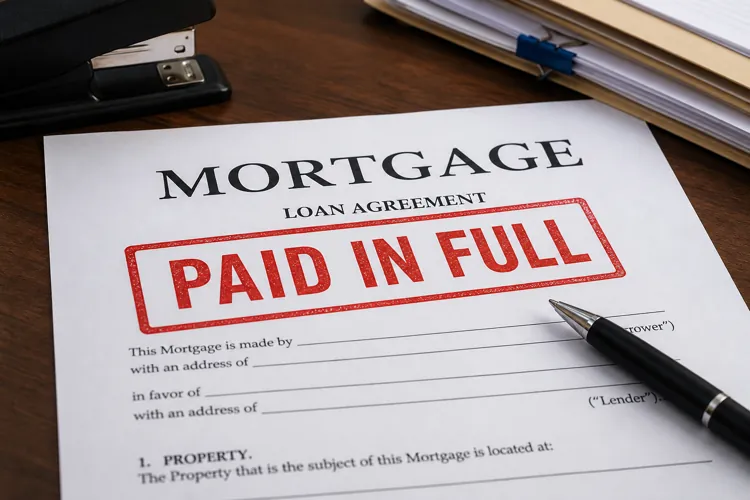

Investopedia estimates a mortgage-free single retiree needs about $693,000 in savings for a comfortable retirement.
The estimated requirement ranges from $572,000 in Arkansas to $909,000 in New Jersey.
Even without a mortgage, homeowners must budget for taxes, insurance, utilities and repairs.
Older homeowners are often told they need $1 million or more to retire comfortably. A new analysis suggests that target may be lower for people who have finished paying for their homes—but the answer depends heavily on where they live.
An Investopedia study estimates that a single homeowner without a mortgage needs approximately $693,000 in retirement savings, on average. A mortgage-free couple needs about $870,000.
The findings illustrate how eliminating a mortgage payment can change the retirement equation. Census data cited in the report show that older homeowners without mortgages have median housing expenses of $658 a month. Those still paying mortgages spend a median of $1,736.
But the national averages can be misleading because living costs vary widely across the country.
Arkansas offers the lowest target
Arkansas had the lowest estimated savings requirement for a single mortgage-free retiree, at approximately $572,000. Louisiana, North Dakota, Mississippi and Tennessee followed, with each requiring less than $590,000 under the study’s assumptions.
New Jersey had the highest estimate at about $909,000. Other high-cost locations included New York at $840,000, Washington, D.C., at $834,000, Massachusetts at $826,000, Connecticut at $819,000 and New Hampshire at $814,000.
For couples, Investopedia calculated that the amount required for a comfortable retirement ranges from approximately $700,000 in the least expensive state to $1.18 million in the most expensive.
The differences mean that two retirees with identical savings and Social Security benefits could have very different financial experiences depending on where they live.
Mortgage-free homes still produce bills
Paying off a house eliminates the principal and interest payment, but not the other costs of homeownership.
Property taxes, homeowners insurance, utility bills, association fees and routine maintenance continue throughout retirement. Investopedia found that monthly housing expenses for older mortgage-free homeowners range from about $398 in West Virginia to more than $1,200 in New Jersey.
Unexpected repairs can also disrupt a carefully planned retirement budget. A new roof, plumbing failure or heating-system replacement can cost thousands of dollars, making an emergency fund important even for consumers who own their homes outright.
Retirees should also consider whether their current home will remain affordable and practical as they age. A large property may require more upkeep, while a home with stairs could eventually need accessibility modifications.
The assumptions behind the numbers
Investopedia calculated the estimates using state-level living expenses, average Social Security income and the 4% withdrawal rule.
The analysis assumed annual Social Security benefits of $23,704 for a single retiree and $37,713 for a couple. It calculated the difference between that income and estimated expenses, then multiplied the annual shortfall by 25—the equivalent of taking a 4% annual withdrawal.
The estimates cover financial savings and investments. They do not count the value of the home itself.
Consumers should treat the figures as general benchmarks, not as personalized savings goals. A retiree’s actual needs may be higher or lower depending on health care expenses, taxes, lifestyle, Social Security benefits and other income sources.
The study’s main takeaway is that retirement planning involves more than reaching a single savings number. Paying off a mortgage can reduce monthly expenses significantly, but local taxes, insurance costs and other bills will help determine how far those savings ultimately go.