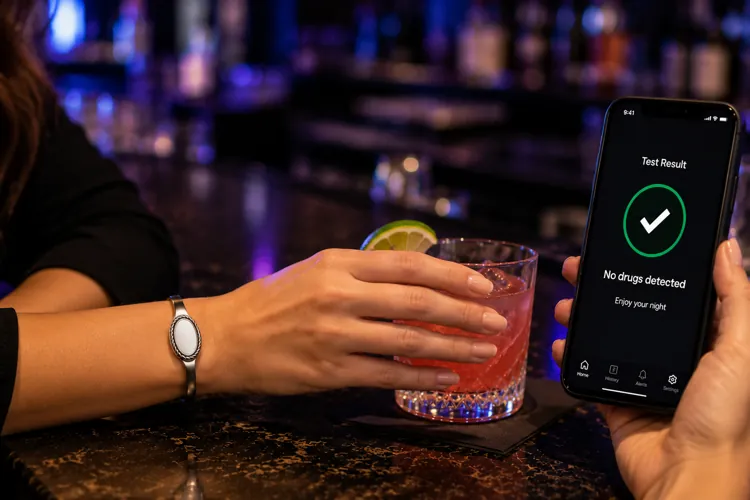

A smart bracelet could help detect drink-spiking drugs. The device is still in development and isn't yet available to consumers.
Don't rely on technology alone. Keep your drink in sight, watch it being made, and stay with trusted friends.
Act quickly if something feels off. If your drink seems unusual or you suddenly feel far more intoxicated than expected, get help immediately.
Whether you're heading to a concert, bar, or college party, a new wearable device could soon add another layer of protection against drink tampering.
Developed by startup Elora Armor, the bracelet (along with pendants and keychains planned for the future) contains a sensor that can detect benzodiazepines, a class of drugs commonly associated with drink spiking.
How exactly does the bracelet work
Users place a small drop of their drink on the sensor, and a connected smartphone app analyzes the sample. If a suspected drug is detected, the app alerts the user and can automatically send their live location to preselected emergency contacts.
While the technology is still being developed and isn't yet commercially available, safety experts say it could become a very useful tool down the road.
The important caveat is that consumers don't treat the technology as a substitute for basic safety precautions.
Technology can help — but awareness still matters
No device can detect every possible substance or eliminate the risk of drink tampering.
Experts continue to recommend keeping drinks within sight, accepting beverages only from trusted servers or bartenders, and staying with friends when going out.
The new bracelet is designed to complement those habits, not necessarily replace them.
How to protect yourself
Create a safety network before you go out. Share your location with a trusted friend, agree on a meeting spot, and establish a code word in case someone needs help leaving quickly.
Don't ignore sudden symptoms. If you become intoxicated much faster than expected, feel unusually dizzy, confused, or struggle to stay awake, tell someone you trust immediately and seek medical attention. Don't try to "sleep it off."
Think beyond bars. Drink spiking can happen at house parties, concerts, festivals, and other crowded events. No matter where you are, never leave your drink unattended or accept one that's already been opened or poured by someone you don't know.
Watch your drink being made. Order directly from the bartender or server whenever possible, and avoid accepting drinks that have already been poured or left unattended.
Trust your instincts. If a drink tastes, smells, or looks unusual (or if someone is pressuring you to drink it) don't take the risk. Throw it away and order a fresh one.
Keep a hand over your drink in crowded places. Whether you're walking through a crowd, dancing, or talking with friends, covering your cup can reduce the chance of someone slipping something into it.