2024 Understanding and Navigating Insurance

Article Image

California ups premium options for homeowners insurance

To hear insurance companies tell it, homeowners insurance policy premiums in California are so low the companies can't bear the risk of writing policies as wildfires become more prevalent.

The result is that many homeowners and renters are currently "going bare," doing without insurance coverage and risking financial ruin. The state has been tinkering with its regulations and has now approved new rules that will let insurers add in "reinsurance" costs when they set their rates.

"Reinsurance" is basically the insurance that insurance companies buy to cover themselves against major disasters that would otherwise bankrupt them. All other states in the U.S. allow insurers to add this cost into their premiums but, in the name of consumer protection, California has prohibited it until now.

The result is that seven of the 12 largest insurers have been limiting their exposure in California in recent years, canceling hundreds of thousands of policies.

Today, Insurance Commission Ricardo Lara said that California would allow reinsurance costs to be added into premiums while also requiring insurers to write more policies in high-risk areas. 

"A reliable model"

“Californians deserve a reliable insurance market that doesn’t retreat from communities most vulnerable to wildfires and climate change,” said Lara in a press release. “This reform balances protecting consumers with the need to strengthen our market against climate risks.”

Under the new policy, insurance companies must increase coverage in wildfire-prone regions, ensuring they write policies for at least 85% of their statewide market share, with annual increases until the threshold is met.

It imposes cost caps on reinsurance. The regulation treats reinsurance like other insurance company expenses — such as claims handling or agent commissions — by establishing an industry-wide standard cost of reinsurance and capping the amount of reinsurance costs that can be charged to consumers. Companies spending more than the industry standard cannot pass these costs onto their policyholders. 

The new provision adds to changes made earlier this month, that let insurance companies use so-called "catastrophe models" to set rates instead of forcing them to rely only on historic data. Homeowners who "harden" their structure against fire can be granted discounts under the new pricing plan. 

California has seen more wildfire activity this year, although total acreage burned is below the five-year average. 

Article Image

California revises home insurance rules, hoping insurers write more policies

California has introduced new insurance regulations aimed at encouraging insurers to offer more policies in wildfire-prone areas.

Under these new rules, insurers will use advanced computer models, which take into account weather, geography, and other data, to set insurance rates, rather than relying solely on past losses.

The change comes in response to the impact of climate change on wildfires, which has made it difficult to find homeowners and renters insurance in some of the state's most populous areas. 

“With our changing climate we can no longer look to the past. We are being innovative and forward-looking to protect Californians’ access to insurance,” Insurance Commissioner Ricardo Lara said in a statement.

The regulations are part of Lara's plan to stabilize the state’s troubled home insurance market. Insurers will now be required to write policies in higher-risk areas, with a goal of covering 85% of homes in those neighborhoods. In exchange, insurers such as State Farm and Allstate have been given some regulatory concessions.

These changes aim to help homeowners who have found it difficult to get insurance in wildfire-prone areas, often turning to the state’s last-resort insurer, the FAIR Plan. However, consumer groups have raised concerns about potential rate hikes and the transparency of the computer models used by insurers.

While the regulations have support from environmental and farming groups, critics fear they could lead to higher insurance premiums without offering more policies. The new rules will take effect in January 2024 and are seen as a step toward addressing the growing insurance crisis in California.

“Consumers should expect large rate hikes but not more insurance policies sold under the new rules,” Carmen Balber, executive director of Consumer Watchdog, said in a statement.

Article Image

Farmers Insurance will resume writing policies in California

Farmers Insurance says it will resume offering several types of insurance coverage to new customers in California, including condominium, renters, umbrella, landlord, vacant, and manufactured home insurance. Many of these coverage options had been paused for over a year.

The company plans to begin reintroducing these policies on December 14, 2024, starting with condominium and renters insurance. Farmers will also increase the number of homeowners policies it accepts from 7,000 to 9,500 per month.

This decision comes after regulatory changes in California, aimed at stabilizing the state's insurance market amid challenges such as wildfire losses. Farmers said it is optimistic about the improvements in the market and hopes to offer more coverage options as the state’s Sustainable Insurance Strategy is implemented.

Farmers will reopen coverage options in phases, with the following dates:

  • Condominium and Renters insurance: December 14, 2024
  • Personal Umbrella insurance: December 24, 2024
  • Manufactured Home Landlord insurance: March 1, 2025
  • Dwelling Fire Landlord and Vacant insurance: March 15, 2025

Additionally, Farmers resumed accepting new applications for business insurance earlier this year and lifted its moratorium on new commercial automobile insurance policies in July.

Article Image

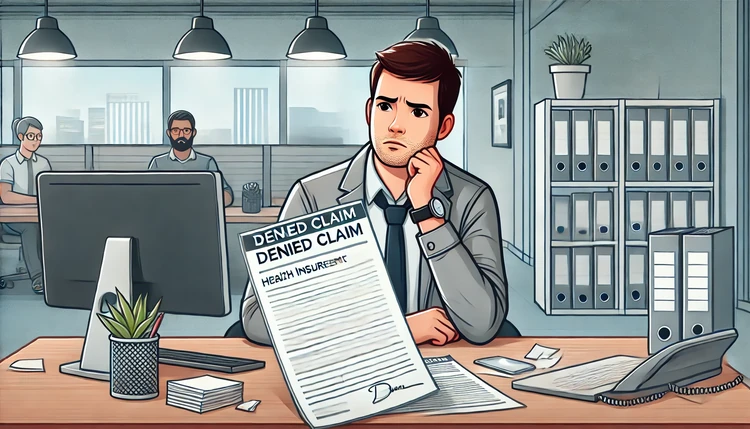
Behind the anger: A look at today’s healthcare system

As shocking as the cold-blooded murder of UnitedHealthcare CEO Brian Thompson was, the reaction of many on social media may have been equally as shocking. Any expressions of sympathy were largely overshadowed by the torrent of hate directed at health benefit providers.

This is not exactly a new phenomenon. In the 1997 movie “As Good as it Gets,” Helen Hunt played a low-income single mother of a son with chronic health problems. When a doctor tells her that a simple allergy test that her health plan refused to cover might show the cause, she unleashes a torrent of expletives directed at her HMO. 

In nearly every case, no matter where the film was being shown, the audience erupted in cheers.

But to be fair, there are two major players entangled in this issue. There are the health insurance companies and there are healthcare providers, whose bills are covered by the benefit plans.

The role of providers

Thomas Kluz, managing director of Venture Lab, which invests in healthcare, believes hospitals and providers bear a lot of responsibility for high premiums and limited coverage.

“Medical service providers determine prices for medical services, and those prices have a big impact on the rates that insurers must pay,” Kluz told ConsumerAffairs. “According to RAND Corporation’s hospital price transparency study, hospital prices for privately insured patients for the same procedures are, on average, twice to three times as much as Medicare rates for the same services.”

And therein may lie one of the big issues. A growing number of patients are covered by Medicare and Medicaid, government health insurance programs that generally pay less. Everyone else is covered by private health insurance.

“Health systems and other provider organizations are in a difficult position because they generally lose money on the growing part of their patient populations that are covered by Medicare and Medicaid, so they must cover these losses with commercially insured patients to remain financially viable,” said Web Golinkin, former CEO at FastMed.

“In addition, their labor costs have risen significantly since and partially because of, COVID, which has further squeezed their operating surpluses and in some cases produced losses.”

The profit motive

Which begs the question: should companies providing sometimes critical life and death services have to show a profit and be accountable to Wall Street? UnitedHealthcare is not only a profitable company, it earns billions of dollars in profit per quarter, which bolsters its stock price.

Jack Glasker, of Affordable Healthcare Solutions in Westfield, N.J., says some people find the idea of for-profit healthcare repulsive, while many others hate the idea of a government “single payer” system.

“Unfortunately though, the cost of major medical care has absolutely skyrocketed,” Glasker told us. “The reasons are multitudinous, including but certainly not limited to for-profit health insurance. The growing complexity of the system runs contrary to the motives of for-profit health insurance. That's primarily the reason for the angst many people seem to share.”

So, as medical costs rise and health insurance premiums rise and cover fewer services, patients often are left to fend for themselves. That led Holden Karau to co-found a company with the descriptive name Fight Health Insurance.

“I started the company after experiencing a lot of health insurance denials personally,” Karau told ConsumerAffairs.

With a background in artificial intelligence and machine learning, Karau developed tools to help patients develop effective appeals of their denied claims.

“We work by taking the patient's denial and asking them some questions and generating an appeal with an in-house large language model,” Karau said. “I would say in regard to the social media response, I’ve seen so much hurt and frustration from denials, including life-saving procedures and medications, I can understand why some folks turn to humor to cope.

Article Image

Auto insurance repair times down but costs up, J.D. Power finds

Auto insurers have been facing challenges since the pandemic, particularly with higher repair costs and longer repair times. But things may be looking up, at least as far as repair times go.

According to the J.D. Power 2024 U.S. Auto Claims Satisfaction Study, repair times have improved, dropping from an average of 23.9 days to 18.9 days later in the study period.

On the downside, repair costs have increased by 26% in the past two years, leading to a 15% rise in premiums.

“The claims process is the moment of truth for auto insurance customers, so when they experience rate increases and then have a claim with longer-than-expected repair times and other inconveniences, their overall trust in the brand is greatly diminished,” said Mark Garrett, director of global insurance intelligence at J.D. Power. 

"However, premium increases have created a new challenge for insurers as trust is eroding and affecting the way customers view their claims. There are still many challenges the industry needs to navigate to maintain customer loyalty,” Garrett said.

These rising costs have hurt customer satisfaction, especially for those who experienced premium increases before making a claim. Trust in insurers is dropping, with 80% of customers who had bad claims experiences saying they’ve already switched or plan to switch providers.

While digital claims processing is improving customer satisfaction, older generations still prefer to handle claims through more traditional methods like phone calls. Good communication, especially making it easy for customers to reach insurer representatives, remains crucial to a positive claims experience. 

Insurance companies ranked

The study ranked NJM Insurance Co. highest for overall customer satisfaction, with a score of 782. Amica (746) ranks second and Erie Insurance (733) ranks third.

The U.S. Auto Claims Satisfaction Study was redesigned for 2024. Scores are not comparable year over year with previous studies. The 2024 study is based on responses from 9,725 auto insurance customers who settled a claim within the past nine months prior to participating in the survey.

It measures customer experience across eight core dimensions (in order of importance): trust; fairness of settlement; time to settle claim; people; communication; ease of resolving claim; ease of starting claim; and digital channels. The study was fielded from October 2023 through August 2024.

Article Image

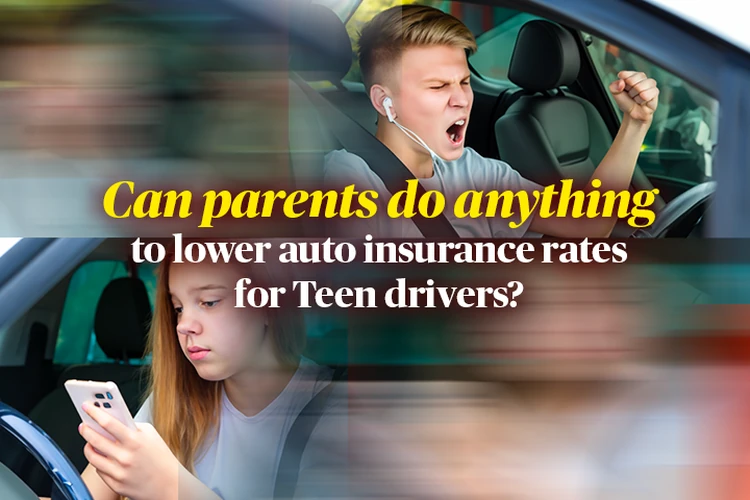
Got a teen starting to drive? Got $38,000 saved up to pay for insurance?

It’s tough being a teenager. Tough on parents, too – especially when they have to pay for their teen’s car insurance.

Research shows that insurers have little mercy, though. Over the last several years, insurance rates for young drivers have risen 50%.

These days, a 16-year-old might have to pay more than $7,200 a year for full-coverage auto insurance, according to CarInsurance.com. Of course, with time, that dollar figure will come down, and by the time they reach 25, they’ll pay $2,010. Still, all added up, that’s nearly $38,000 it could cost whoever is paying for the insurance policy.

Actuaries – the people at insurance companies who determine risk – aren’t trying to line their companies’ pockets, but merely playing the odds so their company doesn’t lose on its bets. A 16-year-old given a set of car keys is a dicey proposition, as any of us know.

Still, there are ways that parents can lower both the risk that their young drivers face as well as lower the cost of paying for the risks those actuaries think are clear and present.

My mama told me, you better shop around

In the insurance world, companies may monitor what the others do, but they each take multiple variables into account when weighting risk, which can lead to different costs. Some may think age is a bigger risk than credit score while another may think about the make and model of the car or how many miles it’s rung up.

And because of the variations of factors, Kate Long, a consumer financial wellness advocate at Assurance IQ, says consumers shouldn’t just jump at the first rate they’re pitched – especially when there’s a younger driver involved.

Long says that for new drivers, gender is also a factor. “Most states do take this into account for car insurance rates and men tend to pay higher premiums than women because insurers consider them to be higher risk,” she told ConsumerAffairs, pointing to a study by The National Highway Traffic Safety Administration (NHTSA) which reported that male drivers were more likely to be speeding in speeding-related fatal crashes than female drivers.

Long suggests that before you pick out a car for your young driver, you should consider the types of vehicles that will impact the insurance premiums the most. 

“The cost to repair is one major factor in determining premiums," she said. "For example, hybrid and electric vehicles can be more expensive to insure than other cars because they can be more expensive to repair, and some require specialty mechanics to complete repairs. Older vehicles cost less to repair than newer, more expensive vehicles.”

But, remember that if you’re going to shop things around, make sure you shop the same factors with each insurer, Mark Snyder, principal consultant and claims subject matter expert at Hi Marley, suggested. That will ensure you’ll get the best deal possible.

“And, don’t forget to explore increasing auto collision and comprehensive deductibles as a potential strategy," Snyder said. "Identifying opportunities to bundle homeowners coverage with auto and umbrella coverages, or qualify for additional household discounts is a good strategy, too.”

You can also use ConsumerAffairs comparative analysis of auto insurance companies, rates, etc. including who’s our research team’s pick for young drivers and a special "how to get cheap insurance" report.

Good grades, off at college, monitoring programs

There are other things parents can do to lower their kid’s insurance costs, too. ConsumerAffairs auto insurance expert Chris Butsch says one is to enroll in the insurance provider’s driver monitoring (“telematics”) program.

Most major providers have a program that monitors a person’s driving behavior and rewards them with as much as a 30% discount for safe driving. Sometimes, there’s even a discount just for signing up.

But, no good deed goes unpunished, as Cassie Sheets, data insights writer at Insurify, reminded ConsumerAffairs. “The downside is that poor driving is penalized with higher rates. Teenagers are still learning. They’re more likely to make mistakes like bumping into the mailbox or sudden braking, which could drive up premiums."

Sheets says that younger drivers can do more than just be a safe driver to reduce premiums. 

“Many insurers offer discounts to good students, and the savings can be significant. State Farm offers up to 25% off for high grades or test scores. GEICO offers up to 15% off, and Progressive’s discount is around 10%,” she said.

Sticking with the subject of school, she said that some insurance companies also provide away-at-school discounts for college students who don’t drive during the semester.