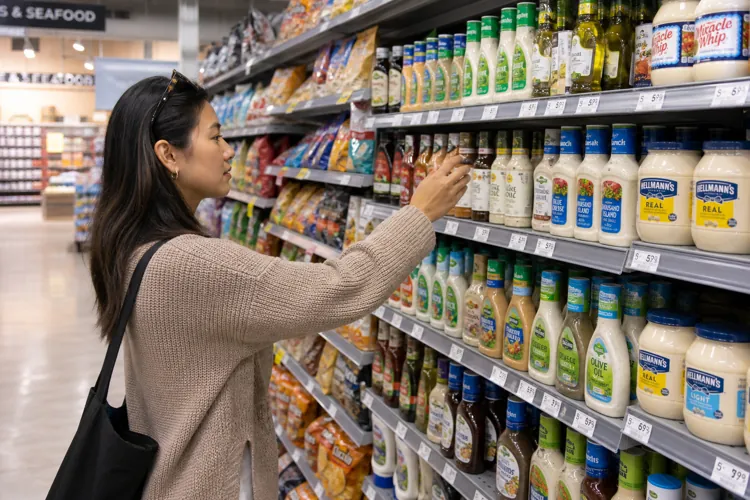

Nearly nine in 10 processed foods labeled as containing avocado oil failed authenticity tests in a new study, raising questions about whether consumers are getting what they're paying for.
Researchers found far fewer issues with olive oil products, with only one of 20 products showing signs of being inconsistent with authentic olive oil.
The study suggests premium oil claims on chips, mayonnaise, and salad dressings deserve greater scrutiny because products made with avocado or olive oil often sell at higher prices.
Consumers who pay extra for chips, mayonnaise, or salad dressings made with avocado oil may not be getting the premium ingredient they expect, according to a new study.
Researchers at the University of California, Davis found that 48 of 54 processed food products labeled as containing avocado oil had chemical profiles inconsistent with authentic avocado oil. By contrast, only one of 20 products labeled as containing olive oil failed the same authenticity tests.
The findings, published in the journal Advances in Food Resources, are among the first to examine the authenticity of premium oils used as ingredients in processed foods rather than oils sold in bottles.
"Our findings suggest that ingredient-level oil claims may represent an under-examined source of economic adulteration in processed foods," the researchers wrote.
Looking beyond the label
The researchers analyzed oils extracted from 74 commercially available products — including potato chips, mayonnaise, and salad dressings — that listed avocado oil or olive oil as their sole edible oil ingredient.
Using internationally recognized standards based on fatty acid and sterol composition, they determined whether the oils matched the expected chemical characteristics of authentic avocado or olive oil.
Overall, the results were stark:
Avocado oil products: 48 of 54 (89%) were inconsistent with authentic avocado oil.
Olive oil products: One of 20 (5%) was inconsistent with authentic olive oil.
Breaking the results down by category, the researchers found:
93% of avocado oil potato chips failed authenticity testing.
71% of avocado oil mayonnaise products failed.
Every avocado oil salad dressing tested failed.
Nearly all olive oil products met authenticity standards.
Possible substitution with cheaper oils
The chemical signatures found in many avocado oil products suggested the oils may have been diluted or substituted with less expensive vegetable oils.
The researchers emphasized that they did not identify exactly which oils had been substituted into every product. However, many of the samples showed fatty acid and sterol patterns more consistent with common vegetable oils than genuine avocado oil. One product's composition closely resembled soybean oil.
The study notes that U.S. labeling regulations require ingredients to be identified by their common names, and consumers seeing front-of-package claims such as "made with 100% avocado oil" would reasonably expect avocado oil to be the product's primary fat source.
Paying more doesn't guarantee authenticity
One reason the findings matter to consumers is price.
Products marketed as containing avocado or olive oil generally cost more than comparable products made with conventional vegetable oils. However, the researchers found that higher prices were not a reliable indicator that the product actually contained authentic avocado oil.
"Consumers cannot rely on price alone as an indicator of authenticity," the authors concluded.
Processing wasn't the culprit
One possible explanation was that frying or emulsifying the oils during manufacturing altered their chemical makeup.
To test that theory, the researchers prepared their own potato chips and mayonnaise using authentic avocado and olive oils. They found only minor changes in the oils' chemical markers after frying and emulsification — far too small to explain the large differences seen in many commercial products.
Some limitations
The researchers cautioned that the study has limitations. Products were purchased in California stores and online, so they may not represent every product sold nationwide. They also analyzed only two production lots for each product, meaning results could vary between manufacturing batches.
Still, the authors say their findings point to a gap in oversight of premium oil claims in processed foods.
"These findings highlight ingredient-level oil authenticity in processed foods as an under-monitored area of food integrity," the researchers concluded, adding that greater testing and scrutiny could improve labeling transparency and strengthen consumer confidence.