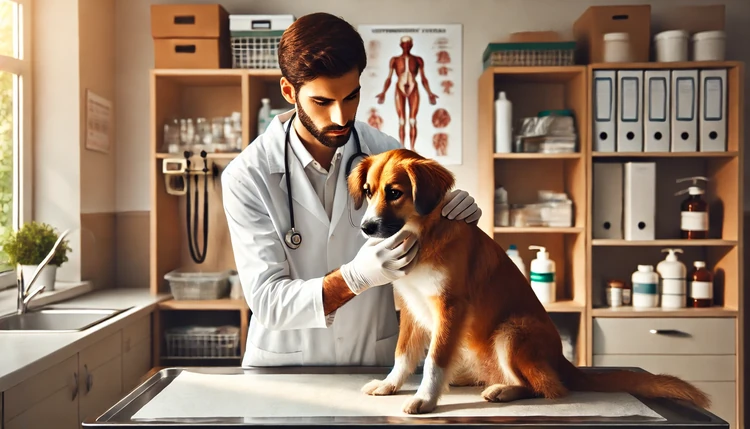

Most pet owners can book vet appointments fairly quickly, a new study shows.
But rural pet owners face longer waits and farther drives for basic veterinary care.
Researchers say boosting the veterinary workforce could help close the gap.
A new multi-state study suggests that while most dog owners can get timely veterinary appointments, access to care drops sharply in rural communities, revealing a growing concern for pet health, owners’ well-being, and even public health.
“Access to veterinary care appears to be generally pretty good and the wait times aren’t too long, particularly if you compare it to how long people often have to wait to establish primary care,” said Simon Haeder, lead author and associate professor at Ohio State’s College of Public Health. “But there’s clearly room for improvement in less populated areas.” The findings were published in the Journal of the American Veterinary Medical Association.
Secret shoppers reveal uneven access
To measure real-world availability, researchers posed as dog owners and called more than 5,000 randomly selected veterinary practices across California, Minnesota, Ohio, Pennsylvania, Texas, and Washington in early 2025.
Overall, callers were able to secure an appointment 67% of the time. When unsuccessful, it was usually because no one answered or callers were left on hold for more than five minutes, long enough to count as a failed attempt in the study. In nearly 4% of cases, clinics reported they were not accepting new patients.
Among successful appointments, wait times averaged 6.4 days, and the typical travel distance was also 6.4 miles, suggesting most pet owners don’t have to go far or wait long for routine care.
Rural pet owners face steeper challenges
The picture changed dramatically in rural communities:
Appointment success rate dropped to less than 62%
Average wait time increased to 8.6 days
Average travel distance more than doubled to 13 miles
These barriers could leave pets without timely preventive care or treatment—issues that can snowball into more serious health problems for animals and financial or emotional strain for their owners.
Haeder notes that after cost, access is the most common concern among pet owners. Delayed or inconsistent care doesn’t only affect pets—it can have wider public health implications, especially when it comes to vaccine-preventable diseases like rabies.
“When pets don’t receive prompt preventive care, diagnoses and treatment, both the pets and their owners suffer,” Haeder said. “And gaps in access can pose broader public health threats.”
Potential solutions on the horizon
Efforts to expand the veterinary workforce may help narrow the rural gap. Ohio State’s College of Veterinary Medicine is part of a new statewide initiative, Protect One Health in Ohio, aimed at strengthening the veterinary workforce, safeguarding public health, and supporting the agricultural economy.
In a recent companion paper, college leaders outlined plans to train more veterinarians specifically to serve rural areas, where shortages are most pronounced.
As pet ownership continues to rise and rural communities struggle to attract veterinary professionals, the researchers suggest that expanding training programs could play a major role in ensuring all pets – whether in cities or quiet farm towns – receive the care they need.