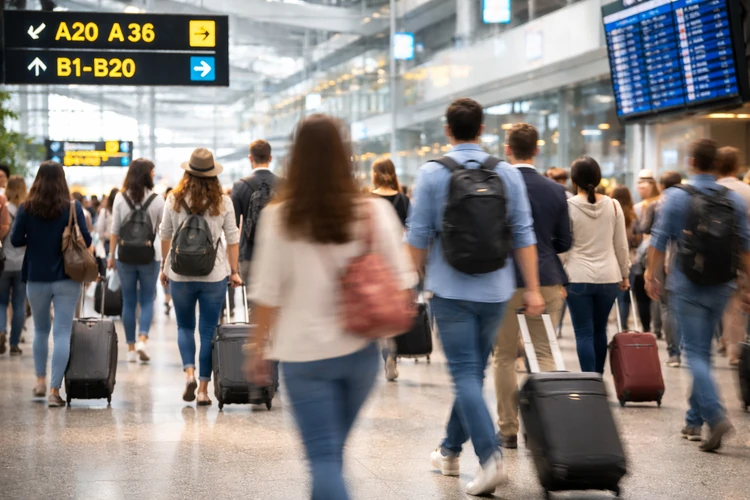

A confirmed measles case tied to travel through O’Hare Airport has prompted a public health alert.
Officials are working to identify people who may have been exposed in busy airport terminals.
Vaccination remains the best protection, with symptoms appearing up to three weeks later.
A new measles alert tied to Chicago’s O’Hare International Airport is raising concerns for travelers and residents alike.
Health officials in Cook County are warning that people who passed through the airport may have been exposed to the highly contagious virus — a reminder that even routine travel can come with unexpected health risks.
While there’s no indication of a widespread outbreak at this point, public health experts say situations like this highlight how quickly measles can spread, especially in high-traffic areas like airports.
What happened at O’Hare
According to the Cook County Department of Public Health, the alert stems from a confirmed measles case involving a traveler who passed through O’Hare after international travel. Officials say the individual has since been isolated, but the timing of their movements means others may have been exposed.
The agency has identified several locations as points of public exposure:
O’Hare International Airport – Terminal 5
Tuesday, March 24, 2026 between 10:45 a.m. – 2:30 p.m.
Fresh Farms – 8203 W. Golf Rd. Niles, IL
Thursday, March 26, 2026 between 7:30 p.m. – 9:00 p.m.
Marshalls – 8249 W. Golf Rd. Niles, IL
Thursday, March 26, 2026 between 8:00 p.m. – 9:30 p.m.
Endeavor Health Immediate Care Center in Mt. Prospect
Friday, March 27
Measles spreads through the air and can linger for up to two hours after an infected person leaves a space, making airports a particularly vulnerable setting.
Symptoms don’t show up right away. They can take anywhere from seven to 21 days to appear and typically include fever, cough, runny nose, red eyes, and the telltale rash.
What travelers and consumers should know
If you’ve recently traveled through O’Hare — or any major airport — experts say there’s no need to panic, but it’s smart to stay aware.
First, check your vaccination status. Two doses of the measles, mumps, and rubella (MMR) vaccine are about 97% effective at preventing infection, making it the strongest line of defense.
Second, monitor your health. If you were potentially exposed, the Chicago Department of Public Health says that anyone exposed to the infected person should monitor their symptoms through April 14, 2026. If anything develops, call your health care provider before going in, which helps prevent further spread.