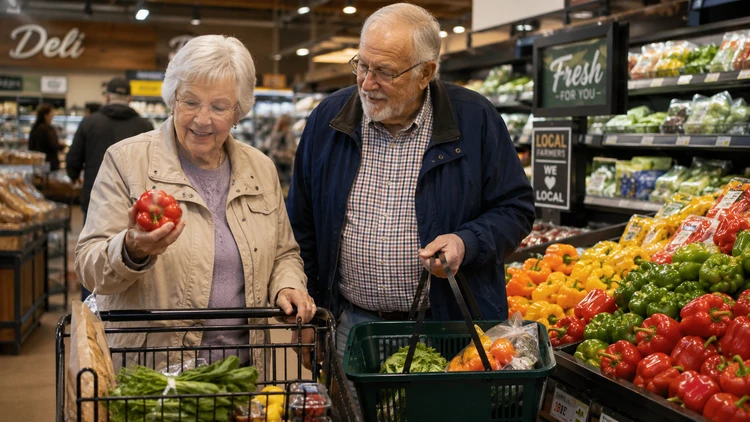

More grocery stores now put their best prices behind apps and digital coupons, leaving many seniors paying higher prices at checkout.
For older shoppers who are not comfortable with smartphones or apps, even simple grocery deals can become frustrating and confusing.
Consumer advocates say many seniors are effectively paying a “technology tax” because they miss out on app-only discounts younger shoppers unlock easily.
For millions of Americans, saving money grocery shopping has become a digital game. You need some tech know-how to maximize your savings, and for many seniors, that shift is creating a frustrating and expensive new reality.
Older shoppers who don’t own smartphones, lack reliable internet access, or simply aren’t comfortable navigating grocery apps, often end up paying significantly more for the exact same items sitting in the same store.
It’s easy to argue that they’re being penalized simply for not being digitally connected.
The rise of the 'digital-only' grocery deal
Over the past several years, grocery chains have aggressively pushed customers toward app-based shopping and couponing.
Stores like Kroger, Safeway, Albertsons, Publix, and Target now regularly offer:
- Digital-only coupons
- App-exclusive discounts
- Personalized online offers
- Rewards programs
- “Clip before checkout” savings
- Online-only pricing
The problem is these deals often require a customer to download an app, create an account, remember a password, navigate a few menus, and even use a mobile wallet or QR code.
For younger shoppers, this feels routine and often only takes a minute to setup. For many seniors, it feels exhausting and many give up before they even try to get set up.
Seniors often face a hidden 'technology tax'
Many older Americans grew up clipping paper coupons from newspapers and simply comparing shelf prices in grocery store aisles.
Now, most stores basically require digital participation just to access advertised savings and coupons. That creates what consumer advocates increasingly describe as a “technology tax,” where people who are less tech savvy end up paying more.
And the gap can be substantial. For example, a box of cereal might cost $5.99, but only $2.99 with a digital coupon.
Or a frozen pizza discount might require app activation, loyalty login, coupon clipping, and then a phone-number verification at checkout.
Without all of those steps, shoppers can miss out on major discounts repeatedly throughout the store. Over the course of a year, that difference can easily add up to hundred of dollars.
Even tech-savvy shoppers get frustrated
This issue doesn’t only affect seniors, as younger shoppers increasingly complain about:
- Forgetting to “clip” coupons
- Apps crashing in-store
- Weak cell service
- Rewards not applying correctly
- Confusing pricing systems
But seniors often feel those frustrations more intensely because the systems weren’t built around their current comfort level.
They may reach checkout only to realize the sale price didn’t apply or the app didn’t load correctly. And for some older shoppers, the experience can become slightly humiliating and make them want to forget the whole thing.
Meanwhile, the customer behind them in line already has everything working perfectly on their phone.
Pro tip: Many grocery chains still allow shoppers to enter a phone number at checkout instead of using the full app. Seniors who are comfortable with basic loyalty programs, but not smartphone apps, should ask customer service whether digital coupons can still attach through a phone-number account.
Some states are starting to pay attention
Consumer advocates and lawmakers in several states have raised concerns that digital-only pricing may disproportionately affect:
- Seniors
- Low-income households
- Rural communities
- People without reliable internet access
- Disabled shoppers
Some regulators have pushed for stores to offer alternative ways to access discounts, including:
- Paper coupon options
- In-store kiosks
- Cashier assistance
- Equivalent non-digital pricing
The debate is likely to grow as more retailers move toward fully digital pricing systems.
What seniors can do right now
For older shoppers feeling overwhelmed, experts recommend simplifying the process instead of trying to master every app.
Some smart and doable strategies include:
- Sticking with one primary grocery chain.
- Asking family members to help set up accounts.
- Using loyalty phone numbers instead of apps when possible.
- Shopping stores with simpler pricing systems like ALDI or Trader Joe’s.
- Checking weekly ads online before going shopping.
- Using paper lists to track those digital deals.
Some seniors also create shopping partnerships with adult children or grandchildren who preload digital coupons before grocery trips.
Pro tip: Warehouse clubs like Costco, and stores like Trader Joe's, often rely less on app-based coupon systems (or don't use them at all), which can make pricing feel simpler and less stressful for some older shoppers.
The bottom line
It used to be when you walked into the grocery store you compared prices, and then bought what was on sale or had the best value.
Now, many of the best deals are hidden behind apps, accounts, and digital hoops that not every shopper can easily navigate.
And for many seniors, that means paying more not because they shop poorly, but because the modern grocery system increasingly assumes everyone is constantly connected.