Hearing Loss and Devices

This living topic explores the evolving landscape of hearing aids, particularly the impact of the FDA's new rule allowing over-the-counter (OTC) hearing aids. The content covers the potential benefits and pitfalls of OTC hearing aids, including cost savings, increased accessibility, and the risk of misleading marketing. It also delves into personal experiences with hearing aids, highlighting the complexities and challenges in finding the right device. Additionally, the topic addresses the broader context of hearing health, including the importance of professional evaluations, the impact of diet and lifestyle on hearing, and the integration of modern technology like telecoils and Bluetooth to enhance hearing aid functionality. The goal is to help consumers navigate their options and make informed decisions about their hearing health.

Article Timeline

Newest
  • Newest
  • Oldest
2025
2024
Article Image

Play a lot of video games? It could increase your risk of hearing loss.

For many people, the risks of playing too many video games may be too much screen time or too much time sitting down. However, have you ever considered what playing a lot of video games does to your hearing? 

A new study looked at that exact question. The results: regular video game players put themselves at a higher risk of lifelong hearing loss and tinnitus, or a ringing in the ears. 

How you play matters

To better understand the risks associated with playing a lot of video games, researchers analyzed data from 14 peer-reviewed studies that included data on nearly 54,000 people from around the world. While all of the studies explored different aspects of video games and hearing, all were looking at the effect of gaming on hearing loss. 

On average, participants played video games for around three hours per week. However, the researchers observed that hearing was affected differently depending on how the participants opted to play. 

Those who played on their phones didn’t experience as loud sounds as those who played on gaming centers. Additionally, the longer that participants played, the more they were exposed to loud noises, and the more likely they were to damage their hearing long-term. 

Long-term hearing risks

In looking at all of the studies involved, the average sound exposure either exceeded or nearly exceeded the sound exposure limits set by the World Health Organization (WHO). According to WHO, the recommended safe level for leisure noise is 80 decibels for a maximum duration of 40 hours per week. Any sounds over 85 decibels are likely to damage your hearing much faster. 

One study involved in this analysis evaluated the sound levels of five different games when playing with headphones on, all of which exceed the 85 decibel mark. One shooting game exceeded 91 decibels, while others were in the mid- to high-80s. 

Several of the studies involved in the analysis also had participants self-report on hearing loss or tinnitus. Those who played more video games were more likely to score themselves as having poorer vision or tinnitus. 

“Although the data provided in this review are limited, they suggest that some gamers, particularly those who play frequently, and at or above the average sound levels described by papers included in this review, probably exceed permissible sound exposure limits, and are thus engaging in unsafe listening practices, which could put them at risk for developing permanent hearing loss and/or tinnitus,” the researchers wrote. 

“The findings suggest that there may be a need to prioritize interventions, such as initiatives focused on education and awareness of the potential risks of gaming, that can help promote safe listening among gamers.” 

For many people, the risks of playing too many video games may be too much screen time or too much time sitting down. However, have you ever considered wha...

2023
Article Image

Diet and alcohol may cause hearing loss, experts say

Other than operating a bulldozer for a living or sitting in the front row at every heavy metal concert ever staged, most people would never even think that eating a ham and cheese sandwich or drinking alcohol would lead to hearing loss. Apparently, those things do and they’ve got company.

Dr., Jenn Schumacher, audiologist for ReSound US, tells ConsumerAffairs that our hearing health is tied into many of our daily habits.

Take cigarettes. Schumacher said that 70% of smokers have a greater chance of developing hearing loss.

And since we’re talking about vices, alcohol consumption in large quantities, over a long period of time, can also contribute to a hearing impairment, as damage to the central auditory cortex of the brain can occur.

No cotton swabs

Schumacher’s other daily watch-what-you’re-doing list includes:

Using cotton buds to clean your ears. Baby Boomers were raised on moms using Q-Tips to keep our ears clean and that generation has kept that habit alive. 

“Putting foreign objects into your ear canals to clean them can actually have the opposite effect and push ear wax further into the ear,” she said.

“The skin in the ear canal is also very thin, meaning it can be easily broken leading to infection. The average ear canal is approximately 2.5cm in length so there is a very real risk of accidentally rupturing the eardrum with a cotton bud as 2.5cm is a very short distance.”

So what should we use instead?

If you’ve simply got a build-up of wax, Dr. Carol DerSarkissian, at WebMD, says all you need to do is gently clean the outside of your ears with a washcloth. “You also can try putting a few drops of baby oil, hydrogen peroxide, mineral oil, or glycerin in your ear to soften the wax." But, whatever you do, do not use those “ear candles," DerSarkissian said.

Watch what you eat. HearingHealthAssociates claims that there are several foodstuffs that can have a negative effect on hearing. Those include:

  • Vegetable oils
  • Margarine/Partially Hydrogenated Oils
  • High-fat meats
  • Whole/2% milk
  • Cream cheese
  • Processed cheeses
  • Sugar and artificial sweeteners
  • Refined carbohydrates (white bread, pasta, any food containing “enriched” flour(
  • Sodium

Things to do

Being inactive. Another daily habit that Schumacher says is a must, but not a don't is exercise. “Having good circulation keeps oxygen levels up and keeps the internal parts of the ears healthy, which is why being inactive can be detrimental to an individual's ear health,” she advises.

Check your medications. Meredith Resnick, director of strategic communications, at the Hearing Loss Association of America (HLAA), suggests anyone who’s experiencing hearing issues check with their doctor and/or pharmacist about possible drug interactions and reactions.

Resnick said the primary class of drugs that come into question are Ototoxic medications (“oto” for ear; “toxicity” means poisoning).

In its research on those drugs, the American Speech-Language-Hearing Association (ASHA) says that there are more than 200 ototoxic drugs on the market -- over-the-counter as well as prescription medications. These include medicines used to treat serious infections, cancer, and heart disease.

"Hearing ... problems caused by these drugs can sometimes be reversed when the drug therapy is discontinued," the researchers said. "Sometimes, however, the damage is permanent."

Those ototoxic drugs can cause inner ear damage, too. “Hearing loss caused by these types of medicine tends to happen quickly. The first symptoms usually are ringing in the ears (tinnitus) and vertigo,” doctors at MyHealthAlberta, said.

“Hearing usually returns to normal after you stop taking the medicine. But some medicines can cause permanent hearing loss even if you stop taking them.”

On top of ototoxic drugs, those physicians said there are commonly used medications that may cause hearing loss, as well. Those include:

  • Aspirin, when large doses (8 to 12 pills a day) are taken.

  • Non-steroidal anti-inflammatory drugs (NSAIDs).

  • Certain antibiotics.

  • Loop diuretics. They're used to treat high blood pressure and heart failure.

Disregarding ear infections can be risky, too. Ear infections (aka “swimmer’s ear”) tend to show up in children more frequently than adults and, typically, any hearing issues arising from those infections are short-term.

However, if an ear infection isn’t treated quickly, it can have a long-lasting – if not permanent – impact on hearing. To minimize these risks, it is advisable to consult a doctor early if you experience any symptoms of an ear infection. That way, you’re making certain that you are not susceptible to long-term hearing issues.

If you’re curious about hearing and think you might experience hearing loss, there are several companies that offer free online testing. Those include Resound as well as some of the companies listed in ConsumerAffairs’ review of hearing aids.

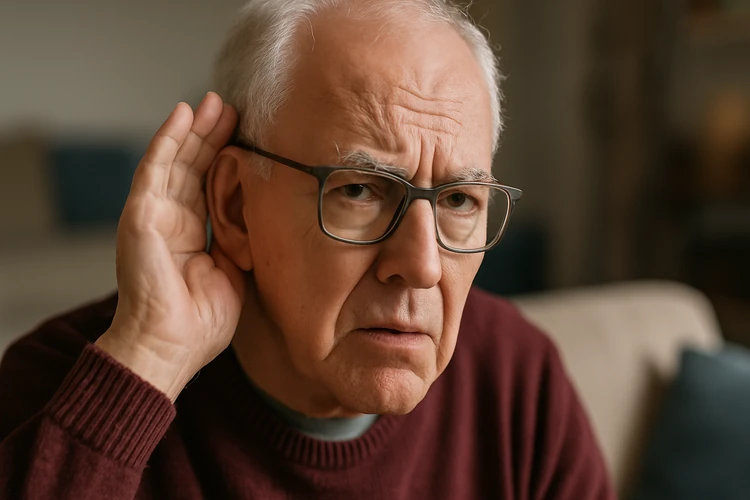
Other than operating a bulldozer for a living or sitting in the front row at every heavy metal concert ever staged, most people would never even think that...

2022
Article Image

FDA finalizes rule for over-the-counter sale of hearing aids

The U.S. Food and Drug Administration (FDA) has cleared the way for the over-the-counter sale of some hearing aids. The move is expected to lower the cost of hearing aids by opening the industry to more competition.

The FDA issued a final rule that establishes a new category of hearing aids, enabling consumers with mild to moderate hearing impairment to buy hearing aids directly from stores or online retailers without the need for a medical exam, prescription, or a fitting adjustment by an audiologist. 

Congress passed bipartisan legislation five years ago that required the FDA to create a category of OTC hearing aids, but it was not fully implemented until now. The agency said consumers could see hearing aids on store shelves in traditional retail and drug stores as soon as mid-October when the rule takes effect.

Consumers have long complained about the high cost of hearing aids and exams, largely because they are not covered by basic Medicare and are not usually included in health insurance coverage.

Pricey devices

The cost of the hearing aids themselves can range from $1,000 to $6,000 per ear, meaning some people who could benefit from them can’t afford them. Sometimes multiple appointments with an audiologist are required to achieve the correct calibration and fitting.

“Reducing health care costs in America has been a priority of mine since day one and this rule is expected to help us achieve quality, affordable health care access for millions of Americans in need,” said Health and Human Services Secretary Xavier Becerra.

“Today’s action by the FDA represents a significant milestone in making hearing aids more cost-effective and accessible.”

Who could benefit

The Hearing Loss Association of America (HLAA), while applauding the move, points out that OTC hearing aids will not be for everyone. The group says people who have difficulty hearing conversations in quiet environments will likely need the professional services of an audiologist.

It says examples of “mild to moderate” hearing loss would include not being able to fully understand conversations in groups, with background noise, or when you can’t see who is talking; hearing telephone conversations; or if you frequently ask people to repeat themselves.

People who are considering the purchase of OTC hearing aids should ask if there is a free trial period or a money-back return policy. If the devices require an app or smartphone, that should be determined before the purchase.

The HLAA says other questions to ask concern Bluetooth capability, volume controls, and how the device is recharged.

The U.S. Food and Drug Administration (FDA) has cleared the way for the over-the-counter sale of some hearing aids. The move is expected to lower the cost...

Article Image

FTC backs over-the-counter sale of hearing aids

In 2021, the U.S. Food and Drug Administration (FDA) issued a proposed rule that would make some hearing aids available for over-the-counter (OTC) purchase. After studying the proposal, the Federal Trade Commission (FTC) has endorsed the idea. The agency has submitted comments to the FDA in which it agrees that making hearing aids an OTC product would be good for consumers.

While millions suffer from hearing loss, the FTC comment notes that many people don’t have them because of their cost. In recent years, some companies have begun selling lower-cost hearing aids online. Consumers still need an audiologist's prescription, but prices tend to be significantly lower.

One company, Audicus, claims to be as much as 70% cheaper than many competitors’ hearing aids. It’s a popular brand with ConsumerAffairs reviewers, earning 4.4 out of 5 stars.

“I purchased a set of Audicus hearing aids, and I am impressed with the quality to cost ratio,”  John, of Farmington, N.M., wrote in a ConsumerAffairs review. 

John also said he was pleased with the support he received from the company. Bruce, of New York City, tells us that he is on his third generation of Audicus hearing aids.

“I investigated things for price, for size, for range of amelioration of hearing, and they seemed to fit well,” he wrote in a ConsumerAffairs review. “I went to another company before this and the hearing aid just did not measure up.”

Bruce said he bought the Audicus hearing aids after comparing them to a set that cost $7,500. The FTC said it believes making hearing aids OTC would lead to more lower-priced devices and bring down prices on some of the more expensive models.

Barriers other than costs

In the agency's comments, FTC staff members suggest that barriers to hearing aid access may include more than just prices for hearing aids themselves.

The agency points to what it calls “restricted channels of distribution” as a factor that can limit consumer choice. It says hearing aids are often marketed in expensive bundles of hearing aids and extended services that many consumers may not want or be likely to use. 

In 2021, the U.S. Food and Drug Administration (FDA) issued a proposed rule that would make some hearing aids available for over-the-counter (OTC) purchase...

2021
Article Image

FDA proposes selling hearings aids over the counter

The U.S. Food and Drug Administration (FDA) has taken steps to make hearing aids available to consumers without a prescription. The agency said the move is in line with President Biden’s executive order to promote competition in the U.S. economy.

“Reducing health care costs for everyone in America is a top priority,” said Health and Human Services (HHS) Secretary Xavier Becerra. “Today’s move by FDA takes us one step closer to the goal of making hearing aids more accessible and affordable for the tens of millions of people who experience mild to moderate hearing loss.”

To start the process, the FDA issued a notice of proposed rulemaking. During that process, stakeholders can make comments on the proposal. As it would be a major change affecting both manufacturers and medical providers, it’s likely to draw a large number of comments.

“Many hearing aids can be expensive,” the FDA said in a press release. “The rule aims to facilitate innovation and increase competition by lowering the barriers to entry for new hearing aid manufacturers.”

Under the FDA’s proposal, consumers would be able to purchase hearing aids in more traditional brick-and-mortar retail stores or online rather than doctors’ offices or specialty retail outlets. The FDA predicts prices would eventually fall, giving consumers both greater choice and lower prices. That would be a great relief to consumers like Phillip from Wheelersburg, Ohio, who pointed out just how expensive these products can be.

“These are the most expensive hearing aids I have ever priced,” Phillip wrote in a ConsumerAffairs review of Belltone. “After some discounts and a good sales pitch they came in at $7900.00 for a pair.”

Industry response

The American Academy of Audiology, which represents the medical practitioners who currently prescribe hearing aids, said the proposal has been in the works for some time. Both Republicans and Democrats supported a bill that became law in 2017 that directed the FDA to create a new category of hearing aids that could be sold over the counter.

“The Academy has established a subject matter expert (SME) workgroup to review the proposed rule and new guidance,” the group said in a statement. “The workgroup will prepare comments for board review, and the Academy will submit comments to the FDA on behalf of the organization.”

The FDA estimates that about 15% of adults in the U.S. have some difficulty hearing. But the agency says only about 20% of that group use a hearing aid. 

The agency said it believes the rule change would reduce the “barriers to use, including cost, access, social stigma related to hearing loss, perceived value of the devices or certain state and federal regulations.”

ConsumerAffairs has collected thousands of verified consumer reviews of the top hearing aid brands.

The U.S. Food and Drug Administration (FDA) has taken steps to make hearing aids available to consumers without a prescription. The agency said the move is...

Article Image

Hearing loss may be more common in women with osteoporosis, study finds

A new study conducted by Brigham and Women’s Hospital explored the link between women with osteoporosis or low bone density (LBD) and an increased risk of hearing loss. According to their findings, women with osteoporosis or LBD were 40% more likely to experience moderate or severe hearing loss. 

“Adult onset hearing loss is typically irreversible; therefore, the [Conservation of Hearing Study] focuses on identifying potentially modifiable risk factors that may contribute to hearing loss,” said researcher Dr. Sharon Curhan. 

“We were inspired by a recent study that found bisphosphonates may help prevent noise-induced hearing damage in mice. We wanted to investigate whether bisphosphonates alter risk of hearing loss in adults, in addition to whether there is a longitudinal association between osteoporosis or LBD and risk of subsequent hearing loss.”  

The link between bone health and hearing loss

To understand how bone health can impact hearing loss in women, the researchers analyzed data from nearly 144,000 participants enrolled in the Nurses’ Health Study I and II and the Conservation of Hearing Study (CHEARS). Participants completed questionnaires that measured their hearing function every two years, and the researchers also monitored their bone health over more than three decades. 

Ultimately, it was clear that osteoporosis and LBD increased the risk of hearing loss; the additional risk was as high as 40% for women with bone health issues, and that risk remained regardless of whether or not the participants took bisphosphonates to improve bone health. 

The researchers also learned that the risk of hearing loss differed depending on where in the body the bone issues were. The team found that vertebrae injuries were linked with an even higher risk of long-term hearing loss. 

“The different findings between these skeletal sites may reflect differences in the composition and metabolism of the bones in the spine and in the hip,” said Dr. Curhan. “These findings could provide new insight into the changes in the bone that surrounds the middle and inner ear that may contribute to hearing loss.” 

While it remains unclear why the link between bone health and hearing loss exists, the researchers plan to do more work in this area to better understand how consumers’ lifestyles can impact their health long-term. 

“Osteoporosis and low bone density may be important contributors to aging-related hearing loss,” said Dr. Curhan. “Building lifelong healthy diet and lifestyle habits could provide important benefits for protecting bone and hearing health in the future.” 

A new study conducted by Brigham and Women’s Hospital explored the link between women with osteoporosis or low bone density (LBD) and an increased risk of...

2020
Article Image

Findings in fruit flies could bolster hearing loss treatment for older consumers

Hearing loss affects countless consumers as they enter into older age, and previous studies have warned about how the condition can lead to premature death.

Now, researchers from University College London have found that a gene in fruit flies could be the key to treating hearing loss for older consumers. Because of how similar fruit flies’ auditory processing is to humans, these advances could greatly benefit consumers with hearing loss. 

“While many studies have been conducted into the hearing function of fruit flies, ours is the first to look at the mechanistic and molecular detail of their auditory life course,” said researcher Joerg Albert. 

“Our twin discoveries that fruit flies experience age-related hearing loss and that their prior auditory health is controlled by a particular set of genes, is a significant breakthrough. The fact that these genes are conserved in humans will also help to focus future clinical research in humans and thereby accelerate the discovery of novel pharmacological or gene-therapeutic strategies.” 

Treating hearing loss

Fruit flies were chosen for the study because of how similar they are biologically to humans. During this study, the researchers found that fruit flies experience hearing loss as they age much in the same way that humans do. 

In learning that, the next portion of the study involved the researchers retracing their steps. They sought to discover if there was any genetic indicator that could have prompted them to know that hearing loss was likely in the fruit flies. 

They discovered that the fruit flies had homeostasis genes, which are often responsible for picking up on sound and overall sensitivity in the ear. Knowing that, the researchers then got to work altering the gene expression, by making the genes either more or less prominent in the fruit flies, to determine if that affected their hearing loss. 

Ultimately, the researchers learned that manipulating the genes in this way was helpful in treating hearing loss for the fruit flies. Their findings from this study could help spur future treatment plans, and they could be the key to improving hearing loss treatment in the future. 

“Based on our findings from [the fruit flies], we have already started a follow-up drug discovery project designed to fast-track novel treatments for human [age-related hearing loss],” Albert explained.

Hearing loss affects countless consumers as they enter into older age, and previous studies have warned about how the condition can lead to premature death...