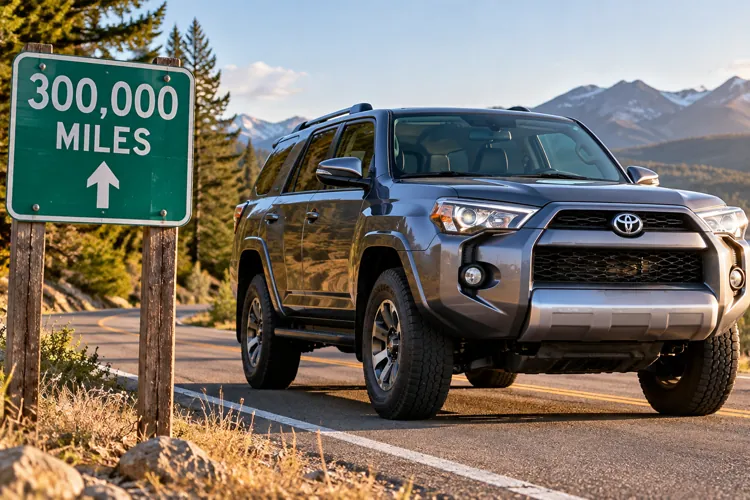

A recent Jalopnik analysis identified 11 vehicles with enough real-world evidence to make 300,000 miles a realistic possibility.
Toyota dominates the list, but Honda, Lexus and one old-school Mercedes also made the cut.
Don't replace a car just because the odometer looks scary. Compare repair costs with what a replacement vehicle would actually cost you.
Your car just rolled past 150,000 miles. Is that your cue to start shopping for a replacement, or could you only be halfway through its useful life?
For certain vehicles, 300,000 miles isn't as crazy as it sounds.
A recent analysis by Jalopnik looked for vehicles with documented examples reaching 300,000 miles and beyond, along with fleet experience and broader reliability evidence.
The result was a list of 11 vehicles that, with proper maintenance and some luck, have a legitimate shot at reaching 300,000 miles.
And Toyota owners are going to like the results.
The cars with a shot at 300,000 miles
Here's Jalopnik's list:
Honda Accord
Toyota Camry
Toyota Prius
Toyota Tacoma
Toyota 4Runner
Toyota Sequoia
Toyota Tundra
Toyota Land Cruiser
Honda Civic
Lexus LS400
Mercedes-Benz W123 300D
Toyota accounts for a whopping six of the 11 vehicles, and Lexus, which is Toyota's luxury brand, adds another.
But there's an important distinction here.
These aren't vehicles guaranteed to make it to 300,000 miles. They're vehicles with enough real-world evidence behind them that reaching that number isn't completely unrealistic.
300,000 miles doesn't mean 300,000 trouble-free miles
This is where the idea of a "300,000-mile car" can get misleading.
Jalopnik points to a 2003 Honda Accord that eventually surpassed one million miles on its original engine.
Sounds incredible, right?
It is. But along the way the owner also replaced the transmission, several clutches, three radiators, and a number of other components.
Toyota Prius taxis provide another interesting example.
A San Francisco hybrid repair shop cited by Jalopnik said the majority of Prius taxis it serviced had surpassed 200,000 miles, with many making it to around 325,000 before being retired.
But those cars weren't maintenance-free either. Repairs included hybrid batteries, transaxles, head gaskets, suspension components, and cooling-system work.
That's the real lesson: A car doesn't have to be repair-free to be worth keeping. It just has to be cheaper to keep than the alternative.
Don't let a $2,000 repair scare you into a $40,000 car
This is where consumers can make an expensive mistake.
Say your 160,000-mile car needs $2,000 worth of repairs. Spending that much on an old car can feel ridiculous.
But what's the alternative?
AAA's most recent annual driving-cost study found that the average cost to own and operate a new vehicle was $12,863 per year, or about $1,072 a month. Depreciation alone averaged $4,334 annually.
Suddenly, putting $2,000 into a paid-off car that could reliably run another couple of years doesn't sound quite so crazy.
Pro tip: Before replacing an older vehicle because of one big repair bill, ask your mechanic what else is likely to need replacing over the next 12 months. That's a much more useful number than looking at today's repair in isolation.
Do the 12-month test
If you're debating whether to keep an aging vehicle, forget the odometer for a moment.
Instead, add up what you've spent on repairs and maintenance during the past 12 months and what your mechanic expects during the next 12. Then compare that number with the real cost of replacing it. That includes a car payment or purchase price, higher insurance premiums, registration fees, taxes, and depreciation.
Reliability matters too. If your car is constantly leaving you stranded, causing you to miss work, or making long trips stressful, the cheapest decision on paper may not be the best decision for your life.
Rust can also change the equation quickly. An engine capable of reaching 300,000 miles doesn't do you much good if the frame or body surrounding it is deteriorating.
Mileage is just one number
Americans are already keeping their vehicles longer. The average age of cars and light trucks on U.S. roads reached a record 12.8 years in 2025, according to S&P Global Mobility.
So, if your car is approaching 150,000 or even 200,000 miles, don't automatically assume its useful life is over. Look at its maintenance history, condition, reliability, and upcoming repairs.
And most importantly, compare what keeping it will cost with what replacing it will cost. Because that scary-looking 150,000 on your odometer might not be telling you it's time for a new car.
It might just be telling you you're halfway to 300,000.