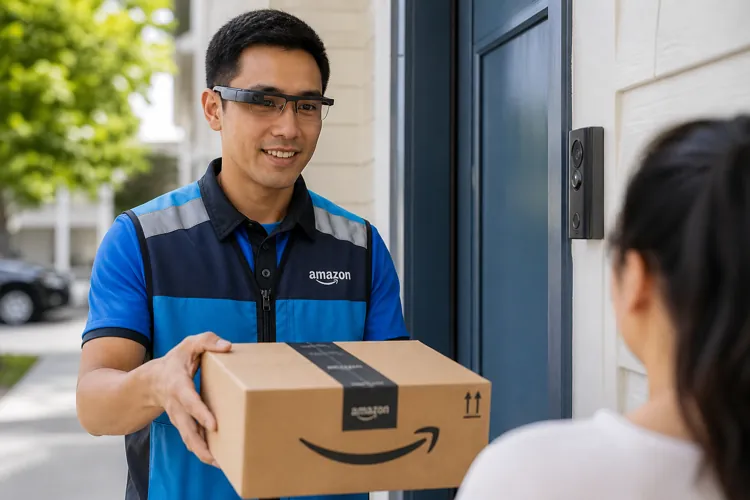

Amazon’s new smart glasses let delivery drivers access directions and delivery instructions without constantly checking their phones.
The glasses use AI-powered technology to help drivers locate packages, navigate to homes, and spot potential hazards.
Amazon says drivers have completed more than 275,000 deliveries using the glasses, with plans to expand the rollout through 2027.
Getting a package from a delivery van to a customer’s doorstep involves more than simply following a GPS. Drivers must find the right package, navigate unfamiliar neighborhoods and buildings, and stay aware of their surroundings.
Amazon is introducing smart glasses designed to help its delivery drivers handle those tasks more easily. The wearable technology displays directions and delivery information directly in a driver’s field of view, reducing the need to switch between a phone, a package, and the surrounding environment.
The company says the glasses are intended to make deliveries safer and more seamless. Wearing them is voluntary for both delivery service partners and their drivers.
How Amazon’s smart glasses work
The glasses combine artificial intelligence, computer vision, cameras, and sensing technology to provide drivers with information throughout the delivery process.
After a driver safely parks, the glasses automatically activate and display delivery details. They can help drivers identify the correct packages inside their vehicles, then provide walking directions to the intended address. Amazon’s geospatial technology is designed to guide drivers to specific delivery locations, including complicated environments such as apartment buildings.
The glasses also include features intended to help drivers avoid mistakes and stay aware of potential hazards. They can alert drivers if a package appears to have been left at the wrong doorstep. If delivery information suggests a pet may be present, the glasses display a paw-print symbol and play an audio alert.
Amazon says more than 500 drivers tested the glasses over 18 months, completing more than 275,000 deliveries. Their feedback helped shape features such as comfort and display clarity.
The system includes a controller worn in the delivery vest, a replaceable battery, an emergency button, prescription and light-adjusting lens options, and a physical privacy switch. Amazon plans to deploy another 5,000 devices this year and expand to more than 20,000 by the end of 2027.
“I felt safer the whole time because the glasses have the info right in my field of view,” explains Kaleb M., a delivery associate working for Maddox Logistics Corporation in Omaha, Nebraska, who tested the technology. “Instead of having to look down at a phone, you can keep your eyes forward and look past the display—you’re always focused on what’s ahead.”
What this could mean for consumers
For customers, the biggest potential benefit is a smoother delivery experience. If the glasses help drivers find the correct packages, navigate to the right doorstep, and avoid delivery errors, customers could see fewer misplaced packages.
The technology may also help drivers stay more aware of their surroundings while completing deliveries. However, Amazon has not provided data showing whether the glasses have reduced delivery mistakes, improved delivery times, or changed customer satisfaction.
For now, the glasses are one part of Amazon’s broader effort to improve its delivery process. Their impact on customers will become clearer as more drivers begin using them.