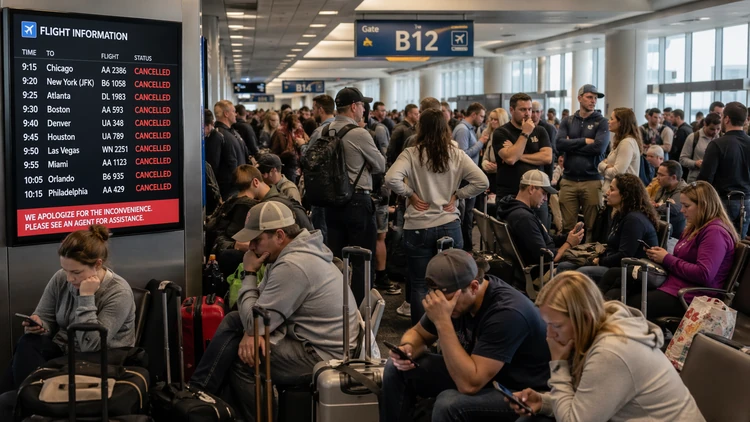

You’re entitled to a refund if your flight is canceled and you don’t take the airline’s rebooking.
Airlines usually don’t owe extra cash compensation for cancellations caused by fuel shortages or other factors outside their control.
Rebooking and basic assistance may be offered — but it’s not guaranteed by law in the U.S.
A surge in jet fuel prices and potential shortages – linked to global conflicts and supply disruptions – are already forcing airlines to cut routes and cancel flights in 2026.
For travelers, the big question is: what are your rights when the cancellation isn’t your fault, but isn’t really the airline’s fault either?
You have the right to a refund—no matter the reason
Under a U.S. Department of Transportation (DOT) rule finalized in 2024, airlines must provide automatic cash refunds when a flight is canceled or significantly changed, if you decline alternatives.
That applies even if the disruption is caused by:
Fuel shortages
Weather
Air traffic control issues
Geopolitical events
You don’t have to accept a voucher or rebooking — you can choose your money back instead.
Rebooking is standard — but not strictly required in all cases
Most airlines will try to put you on the next available flight at no extra charge. That’s industry practice — and often your fastest way to reach your destination.
But here’s the catch:
U.S. law does not guarantee rebooking on another airline
Policies vary by carrier
During widespread disruptions (like fuel shortages), options may be limited
Travelers are often advised to check airline apps quickly and consider alternatives before accepting changes.
Don’t expect automatic compensation for inconvenience
Unlike Europe, the U.S. does not require airlines to pay cash compensation for cancellations — even when the airline is responsible.
And in situations like jet fuel shortages — generally considered outside airline control — you typically won’t get:
Compensation for lost time
Reimbursement for missed hotel stays or tours
Automatic coverage of meals or lodging
Some airlines may offer:
Meal vouchers
Hotel stays (more likely if the airline caused the issue)
But for fuel-related disruptions, these extras are often optional, not guaranteed.
The complications
Jet fuel shortages are different from mechanical failures or staffing issues. Airlines can argue they’re “uncontrollable” events, similar to weather.
That matters because:
“Uncontrollable” = refund required, but little else mandated
“Controllable” (like maintenance issues) = airlines are more likely to provide assistance
With fuel costs doubling and airlines cutting schedules, cancellations may increase — without expanding your legal protections.
What consumers should do now
If your flight is canceled due to fuel issues:
Decide quickly: Refund vs. rebooking
Document everything: Receipts, delays, communications
Check alternatives: Other airlines, nearby airports
Consider travel insurance: It may cover expenses airlines won’t
Even as jet fuel shortages disrupt travel worldwide, U.S. passenger rights remain limited. You’re guaranteed your money back — but beyond that, much depends on airline policies, not federal law.
That makes planning — and backup options — more important than ever.