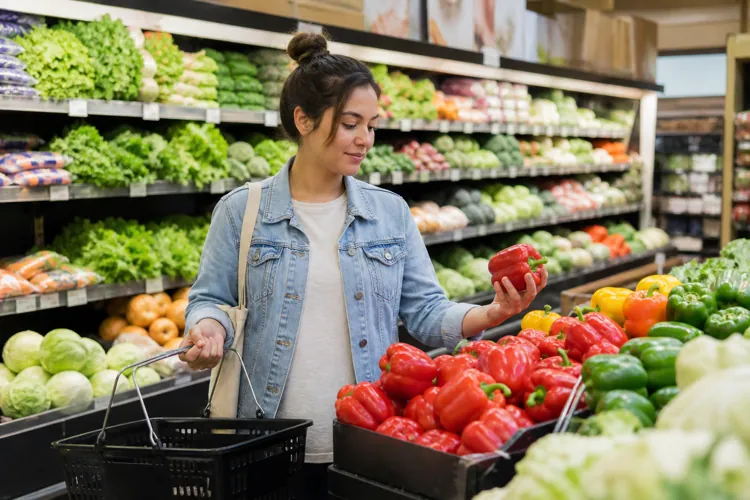

Four in 10 Americans say they're buying or eating less produce because of the Cyclospora outbreak.
Most people are following news about the outbreak, with those paying the closest attention most likely to change their eating habits.
Confidence in the FDA is mixed, though more Americans say they have confidence in the agency than not.
The ongoing Cyclospora outbreak isn't just making headlines — it's also changing the way many Americans shop for food.
According to a new CBS News/YouGov poll, 40% of U.S. adults say they are now buying or eating less produce because of concerns about the outbreak.
The poll suggests the outbreak has captured widespread public attention. Most Americans say they are following news about Cyclospora at least somewhat closely, making it one of the more closely watched public health stories at the moment.
Women were somewhat more likely than men to report cutting back on produce, while older adults were also more likely than younger people to say they've changed their eating habits.
The findings come as federal health officials continue investigating illnesses linked to Cyclospora, a parasite that can contaminate food or water and cause an intestinal illness known as cyclosporiasis.
How the poll was conducted
The findings are based on a nationally representative CBS News/YouGov survey of 2,193 U.S. adults conducted between July 22 and July 24, 2026.
Researchers weighted the results to reflect the U.S. adult population based on demographic factors, including gender, age, race, education, and 2024 presidential vote. The survey has a margin of error of plus or minus 2.7 percentage points.
Participants were asked about how closely they were following news about the Cyclospora outbreak, whether it had affected their produce purchases or consumption, and how much confidence they had in the Food and Drug Administration's (FDA’s) ability to respond to the situation.
What the results mean for consumers
One of the clearest patterns in the survey is that attention appears to influence behavior. People who said they were following the outbreak "very closely" were especially likely to report buying or eating less produce than those paying less attention to the news.
The poll also found mixed opinions about the FDA's handling of the outbreak. Overall, more Americans expressed confidence in the agency than a lack of confidence, but relatively few said they had "a lot" of confidence.
While the survey highlights shifting consumer behavior and attitudes, it doesn't examine whether reducing produce consumption lowers the risk of illness. Instead, it offers a snapshot of how a high-profile food safety investigation is influencing Americans' perceptions, shopping decisions, and confidence in the nation's food safety system.