2022 Consumer Product Lawsuits and Safety Alerts

Article Image

These five companies are paying $16.8 million to settle class-action lawsuits

The claims windows are now open on a handful of class-action lawsuit settlements that could result in cash payments to affected consumers. According to Top Class Actions, these five companies will pay out nearly $17 million to consumers.

In one settlement that is now accepting claims, American Airlines will pay a total of $7.5 million to settle a suit claiming that it overcharged for baggage fees for some passengers. Consumers may be eligible if they were charged to: 

  • Check a bag on or after Feb. 24, 2017

  • Received a ticket issued before April 9, 2020

  • Received an email from the airline saying they could check a bag for free

  • Had a credit card account with American Citi or Barclays that entitled them to check a bag for free

Though people can submit a claim form now, they have until Feb. 22, 2023 to do so here. Affected consumers will get a full refund.

Uber

Ride-sharing company Uber will pay $2.2 million to put to rest a lawsuit claiming it discriminated against disabled passengers with unfair wait-time fees. The money will be paid to the U.S. Justice Department but it will be used to compensate affected customers.

Eligible consumers are those who opted in to Uber’s wait-time fee waiver program for riders who have disabilities on or before May 12, 2022. Many disabled riders complained they were charged the fee anyway.

Eligible consumers have until  April 24, 2023, to file a claim. You’ll find the form here.

Proctor & Gamble

Consumer products giant Procter & Gamble has agreed to pay $8 million to resolve claims that it sold aerosolized products containing benzene, which is classified as a carcinogen. The funds will compensate consumers who bought a number of different aerosol products containing the cancer-causing chemical.

The brands of the products include Old Spice, Secret, Pantene, Herbal Essences, Hair Food and Aussie between Nov. 4, 2015, and Dec. 31, 2021. 

Affected consumers have until Jan. 26, 2023, to file a claim form, which can be found here.

All-Clad

All-Clad, a company that makes a wide range of cookware and kitchen utensils, is writing a check for $4 million, settling a class-action suit that claimed cookware marketed as “dishwasher-safe” was anything but.

Plaintiffs contend that the company’s “dishwasher-safe” pots and pans were damaged after being run through the dishwasher. Specifically, the complaint said machine-washing caused the non-stick surface of the pan to peel away from the base, creating sharp edges.

Consumers who purchased All-Clad D3, D5 or LTD cookware may be eligible for a claim. In some instances, proof of purchase may be required. Claims must be submitted by March 27, 2023. The claim form is here.

ConAgra

If you purchased a “natural” Wesson Oil product between January 2006 and July 2017, you may be eligible for a cash payment from ConAgra’s $3 million settlement. The company has agreed to settle a lawsuit that said the company incorrectly labeled the products as “natural.”

The products in question are Wesson Vegetable Oil, Wesson Canola Oil, Wesson Corn Oil and Wesson Best Blend. The plaintiffs claimed the company marketed them as natural when they weren’t.

The deadline for filing a claim, found here, is May 22, 2023.
Article Image

There’s a pile of money waiting for consumers as part of class action settlements regarding baby formula and margaritas

There's not a week that goes by that a major brand or manufacturer settles a class action lawsuit. Many of those claim that consumers were done wrong in one way or another.

As these lawsuits go, the settlements can run into multi-millions of dollars, a portion of which the wronged parties might receive. Here's ConsumerAffairs' latest round-up of what's recently become available.

Purchased baby formula recently?

This year hasn’t been so good for Abbott Laboratories. In June, the company found itself being investigated by the U.S. Food and Drug Administration (FDA) after an infant who was given formula made by Abbott Laboratories, died. 

Then, the company’s production of baby formula caught grief from the FDA for an infant formula shortage, which then led to allegations by a whistleblower who claimed problems at one of Abbott’s baby formula plants were known a year before shutdown.

And, while all of that was going on, the company was fighting a class action lawsuit that alleged that the label on certain infant formula products manufactured by Abbott led consumers to believe that those products were capable of making a specified number of liquid 4-ounce bottles of formula, when in fact it couldn’t.

To avoid the rigors of fighting the lawsuit and to get back to business, Abbott Laboratories has settled this case. All totaled, there’s $19.5 million available to consumers who live in the United States and purchased certain Abbott Laboratories formula products between June 24, 2016, and September 22, 2022.

Full details of the settlement including how to file a claim are available here. Claim Forms must be submitted online or postmarked by January 31, 2023.

Do you drink margaritas?

If you purchased one of Anheuser-Busch’s (AB) “Ritas” drinks expecting that there was some type of alcohol content like tequila or wine, listen up. 

AB was on the wrong end of a class action lawsuit claiming false advertising laws for representations that those Ritas brand products contained wine or distilled spirits when they didn’t. Rather than fight the lawsuit in court, AB denies all allegations and has settled this lawsuit to avoid further litigation. 

If you purchased any of these products between January 1, 2018, and July 19, 2022, you may be a “Settlement Class Member.” Depending on whether claimants have proof of purchase or not, they can receive up to $21.25 per household. Claims can be filed here.

Suboxone

Consumers who were prescribed the opioid withdrawal medication Suboxone could take part in what’s left of a $59 million Federal Trade Commission (FTC) settlement as a result of false advertising and antitrust violations. According to the FTC and TopClassActions, the manufacturers hatched a plot to maximize Suboxone profits at the expense of consumers. 

How so? It seems that the companies were a little too aggressive in trying to convince more patients to take their branded medication, so they allegedly deceived both patients and doctors with claims that the sublingual film version of Suboxone was safer than its tablet version kin.

Much of the original distribution is gone, but there’s still $500,000 that the FTC wants to distribute. If you were prescribed Suboxone oral film between March 1, 2013, and Feb. 28, 2019 and haven’t filed for part of the original settlement, you can apparently apply for this one. The necessary forms are here, but time is of the essence – you must submit your claim by November 26, 2022.

Snap Finance

If anyone needs proof that a company can hound consumers with phone calls and violate the Telephone Consumer Protection Act (TCPA), just ask Snap Finance, a Utah-based financial services company. Snap was accused of violating the TCPA when it placed at least 60 calls in a three-month period. 

The company’s bread and butter it seems are consumers who are credit challenged and looking for a quick financing deal to help them make a purchase. “Good credit? Poor credit? No credit? Snap Finance has got you covered with lease-to-own financing made simple,” the company claims on its website.

The settlement class includes anyone living in the United States “(1) to whom Snap Finance LLC placed, or caused to be placed, a call, (2) directed to a number assigned to a cellular telephone service, but not assigned to a current or former Snap Finance LLC accountholder, (3) in connection with which Snap Finance LLC used an artificial or prerecorded voice, between Sept. 1, 2019, and June 14, 2022.

Anyone who feels they were besieged by calls from Snap could be considered a class member and receive an estimated payment of $300 to $1,000. TopClassActions reports that the actual amount will depend on the number of claims the settlement administrator receives. To file a claim, go here.

The deadline to file a claim is Dec 12, 2022.

Article Image

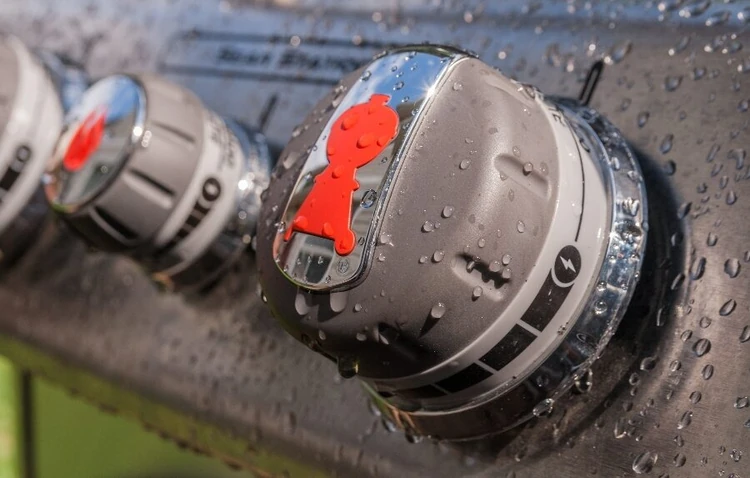
Weber settles with FTC in latest right to repair lawsuit

The Federal Trade Commission (FTC), which has become more active in recent months when it comes to cracking down on companies that deny consumers’ right to repair their products, has reached a settlement with Weber-Stephen Products, the maker of popular Weber barbecue grills.

The settlement was reached in near-record time. The agency filed its lawsuit on Wednesday, and the settlement was reached hours later.

In its suit, the FTC charged that Weber’s limited warranty illegally restricted customers’ right to repair their purchased products by including terms that voided the warranty if customers used or installed third-party parts on their grill products. 

In settling the case, Weber said it would remove those disputed terms, recognize the right to repair, and inform customers about their ability to use third-party parts.

“This is the FTC’s third right-to-repair lawsuit in as many weeks,” said Samuel Levine, Director of the FTC’s Bureau of Consumer Protection. “Companies that use their warranties to illegally restrict consumers’ right to repair should fix them now.”

Last month the FTC sued Harley-Davidson and Westinghouse over the same issue. The FTC’s complaints charged that the companies’ warranties included terms that voided the agreements if customers used independent dealers for parts or repairs. 

The FTC ordered Harley-Davidson and Westinghouse to revise their warranties by removing illegal terms and ensuring that dealers compete fairly with independent third parties.

FTC takes cue from White House

The White House directed the FTC to strictly enforce right to repair rules last year. Officials said consumers who have purchased a product have the right to repair it themselves or use a third-party vendor if they choose to.

“It’s great news for everyone concerned with repair monopolies,” U.S. PIRG Right to Repair Senior Campaign Director Nathan Proctor told ConsumerAffairs at the time. 

In its latest action, the FTC stressed that product warranties should be designed to protect consumers, not the manufacturer. It faulted Weber’s warranty by saying it “improperly implied that as a condition of maintaining warranty coverage, consumers had to use the company’s parts.”

The FTC said that policy increases consumer costs by forcing them to use more expensive repair services. The agency said it also puts independent repair firms at a competitive disadvantage.

Article Image

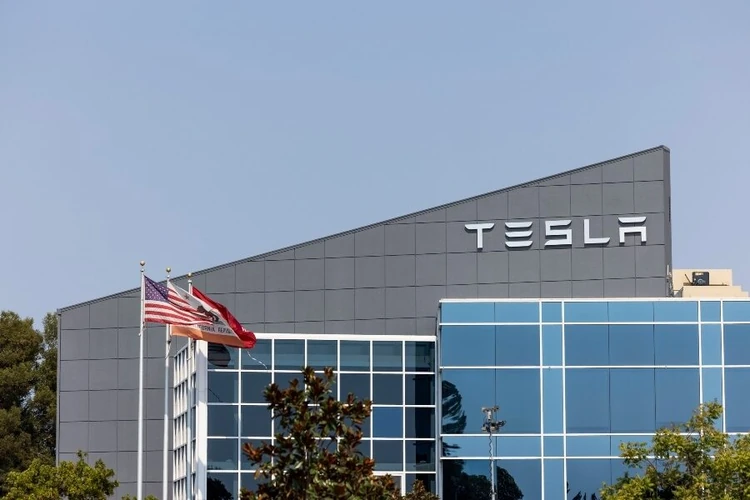
Terminated Tesla employees file lawsuit against the U.S. automaker

Former Tesla employees have filed a lawsuit against the automaker over claims that the company's decision to execute a "mass layoff" disregarded a federal law that requires companies to provide sufficient, advance written notice to affected employees.

John Lynch and Daxton Hartsfield are the lead plaintiffs in the suit, but they both filed individually and “on behalf of all others similarly situated.” They said they were terminated from Tesla's Gigafactory plant in Sparks, Nevada, earlier this month. According to the lawsuit, Tesla terminated more than 500 employees alone at that Gigafactory plant in Sparks.

Where Tesla crossed the line

Lynch and Hartsfield claim that if Tesla had abided by the Worker Adjustment and Retraining Notification Act (WARN), they should have had at least 60 days advance notice. 

Instead, the suits claim that Tesla "simply notified the employees that their terminations would be effective immediately." They also claim that the company "failed to provide a statement of the basis for reducing the notification period to zero days advance notice.”

WARN isn’t likely something someone thinks about when they lose their job, but it's designed to give workers and their families sufficient time to adjust to the possible loss of employment, to seek and obtain other jobs, and, if necessary, to enter skill training or retraining that will allow these workers to compete successfully in the job market.

The law requires employers who have 100 or more employees (not counting those who have worked less than six months in the last 12 months and those who work less than 20 hours a week) to provide at least two months of advance written notice of a plant closing and mass layoff that impacts 50 or more employees at a single site. 

There’s a slight silver lining in WARN for employers, however, and it's something that Tesla might try to use to sway the court. The law allows for exceptions to be made when layoffs occur due to unforeseeable business circumstances or the company “faltering.” 

ConsumerAffairs contacted Tesla, but the company did not immediately respond to our request for comment.