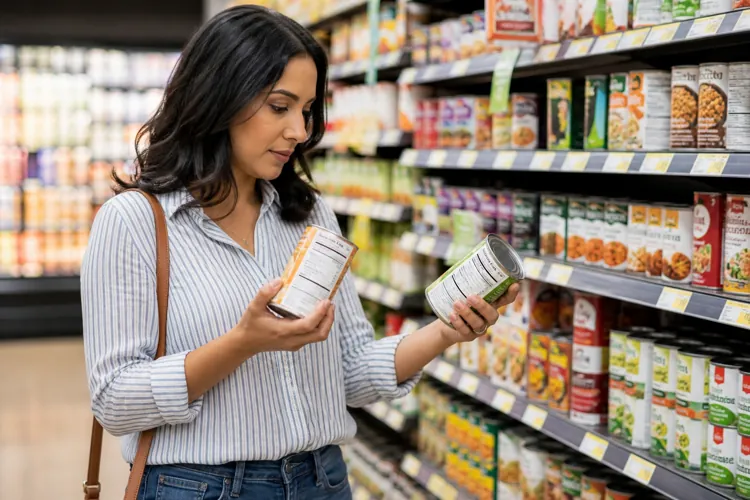

California has created a new “non-ultra-processed certified” label for qualifying food products.
The state will oversee the certification process and maintain a public list of certified products.
Large grocery stores that meet certain requirements will have to make certified products easier to spot.
Figuring out how processed a food is can be surprisingly difficult. Even when shoppers carefully read an ingredient list, it may not always be obvious how a product was made or why certain ingredients were added.
That’s the issue California’s new law is designed to address. Gov. Gavin Newsom has signed Assembly Bill 2244, creating a standardized “non-ultra-processed certified” label for foods that meet the state’s requirements.
The law is intended to give shoppers a simpler way to identify products that are not classified as ultra-processed under California law. The Environmental Working Group (EWG), which co-sponsored the legislation, says the label could make it easier for consumers to compare products while grocery shopping.
“Like the USDA Organic label, this new seal will provide consumers with clear, trustworthy information and make it easier for them to locate healthier foods that are free from harmful additives,” Assemblymember Jesse Gabriel (D-Encino) said in a news release. “Parents shouldn't need a Ph.D. in chemistry to understand what they’re feeding their kids.
“California began this movement three years ago by banning the most dangerous food additives, and with Governor Newsom’s continued leadership we are taking another big step forward today.”
How the new food label will work
Under the law, foods classified as ultra-processed under California’s standards won’t be allowed to carry the new certification. Products also won’t qualify if they contain certain substances or additives used to manipulate a food’s taste or quality, including dyes, flavor enhancers, non-sugar sweeteners, and processing aids.
The California Department of Public Health will oversee the certification program. Third-party certifiers will evaluate products, and those certifiers will have to be approved by the state. Products will need to be recertified at least every three years.
The law also includes several transparency measures. Certification agents must register with the state, California can audit certification records, and the state will maintain a public online list of certified products. Misusing the label will also be illegal and subject to enforcement.
What this means for shoppers
The new label won't appear overnight. California must first establish the certification system, with the state directed to accredit third-party certifiers by June 1, 2029.
Once the program is operating, some large grocery stores will also have to make certified products easier to find. The requirement applies to stores that sell more than 25 individual non-ultra-processed-certified product types and generate more than $10 million in annual sales.
For consumers, the biggest change will be having another piece of information to consider while shopping. Rather than trying to determine whether a product meets California’s definition of ultra-processed by studying the ingredient list alone, shoppers will eventually be able to look for the state-backed certification.
Until then, consumers can continue checking ingredient lists and use resources such as EWG’s Food Scores database, which identifies less-processed products and flags ultra-processed foods and drinks.