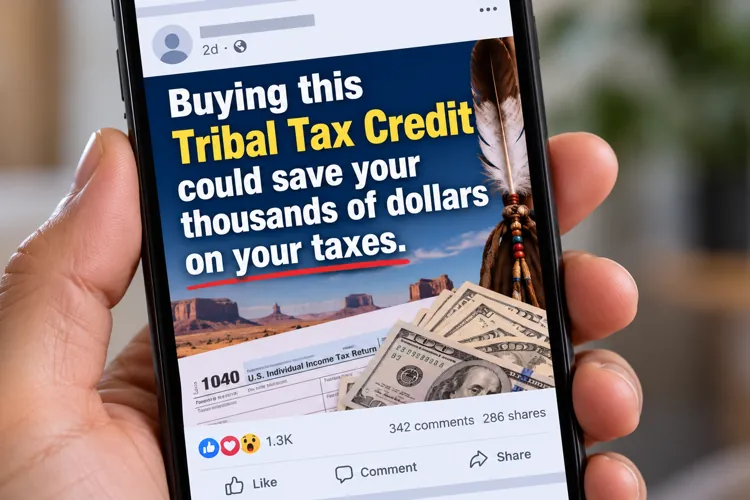

The IRS is warning taxpayers about promoters selling nonexistent “Tribal Tax Credits” that supposedly reduce federal taxes or produce large refunds.
Promoters may claim the credits are backed by tribal governments or federal agreements, but the IRS says no such federal tax credits exist.
Taxpayers who put the bogus credits on their returns can be liable for unpaid taxes, interest, penalties, and in serious cases, could face criminal prosecution.
The Internal Revenue Service (IRS) is warning consumers about a tax scheme that uses the names of Native American tribes and legitimate federal programs to make nonexistent tax credits appear real.
In a taxpayer alert, the IRS said promoters are marketing what they call “Tribal Tax Credits,” “Native American Tax Credits,” or “Sovereign Tribal Tax Credits.” Despite the official-sounding names, the agency says there is no federal tax credit fitting those descriptions.
The promoters typically encourage taxpayers to buy the purported credits from an organization they claim is connected with a tribal community. The credits are then promoted as a way to reduce an existing federal tax bill or generate a refund.
In some cases, promoters promise taxpayers a substantial return on their investment and use high-pressure sales tactics to persuade them to act quickly, the IRS said.
The danger for consumers is that even if a promoter prepares the paperwork, taxpayers remain responsible for what's on their tax returns.
The IRS said a return claiming a nonexistent Tribal Tax Credit contains a false claim even if the agency initially processes the return and issues a refund. Participating in an abusive tax scheme can result in taxpayers having to repay taxes, along with interest and penalties. More serious cases can potentially result in fines or imprisonment.
Making a fake credit look legitimate
The schemes can be convincing because promoters may mix legitimate provisions of tax law with false claims.
For example, some promoters reportedly claim there is an agreement involving the Treasury Department, Department of the Interior, or tribal governments that allows tribal trust fund payments to be converted into federal tax credits. The IRS says no such agreement exists.
Others point to legitimate transferable tax credits. Federal law does allow certain clean-energy tax credits to be transferred between taxpayers, but the IRS says those provisions don't create a Tribal Tax Credit.
Promoters may also invoke the New Markets Tax Credit, executive orders, or the sovereign status of tribal entities. The IRS says none of those provisions create the tax credit being marketed.
Another sales pitch is that other taxpayers have successfully claimed the credit and had their returns accepted by the IRS. But the agency warns that simply accepting and processing a return doesn't mean the IRS has determined that every credit claimed on it is legitimate.
Red flags to watch for
The IRS says consumers should be especially skeptical when someone offers to sell a tax credit for substantially less than its supposed face value.
Other warning signs include claims that only a limited number of credits are available, pressure to act immediately, references to secret or unavailable government agreements, and legal opinions that can't be independently verified with the attorney or law firm supposedly providing them.
A request to sign a nondisclosure agreement before receiving basic information about the tax credit is another warning sign. Promoters may also charge fees for arranging the supposed purchase or preparing documentation to support the claim.
The warning fits a broader pattern of tax scams in which promoters and social media posts promise unusually large refunds based on credits or deductions for which taxpayers aren't eligible. The IRS advises consumers to be suspicious of unsolicited messages promising refunds or tax breaks and of anyone pressuring them for personal or financial information.