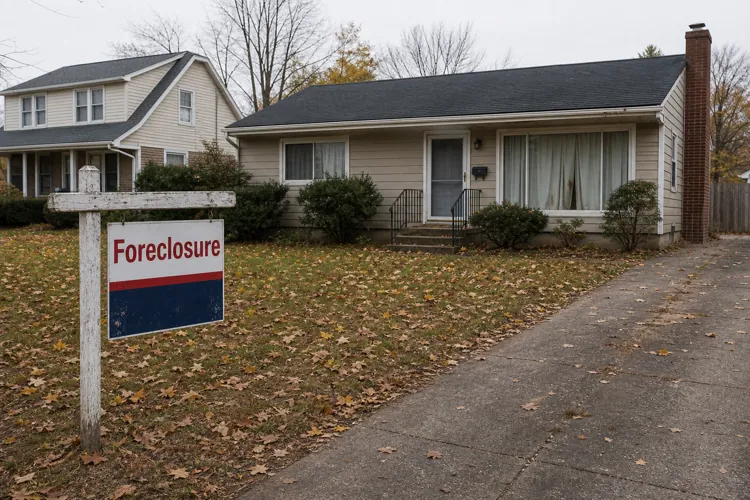

Foreclosed homes are selling at steep discounts, with the typical property fetching 27.2% less than its estimated market value, according to Realtor.com.
The savings can come with added risks, including costly repairs, title issues, and lengthy buying processes that require careful due diligence.
Foreclosure listings have climbed to their highest level in six years, giving bargain hunters more options but also more competition.
During the financial crisis and resulting housing market crash, many people were able to buy foreclosed homes at rock-bottom prices. That opportunity may be reappearing, though not nearly to the same scale as the 2009-2010 period.
A new Realtor.com report shows that the median foreclosed home sold for 27.2% below its estimated market value, making these properties among the biggest discounts available in today's housing market. At the same time, foreclosure listings have risen to their highest level in six years, accounting for 1.3% of all homes for sale in April 2026.
Despite the increase, housing economists stress that the market is not showing signs of a foreclosure crisis.
"Foreclosures are normalizing, not accelerating into a crisis," said Joel Berner, senior economist at Realtor.com.
The unusually low foreclosure rates seen during the pandemic were driven by foreclosure moratoriums, mortgage forbearance programs, and rapidly rising home values that gave many homeowners enough equity to avoid losing their homes. As those temporary factors have faded, foreclosure activity has gradually returned to more typical levels.
Bargains attract plenty of attention
The discounts have not gone unnoticed.
According to the report, foreclosure listings received 26.5% more online views than the average home listing during the first half of 2026, even though they remained on the market about 11 days longer than conventional listings.
The longer selling time reflects the unique challenges associated with distressed properties, which often require additional inspections, financing approvals, or legal steps before a sale can close.
What buyers should look out for
While a foreclosure may appear to be a bargain, experts caution that buyers should carefully evaluate the true cost of the purchase.
Among the most important considerations:
Property condition: Many foreclosed homes have been vacant for months or even years. Deferred maintenance, vandalism, water damage, and outdated systems can result in expensive repairs.
Inspection limitations: Some lenders sell foreclosed properties "as is," and buyers may have limited opportunities to negotiate repairs.
Title issues: Unpaid taxes, liens, or legal claims can sometimes complicate ownership, making a thorough title search and title insurance essential.
Financing challenges: Homes needing substantial repairs may not qualify for conventional mortgages, requiring renovation loans or cash purchases.
Competition: Because the discounts are attractive, desirable foreclosures can still generate multiple offers.
Real estate professionals generally recommend buyers build repair costs into their budget, hire experienced inspectors whenever possible, and work with an agent familiar with foreclosure transactions.
More opportunities in some markets
The report found that foreclosure activity varies significantly across the country, with some metropolitan areas seeing much larger shares of distressed listings than others. Buyers willing to search in markets with higher foreclosure rates may find more opportunities, although local economic conditions and neighborhood trends remain important factors when evaluating any purchase.
For buyers willing to do their homework, a foreclosure can provide an opportunity to purchase a home below market value. But the lowest purchase price does not always translate into the lowest overall cost, making careful research and due diligence essential before signing a contract.