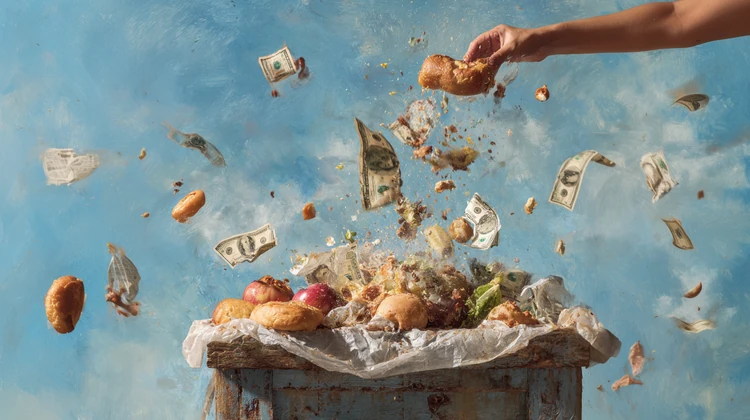

Americans waste about $728 a year on food, often throwing away everyday items like bread, milk, and produce.
Most people misunderstand date labels — “best by” usually refers to quality, not safety, leading to unnecessary waste.
Simple habits like meal planning, checking your fridge, and freezing food can quickly cut waste and save hundreds.
With Stop Food Waste Day right around the corner on April 29th, it’s a good time to take a closer look at one of the most overlooked ways Americans are losing money.
It’s not subscriptions. It’s not those impulse buys. It’s food they’re throwing away.
According to data from the U.S. Environmental Protection Agency (EPA), the average American wastes about $728 worth of edible food every year. For a typical household, that number can easily climb into the thousands.
And much of it comes down to a simple misunderstanding.
The biggest mistake shoppers are making
Most people believe food date labels tell them when something is no longer safe to eat.
But it turns out labels like “best by” or “best if used by” are more about quality and freshness, not safety. The only major exception is infant formula.
Still, a recent survey found that 73% of Americans think these dates mean food should be thrown out, and that number jumps to 88% among Gen Z.
This translates into perfectly good food getting tossed in huge numbers.
Where the money is going
The average household wastes hundreds to thousands of dollars annually.
Large states like California may be throwing away tens of billions of dollars in food each year. Even smaller cities lose millions in edible food.
And it’s not just obscure items getting tossed. The most commonly wasted foods are everyday staples like:
- Bread
- Lettuce
- Milk
- Chicken
Why it’s getting worse
Younger shoppers, in particular, are throwing away the most food, with some estimates showing they discard up to 30% of what they buy.
The reason is a mix of these:
- Confusion over food labels
- Overbuying (especially in bulk)
- Poor meal planning
- Busy schedules leading to unused leftovers
In other words, people are buying more than they can realistically use.
How to actually save money (starting this week)
In addition to conducting the survey, NetCredit gave some smart tips that can easily save a family hundreds of dollars per year.
- Stop trusting the date—use your senses. Before tossing food, take a few seconds to check it out. Look at the texture and appearance, then give it a good smell. Most foods don’t suddenly become unsafe the day after a “best by” date. Many popular foods like eggs, yogurt, and cheese are safe well beyond the printed date.
- Plan meals before you shop. Try to plan three to four meals for the week and choose ingredients that overlap to cut down on food waste. Also, try to be realistic about your schedule. If you know you won’t cook on certain days, don’t buy fresh items that depend on it.
- Check your fridge before buying anything. Before heading to the store, take inventory of what you already have and build meals around it. Create a “use first” section in your fridge for items that need to be eaten soon so they don’t get forgotten.
- Be careful with bulk buying. Bulk only saves money if you actually use everything. It works best for non-perishables or items you use consistently. If you’re unsure that you’ll finish it before it goes bad, it’s probably not a deal.
- Use leftovers strategically. Leftovers don’t have to mean eating the same meal twice. Repurposing them into something new is very smart and reduces waste. For example, try turning roasted chicken into tacos or soup. Think about your second meal before you even cook the first.
- Freeze more than you think. Freezing can extend the life of many foods, including bread, meat, and pre-cooked meals.