

Compare cross-country moving options: DIY vs. professional vs. hybrid
You have a few options to consider when moving cross-country. You can go the DIY route, hire professional movers, or do a combination by using portable containers or hiring labor to help with loading and unloading.
Each option comes with varying costs. Here’s a breakdown, according to Derek Mills, co-founder of Texas-based moving company Square Cow:
- DIY: Between $1,500 and $4,000 to rent a truck and pay for fuel and lodging along the way.
- Professional full-service movers: About $5,000 to $10,000 to move a typical two- or three-bedroom home.
- Combination: Between $1,400 and $4,000 to book a portable container like a PODS container, or hire laborers to load and unload a rental truck.
While the DIY route is typically the least expensive option, it comes with its fair share of risks, namely damage.
DIY moving can be cheaper than hiring movers, but you risk damaging your stuff.
“DIY saves money, but we have around 1/4 of people we speak to report damages over $500,” said Mills. “You're also driving five to 10 days straight and handling all the physical labor.”
While hiring professional movers is more expensive, this option comes with “lower damage rates,” according to Mills.
Smaller households or apartments, and those on a tighter budget, will likely benefit from taking the DIY route. But hiring pros may be best for bigger households. “Families with kids, anyone with mobility issues, or large households benefit from paying professionals,” Mills said. “The stress reduction and injury prevention matter more when you have a lot to move.”
Plan and budget your move
Successful cross-country moves require a bit of planning and budgeting. Here’s what you should plan for, according to Nick Friedman, co-founder of College HUNKS Hauling Junk & Moving.
- Get three written estimates from different moving companies.
- Schedule a virtual walkthrough.
- Build a detailed inventory of your belongings.
- Lock in your move-in date early.
- Know access details (stairs, elevators, parking restrictions), and whether you need packing, storage, or specialty handling.
“Fuel, lodging and storage fees add up on long moves, so budget 10-15% for unexpected costs,” Friedman suggested.
Booking movers both mid-month and mid-week is an effective way to save a few dollars on moving costs. “Demand drops and so do prices,” said Mills.
Other ways to save money on your cross-country move include:
- Grab free boxes at the grocery store or liquor store
- Declutter your belongings; donate or sell anything you don’t really need
- Take advantage of deals and discounts for moving services
Timeline for your cross-country move
Moving cross-country takes time. Friedman recommends that you give yourself at least six to eight weeks to start decluttering your home and getting quotes from moving companies.
Book your movers at the four to six-week mark. “If you’re moving at the end of the month, on a weekend, or during May through September, add another one to two weeks,” Friedman said.
With two weeks to go, finalize your utility transfers, set up mail forwarding and change of address through the United States Postal Service, and continue packing. This is a good time to pack a first-night box with all of the essentials you’ll need for your first night in your new home right in one spot.
The week of the move:
- Start taking furniture apart (if it can be disassembled, such as modular couches)
- Set aside valuables and important documents that will travel with you and not on the moving truck
- Take your final utility readings, or make sure this is scheduled
- Take a walkthrough of your home to make sure you haven’t forgotten anything
Packing tips for moving cross country
Protecting your belongings from damage during a long-distance move comes down to a proper packing technique.
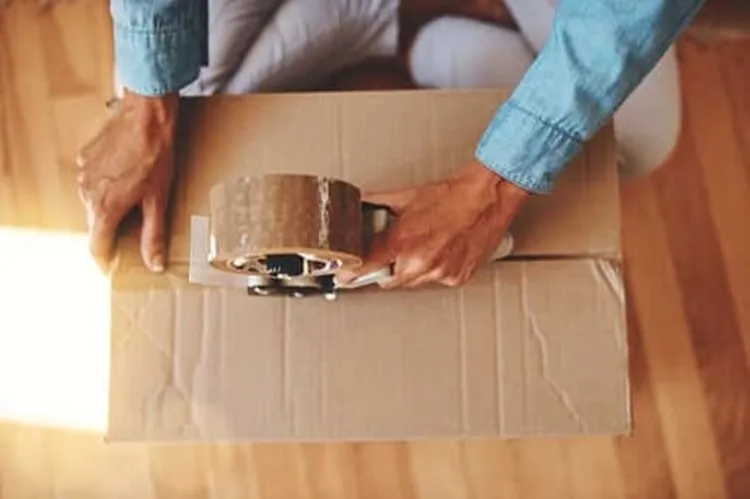
Make your boxes stronger by taping them with an “H” pattern along the seams, suggested Riggs Powell, owner of UNITS Moving and Portable Storage of Utah. The H-tape pattern helps to further reinforce the box. Here’s how to do it properly:
- Unfold the box and stand it up for building.
- Tape the bottom flap of the box, pressing down the packing tape securely.
- Place two pieces of tape across both side flaps, creating a large letter H seal.
After your boxes are properly assembled, keep these packing tips in mind, per Powell:
- Heavy items should go in smaller boxes, while lighter items can go in larger boxes.
- Pack plates vertically with padding between each plate.
- Use individual sleeves or bubble wrap for drinking glasses.
- Fill the boxes as much as you can, even if it’s with packing materials such as paper or bubble wrap, so that nothing can shift inside the box.
Label each box with the room it belongs to, and add details about the contents of the box so you’ll be more organized when unpacking in your new home.
Packing fragile and high-value items
Fragile and high-value items may require specialized packing to keep them safe.
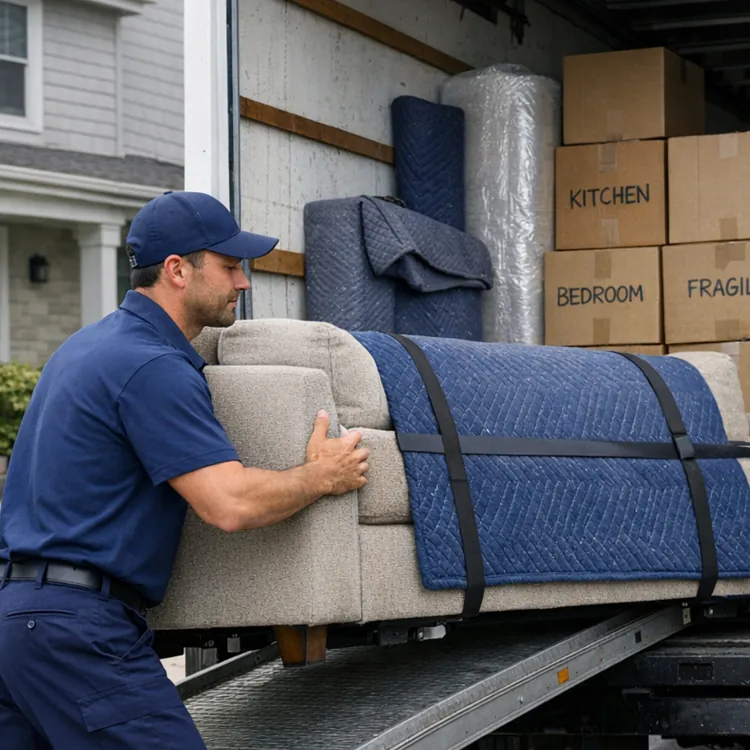
Packing items such as TVs in their original boxes is the ideal way to go, but if you don’t have the box it came in, pack the TV in a dedicated TV box with foam inserts. Artwork, mirrors, and framed items can be packed into mirror boxes or custom cardboard boxes with sleeves.
“For antiques or heirlooms, consider custom crating or at least wrapping with moving blankets plus shrink wrap,” said Friedman, of College HUNKS Hauling Junk & Moving. “These items usually break from pressure or vibration during transit.”
Lastly, be sure to mark boxes as fragile so the movers know to pack them accordingly in the moving truck.
Keep jewelry and small valuables alongside important documents, passports, and medication in the car with you, not the moving truck, Friedman advised.
Moving with kids or pets
If you’re moving with kids or pets, make sure to plan stops every few hours. “Plan pet-friendly hotels and pack a small kit with food, meds, bowls, and a familiar blanket,” said Powell. “For kids, give them a first-day box with bedding, snacks, a lamp, and a comfort item.”
» LEARN MORE: 8 cheap ways to move across the country
Handle legal, administrative and logistics tasks for a cross-country move
Packing your belongings and deciding how you’ll move is just part of the cross-country moving process. You’ll also have a few logistical tasks, such as filing for a change of address and setting up utilities.
Two weeks or so before your move, set up your change of address with USPS so that your mail is forwarded correctly.
Most states require you to update your license and vehicle registration within 30 to 60 days of your move.”
Don’t forget to look at your insurance policies, too. “Update insurance policies, transfer medical and school records, and review coverage levels for interstate moving valuation,” said Friedman.
Schedule your utility shut-off at your former home (such as electricity, oil/gas, water and internet) and start-up for your new home. It’s a good idea to start these services at your new home the day before you’re scheduled to move in, so you have them on moving day.
Lastly, you’ll need to update your driver’s license and vehicle registrations. “Most states require you to update your license and vehicle registration within 30 to 60 days of your move,” Friedman said.
Don’t forget to transfer your prescriptions, update your voter registration and cancel local services or subscriptions.
» LEARN MORE: Best long-distance moving companies
FAQ
How can I make my cross-country move eco-friendly?
Make your move more eco-friendly by using recyclable or reusable packing materials (cardboard boxes, plastic bins or paper bubble wrap). Use household items such as dish towels and bedding as packing materials, or try biodegradable packing peanuts. Recycle or donate your packing materials after you arrive at your new home.
What are the legal requirements for transporting vehicles or plants across state lines?
First, confirm the vehicle transport carrier’s Department of Transportation (DOT) authority and cargo insurance. Some states may require a bill of sale, proof of insurance or valid driver’s license to ship a car there. Additionally, each state or jurisdiction may have different emissions standards that need to be met before the vehicle can be registered in your new state.
Check with your new state’s Department of Agriculture before moving your plants. Some states have strict rules about the types of plants or soil that can be moved in due to the potential for pest infestations or disease outbreaks among crops.
What should I do if I have to move cross-country on a tight deadline?
If you’re moving across the country on a tight deadline, schedule a moving company ASAP. Many movers have last-minute availability created by cancellations. “Flexibility on dates and delivery windows makes urgent moves possible,” said Friedman. Then, get to work purging clutter, donating items and packing.
How do I protect fragile or valuable items during a cross-country move?
“Pad generously, double-box, and load tight so nothing can wiggle,” said Powell, of UNITS Moving and Portable Storage. Take pictures of your valuables and fragile items before packing, and keep valuable items such as jewelry in your personal vehicle instead of the moving truck.
Article sources
ConsumerAffairs writers primarily rely on government data, industry experts and original research from other reputable publications to inform their work. Specific sources for this article include:
- Bellhop, "How to Move Across the Country as Affordably as Possible." Accessed Dec. 22, 2025.
- Bayshore Moving and Storage, "The Importance of Planning Your Move." Accessed Dec. 22, 2025.
- Shipmate Fulfillment, "H-Tape Method: How to Seal a Box for Shipping." Accessed Dec. 22, 2025.
- eShip Transport Company, "Are There Any Restrictions On Shipping Cars Across State Lines?." Accessed Dec. 22, 2025.
- Square Cow Movers, “Moving Plants: What Can and Can’t Cross State Lines.” Accessed Dec. 22, 2025