

Key insights
Successful plant packing starts with choosing which plants to move, watering them two to three days before the move and securing soil with newspaper or damp paper towels to prevent spills during transport.
Jump to insightEssential packing materials include sturdy cardboard boxes taller than your plants, bubble wrap or packing paper for cushioning, plastic pots to replace breakable containers and newspaper for wrapping foliage.
Jump to insightPlants survive vehicle transport best when they’re secured in boxes that prevent tipping, kept in climate-controlled areas away from trunks and brought inside during overnight stops on multi-day moves.
Jump to insight6 steps to pack plants for moving
Moving plants from Point A to Point B without them getting damaged requires careful thought and quality packing. Below, we provide detailed steps you can take when preparing to relocate your houseplants.
1. Choose plants to move
First, decide whether all your plants are worth moving to your new place. Consider their size, value and fragility, as well as the climate of your destination, to determine which plants are top priorities to bring with you.
Assess your new home’s lighting and climate to ensure the plants you intend to take will thrive there, and check local agricultural regulations if you’re moving to a new state.
Prioritize rare or sentimental plants, and focus on varieties that can handle the stress of transport. Large, delicate or struggling plants aren’t practical, so consider leaving them behind or gifting them before the move.
2. Water and prune before packing
Give your plants access to essential nutrients, such as water and light, a few days before the move to ensure that they are healthy and ready for transport.
A week or two before your move, you should lightly prune dead or damaged leaves and trim back any long or fragile stems. This reduces the risk of breakage and helps plants conserve energy during the move.
Water plants two to five days before moving, aiming for soil that is moist but not waterlogged. This helps prevent leaks while keeping roots hydrated.
3. Cover soil to prevent spills
Soil spills are a risk when transporting plants. And because plants need the soil to grow and survive, a soil spill can be a serious issue.
To prevent soil spills, cover plant soil with newspaper, damp paper towels or plastic wrap. Cut the material to size and wrap it lightly around the base of the plant so soil doesn’t spill out if it’s tipped over.
- Plastic wrap or bags create a tighter seal and work best for longer moves.
- Newspaper is a breathable option for short trips.
- Damp paper towels help hold loose soil in place while maintaining light moisture.
Make sure to cover the soil loosely, allowing air flow. Avoid sealing the cover, which can cause excess moisture and promote mold growth.
4. Wrap and stabilize foliage
When packing for a move, you should protect the plant’s leaves and branches to prevent damage while in transit.
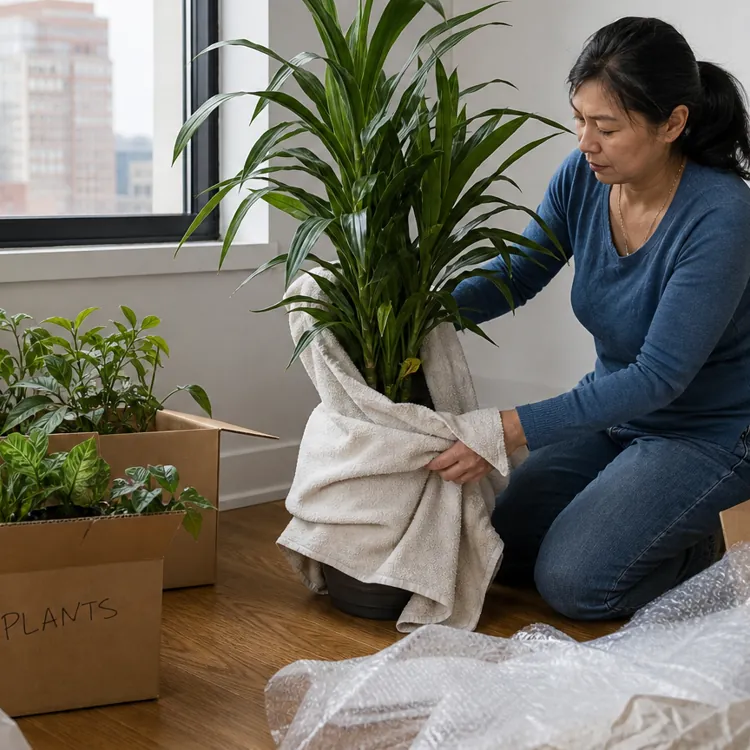
Gently gather loose stems and use soft materials such as newspaper, packing paper or light sheets to wrap the foliage. For tall or delicate plants, create a loose paper cone around the plant and secure it lightly at the base to keep branches upright and contained.
Avoid wrapping too tightly, as this can crush leaves or restrict airflow. The goal is to support and protect the plant while allowing it some room to breathe.
5. Box and secure pots
When packing plants for moving, it’s important to protect both the pot and foliage to minimize damage.
Different plants require different boxing and security strategies. Group smaller plants together in sturdy boxes and place packing paper or towels between the pots to prevent shifting. Make sure each plant sits upright and fits snugly to avoid tipping during transit.
For larger plants, use individual boxes or leave them unboxed if they are too tall. Stabilize the pot with padding around the base, and secure the plant by gently tying stems or using stakes to keep it upright.
Fill empty space in boxes to prevent movement, and clearly label boxes as “live plants” and “this side up” so they are handled with care. If the box is fully enclosed, punch a few small holes in the sides to allow for ventilation.
6. Load last and unload first
Minimize damage to your plants by loading them into the moving truck last. Make sure to cushion the pot with paper, cardboard or a moving blanket to secure it in place and avoid shifting.
Once you’ve reached your destination, unload plants first. Move them to a spot with access to natural light and clean air, such as near a window in your new living room, so they can acclimate to their new space.
Give plants a little time to adjust before watering or repotting them, as they may experience minor stress from the move.
Packing materials for moving houseplants
The right materials for packing your plants can vary by size.
- Small plants: Use smaller boxes, newspaper or packing paper for cushioning and shallow containers that keep pots snug.
- Medium plants: Combine cushioning materials with light fabric wraps to protect foliage.
- Large or tall plants: Use stakes for support, larger boxes or partial boxing and soft wraps such as sheets or towels.
Household items you can use
You don’t need specialty supplies to pack fragile items, including plants, for moving; many common household items work well, such as:
- Newspaper or scrap paper for cushioning and soil coverage
- Paper towels (dry or damp) for soil stabilization
- Towels, pillowcases or old sheets for foliage protection
- Cardboard boxes from deliveries for plant containers
- Rubber bands, twist ties or string for securing wraps
How to choose the right box size
Follow these tips to make sure you pack your plants in the correct box size:
- Select a box slightly taller than the plant to avoid bending leaves.
- Ensure the pot fits snugly at the base for minimal shifting.
- Avoid oversized boxes, which allow movement and increase breakage risk.
- For multiple plants, use boxes that allow tight grouping without crowding foliage.
A few weeks before your move, repot plants as needed. Swapping heavy ceramic or terracotta containers for lightweight plastic pots reduces weight, prevents breakage and makes it easier to group plants in boxes.
Essential materials and optional upgrades
The following materials — both essential supplies and common household alternatives — can help you pack houseplants safely and efficiently:
- Sturdy cardboard boxes in various sizes
- Plastic nursery pots
- Packing paper, paper towels or newspaper
- Bubble wrap
- Old sheets, towels or light fabric
- Packing tape
- Rubber bands or twist ties
- Stakes, bamboo poles or dowels to support tall or top-heavy plants
- Scissors or a utility knife for ventilation holes
Optional upgrades:
- Liquor boxes with dividers (great for small plants)
- Clear plastic bins (for added visibility and structure)
- Moisture meters or picks (for monitoring plant needs during longer moves)
Transport plants safely in a car
Transporting plants in your personal vehicle, rather than the moving truck, is the best way to ensure their safety when moving. Regardless of the vehicle, use these tips to protect plants in transit.
Prevent tipping and crushing
Pack plants upright and close together, if possible. Secure padding, such as blankets or towels, snugly around the base to keep pots from shifting.
Place plants in the back seat of your car, on the floor or in a climate-controlled truck bed during transport. This will keep plants safe, upright and stable while protecting them from extreme temperatures and preventing tipping during sudden stops. It also minimizes damage from wind or direct sunlight.
Manage heat, cold and airflow
High heat causes wilting, leaf scorch and stunted growth in houseplants. Extreme cold damages plant cells and causes mushy foliage and blackened stems. Because of this, plants are often safer when transported in a personal vehicle rather than a moving truck, especially during long-distance moves.
When transporting plants during a move, prioritize airflow and temperature, and avoid moving plants during extreme weather when possible. You should also avoid placing plants in trunks, direct sunlight and extremely hot or cold car interiors or truck beds. Place plants away from the A/C or heater to protect them from extreme temperatures.
You can protect plants from sunburn during transport by draping light sheets over them to shield foliage from direct sunlight. Just make sure the sheet is draped lightly to encourage airflow.
How to handle multi-trip and overnight stops
Long moves sometimes require multi-day trips with overnight stops. Take precautions when moving plants for multiple days to keep them safe and healthy.
- Bring plants indoors overnight: Avoid leaving them in a car or truck where temperatures can drop or spike quickly.
- Provide light and airflow: Even brief exposure to natural light and fresh air helps reduce stress in plants.
- Check soil moisture: Lightly water plants if they appear dry, but avoid overwatering during transit.
- Minimize time in darkness: Load plants last and unload them quickly at each stop.
Taking plants into hotels or indoor spaces each night helps prevent damage from temperature swings and keeps them in a relatively stable environment.
Check regulations
Check local and federal guidelines before moving plants over state lines. The United States Department of Agriculture regulates plant transport to prevent the spread of pests and diseases. Some states have strict agriculture restrictions, prohibiting certain plants from entering. It’s important that you check these requirements in advance.
Professional movers typically do not transport houseplants more than 150 miles or on trips that exceed 24 hours. For longer trips, consider moving plants yourself instead of hiring movers.
After-move care for packed plants
Once you’ve reached your destination, check that your plants made the journey safely.
Unpack and inspect immediately
Unpack plants as soon as you reach your destination, placing them in an area with good airflow and natural light, such as near a window. Remove packing materials and inspect them for damage. Look for issues including:
- Broken stems
- Crushed or yellowing leaves
- Pests
- Exposed roots
It’s normal for plants to show signs of stress after a move. You may notice temporary leaf drop, wilting or yellowing as they adjust to new light, temperature and humidity conditions.
Most plants begin to recover within a few weeks, but full acclimation can take several weeks to a few months, depending on the plant type and the extent of stress.
Avoid fertilizing or repotting right away, giving plants time to recover and adapt to support their long-term health.
Fix breakage and repotting needs
Trim damaged stems or leaves with clean scissors to prevent further stress or disease. Removing broken or dying material allows the plant to redirect energy toward recovery, helping it bounce back from damage quickly.
You may need to repot a plant if it has shifted in its pot or if roots are exposed, especially if there’s significant damage to the root ball or pot. Otherwise, leave plants undisturbed for the first couple of weeks to avoid adding stress.
Place plants in a stable, low-stress environment to recover and acclimate to your new home. Keep them away from heavy foot traffic, drafts and direct sunlight, according to the individual plant’s needs. Temporary recovery placement helps plants recuperate from the stressful journey before you move them to their permanent location.
Reintroduce light and watering
Plants need time to readjust to their environment after a move. Begin reintroducing light slowly, placing them in indirect light, even if they normally prefer full sun. Gradually reintroduce brighter light over several days to prevent shock or leaf burn.
Water your plants based on soil moisture rather than following a strict schedule. Water lightly if the soil feels dry, and avoid overwatering, as stressed plants are more susceptible to diseases like root rot. Follow this routine for a few weeks, and resume your normal watering schedule once each plant begins to stabilize.
FAQ
How long can plants survive in a moving truck?
Most plants can only tolerate a moving truck for a few hours to a day, depending on temperature and ventilation. Extended time in a truck can expose them to extreme heat or cold, which can cause damage.
Do plants go into shock after transplanting?
Yes, plants often experience transplant shock. This can cause wilting, leaf drop or slowed growth. Most plants recover within a few weeks with proper care in the form of exposure to natural, indirect light, airflow and water when needed.
How do you pack large plants for moving?
Wrap large plants’ foliage with a light sheet or packing paper to prevent breakage, and secure the plant with stakes if needed. Swap to a lightweight plastic plant pot, if possible, and place padding around the base to keep it upright and stable.
Can moving companies transport plants across state lines?
Many moving companies do not transport plants long distances due to perishability and agricultural regulations. Some states also restrict plant transport to prevent the spread of pests and diseases. Check local regulations before hiring movers if you plan to move plants across state lines.
Article sources
ConsumerAffairs writers primarily rely on government data, industry experts and original research from other reputable publications to inform their work. Specific sources for this article include:
- International Society of Arboriculture, "The Influence Of Stress On Diseases Of Nursery and Landscape Plants." Accessed April 16, 2026.
- Hoffmans Lawn & Fertilization, "The Role of Pruning in Plant Health & Growth." Accessed April 16, 2026.
- Mayflower, "How To Move Plants." Accessed April 16, 2026.
- PlantIn, "Comprehensive Guide on Heat Stress in Plants." Accessed April 16, 2026.
- Joe Gardener, "138- Why Pruning Matters: Principles, Recommendations and Tips from The Pruner's Bible." Accessed April 16, 2026.
- Pipeline and Hazardous Materials Safety Administration, Department of Transportation, "Part 173—Shippers—General Requirements for Shipments and Packagings." Accessed April 16, 2026.