

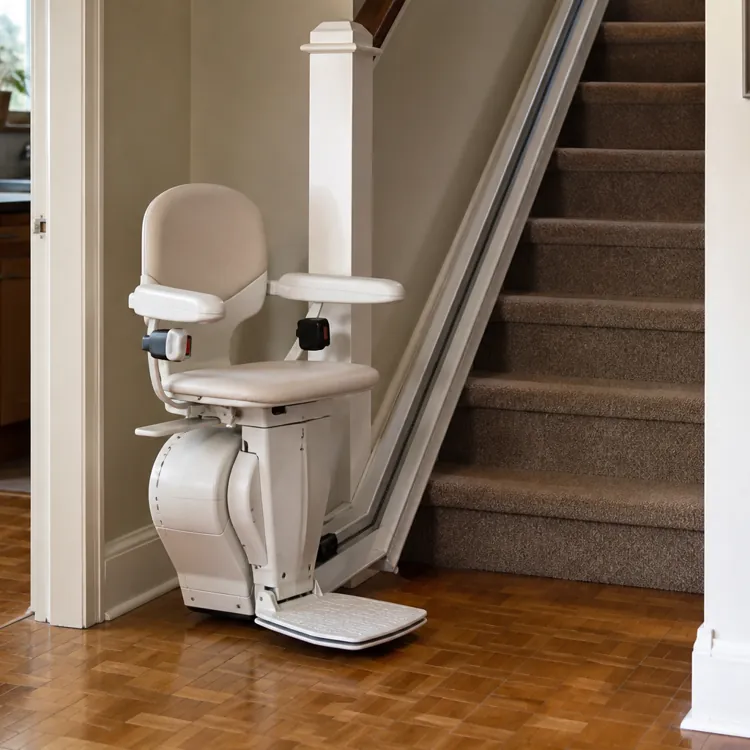
Stair lift financing options explained
Financing your stair lift is a common way to spread out the purchase and pay over time in a way that better fits your budget. In addition to traditional dealer financing and bank loans, credit card introductory offers, rent-to-own programs and alternative financing programs (AFPs) help seniors get the funds they need to stay in their own homes longer.
Since the majority of seniors plan to age in place, financing a stair lift is a consideration most of us will face.
Dealer financing programs
Much like dealer financing when buying a car, stair lift dealers typically offer financing through preferred lenders such as CareCredit. A few larger companies may also offer in-house financing through a separate division.
Companies that offer in-house financing tend to offer services for lower credit scores, as low as 540 in some cases, but options through outside lenders are more likely to require better credit scores. Exceptional credit scores may qualify for special discounts, such as a limited-time 0% financing offer.
Bank and credit union loans
A bank or credit union loan might not match a discount annual percentage rate (APR) offer, but if you prefer keeping all of your banking together, you may find favorable terms. However, mortgage loans may require credit scores of 620 or higher, while personal loans may be available around 580.
The most common bank and credit union loan types for stair lifts are listed below.
Home improvement loans
Home improvement loans are a blanket term for any loan used for home repairs and remodeling. They may be unsecured or use your home as collateral. Some government programs, such as Title I Property Improvement Loans, may be available to qualified homeowners to help reduce loan costs.
Home equity line of credit (HELOC)
A HELOC is a secondary mortgage secured by your home's equity, designed for home improvements. However, the funds can typically be used for anything, provided you are comfortable using your home as collateral. Funds can be accessed quickly, up to your loan limit.
Home Equity Conversion Mortgage (HECM)
HECMs are a reverse mortgage, but they are the only ones insured by the Federal Government. HECMs are only available through FHA lenders.
Unsecured personal loans
Unsecured personal loans don’t use your home as collateral, but the APR may be higher and payoff terms shorter than mortgage-type loans.
» RELATED: Types of personal loans
Credit card APR promos
One way to buy a little extra time to pay off a stair lift without getting a traditional loan is to use balance transfer or new customer 0% interest offers from credit cards. For example, some balance transfer cards offer 21 months interest-free.
However, if you don’t pay off balances within the promotional period, you may be charged retroactive interest if the offer is deferred interest rather than interest-free. Be sure to carefully read the terms before committing.
Pay-over-time cards
A newer alternative to a credit card, pay-over-time cards are more like microloans. Think of them as the digital age’s equivalent of layaway, except you get your product up front. It’s still a loan like a credit card, but typically offers more stability and lower costs.
Providers such as Affirm and Bread Pay offer fixed payment terms rather than compounding interest, as credit cards do. Most have no deferred interest, offer set installment payments, give you the option to set up autopayments and don’t have prepayment penalties.
Rent-to-own
Stair lift manufacturers and dealers often offer short-term stair lift rentals (usually six months or more) with monthly payments or rent-to-own options. These options are similar to dealer financing, but typically offer an out if you decide not to keep the stair lift. Rental agreements typically include delivery, installation and removal.
Alternative Financing Programs (AFP)
Less well-known financing includes Alternative Financing Programs (AFPs) focused on assistive technology, such as wheelchairs and stair lifts. Most states have programs working with the Rehabilitation Engineering and Assistive Technology Society of North America (RESNA), and the National Disability Institute maintains a list of program contacts.
RESNA offers low-cost loans to qualifying individuals with disabilities for assistive technology or home modifications, as well as free trial equipment programs.
Stair lift financing rates and terms
Stair lift financing can make monthly payments easier, but raise your costs over time. Minimizing those extra costs means understanding what affects the terms and rates.
Factors affecting total costs when financing a stair lift
Not all stair lift financing is equal. Your personal credit situation, where you get the loan, the type of loan and the amount of the loan all affect rates and terms. While most costs revolve around APR, fees and penalties also influence costs.
Common factors influencing your APR when financing a stair lift include:
Amount financed
Larger loans tend to have lower APRs because of lender incentives. However, if the amount borrowed relative to the stair lift's value is high, the APR may increase due to risk.
For example, the loan-to-value ratio (LTV) is riskier for a $25,000 stair lift with a $25,000 loan than for a $7,500 loan on the same stair lift.
Federal interest rates
The Federal Reserve controls the interest rate banks pay to borrow money. When the federal funds rate rises, banks raise APRs on loans.
Term length
The loan term affects APR, but not as strongly as other factors. In general, longer loans carry slightly higher APRs.
Down payment
A larger down payment often lowers APR because it lowers the overall loan amount and signals reduced risk to lenders when you have a financial stake in the loan.
Credit rating
Your credit rating gives lenders a snapshot of the risk of lending to you. Lower scores either can’t get a loan or are charged higher interest rates.
Type of loan
Mortgage-type loans often offer lower interest rates for longer loans, while short-term loans may have lower rates with dealer financing.
Fixed or variable rates
Fixed rates tend to be higher, while variable rates are often lower because the bank can raise the rate later if the federal rate rises.
The lender
Within regulatory limits, each lender offers different rates based on its business goals. Some may offer preferred rates to current customers, while others may focus on short-term loans.
Other common costs and terms when financing a stair lift include:
Origination fees
While not universal, some lenders charge a fee for providing a loan. The idea is that it covers some of the upfront lending costs, such as credit checks and the initial paperwork.
Late payment fees and penalties
Most loan providers charge a fee if payments are late by a certain number of days. In addition, lenders may raise your interest rate for some late payments. Late payment rules are heavily regulated and vary by loan type.
Closing costs
Just like your primary mortgage, if you use a mortgage-type loan to cover a stair lift, there may be closing costs. Closing costs typically include appraisals and title searches.
Mortgage insurance
Only applicable to mortgage-type loans; mortgage interest benefits the lender but is paid by you.
Prepayment penalties
While rare, some loan types have prepayment clauses. In general, you are more likely to incur a prepayment penalty on a mortgage. However, even those penalties typically apply only to prepayment in the first few months of the loan. Prepayment penalties are heavily regulated and vary by location and loan type.
Ways to improve stair lift financing rates
Improving financing rates and terms for a stair lift requires a bit of preplanning and research.
The primary ways to improve financing are:
- Shop around: Get comparison quotes from multiple lenders and explore different loan types.
- Increase your down payment: A larger down payment often improves APR.
- Pay faster: Choosing a shorter repayment term typically reduces interest rates and the total interest you pay over the life of the loan.
- Improve your credit rating: Use proven techniques to improve your credit rating rather than risking quick-fix services.
Stair lift financial assistance programs
Financial assistance for stair lifts is available, but many find it simpler to reduce the technical complexity of stair lift installations to lower costs. Still, there are financial assistance programs for stair lifts.
Medicare and Medicaid
Medicare and Medicaid don’t consider stair lifts as durable medical equipment (DME), so lifts aren’t typically covered under these programs. However, there are some exceptions, including:
Medicaid Home and Community-Based Services (MHCBS) waivers
Medicaid waivers may cover stair lift costs if the stair lift is necessary to prevent a move to a group home facility. Coverage may vary by state, however.
Medicare Advantage
Some Medicare Advantage plans offer stair lift coverage. Because plans are privatized and vary, you’ll need to check your specific plan to see if stair lifts are covered.
VA grants
The Veterans Administration offers four programs to help veterans with the cost of mobility modifications to their homes, such as stair lifts. Each of these grants applies to specific injury and dwelling types. The grants include:
- Home Improvements/Structural Alterations grants (HISA)
- Specially Adapted Housing grant (SAH)
- Special Home Adaptation grant (SHA)
- Temporary Residence Adaptation grant (TRA)
Check with the main VA office in your state or your State VA office. While the U.S. Department of Veterans Affairs manages the grants, State VA offices often offer walk-in appointments.
State VA offices are good places to start gathering information about grants without the maze of telephone menus and long wait times.
Government aid and nonprofits
Various private and government groups across the country offer local assistance with mobility and fall-prevention aids. Your options may include:
- The USDA Rural Development’s Section 504 Home Repair Program assists very low-income households with a variety of modifications.
- The HUD Community Development Block Grant (CDBG) is a government funding program that may help with adding a stair lift if your community is a grant recipient.
- Rebuilding Together is a private nonprofit with programs targeted towards seniors, people with disabilities and veterans. Its Safe at Home program helps low-income seniors and disabled individuals stay in their homes longer through home improvements.
- Veterans at Home offers home modifications and repairs for veterans and their families to promote safety, accessibility, independence and aging in place.
Local governmental officials, such as state or county representatives, have contact information for the listed programs, plus others.
Senior discounts
Senior groups or disability advocacy groups often have discount partnerships with a variety of companies, including stair lift dealers. Check with groups you are a member of for any available discounts.
Tax deductions for stair lifts
Although stair lifts don’t qualify as durable medical equipment (DME), they may still be eligible for tax deductions as medical expenses. If your stair lift meets medical-necessity requirements, which may include a prescription from a licensed medical provider, it may count toward your total medical expenses on your tax return.
For medical expenses to qualify as a deduction, the total of your qualified medical expenses, such as office copays and prescriptions, must exceed 7.5% of your adjusted gross income (AGI). As tax rules change frequently and can be complex, it’s recommended you consult a qualified tax professional before claiming a stair lift on your taxes.
FAQ
How do you qualify for a free stair lift?
Qualifying for a free stair lift varies by program, but is often based on income. Free stair lifts are rare and typically limited to a few government programs such as Medicaid waivers.
Does stair lift financing include installation costs?
Yes, stair lift financing often includes installation costs when purchased together with the stair lift. However, if you purchase the stair lift and installation separately, the loan may not cover both.
Can used stair lifts be financed?
Yes, many used stair lifts can be financed. HELOCs and dealer financing are two common ways to finance used stair lifts.
Can temporary stair lifts be financed?
Many dealers offer rental programs instead of traditional financing to help budget temporary stair lift payments.
Article sources
ConsumerAffairs writers primarily rely on government data, industry experts and original research from other reputable publications to inform their work. Specific sources for this article include:
- U.S. Department of Housing and Urban Development, "Fixing Up Your Home and How to Finance It." Accessed July 9, 2026.
- U.S. Department of Housing and Urban Development, "Home Equity Conversion Mortgages for Seniors." Accessed July 9, 2026.
- National Disability Institute, "Alternative Financing Programs." Accessed July 9, 2026.
- Rehabilitation Engineering and Assistive Technology Society of North America, "Consumer and Public Information." Accessed July 9, 2026.
- Consumer Financial Protection Bureau, "How Much Does a Reverse Mortgage Loan Cost?" Accessed July 9, 2026.
- Fannie Mae, "B8-3-02, Special Note Provisions and Language Requirements." Accessed July 9, 2026.
- Consumer Financial Protection Bureau, "When Is My Credit Card Payment Considered Late?" Accessed July 9, 2026.
- Consumer Financial Protection Bureau, "What Is a Prepayment Penalty?" Accessed July 9, 2026.
- United States Department of Agriculture Rural Development, "Single Family Housing Repair Loans & Grants." Accessed July 9, 2026.
- U.S. Department of Housing and Urban Development, "Community Development Block Grant." Accessed July 9, 2026.
- Internal Revenue Service, "Publication 502 (2025), Medical and Dental Expenses." Accessed July 9, 2026.