

Key insights
Consider a new roof if yours is reaching the end of its expected life, you see obvious signs of damage or you have ongoing issues with leaks.
Jump to insightSome of the most obvious signs that you need a roof replacement include water stains in your attic or on your second-floor ceilings and visible deterioration on the exterior.
Jump to insightA good rule of thumb is to replace your roof if repair costs equal 25% or more of the total replacement cost, but defer to a professional before making a final decision.
Jump to insightHow to tell if you need a new roof
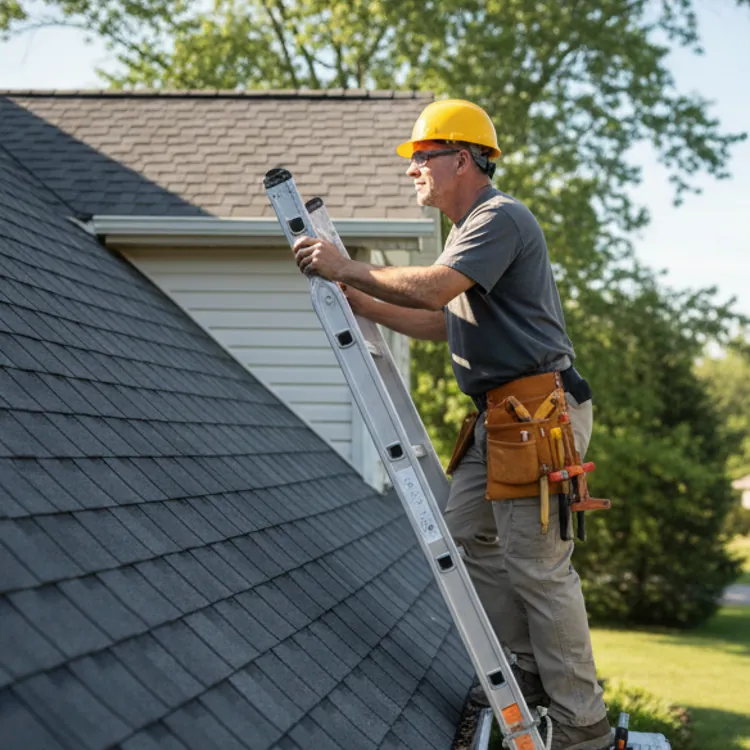
The easiest way to determine if you need a new roof versus just repairs is to speak with a reliable roofing company. A pro can look for signs of roof failure or early aging and check for one-off damage from severe weather or fallen trees or tree limbs.
Alternatively, you can follow the steps below to assess your roof and decide if a repair or a replacement is a better value overall.
1. Check roof age
All roofing materials have an expected lifespan, which you can use as a quick gauge to determine if yours is approaching the end of its life. Generally speaking, experts suggest a replacement once your roof reaches about 80% of its expected lifespan.
Here’s a quick guide on how long different roof materials last and when to consider a replacement.
| Roof material | Average lifespan | Consider replacement after |
|---|---|---|
| Asphalt | 20 to 30 years | 16 to 24 years |
| Clay | 100 or more years | 80 years |
| Composite/synthetic | 10 to 35 years | 8 to 28 years |
| Concrete | 100 or more years | 80 years |
| Metal | 40 to 80 years | 32 to 64 years |
| Wood | 25 years | 20 years |
2. Look for obvious signs of damage
Regardless of how old your roof is, there’s a chance it has lost some of its integrity, especially if you live in an area that sees intense sunlight or extreme weather — both of which can reduce the average roof lifespan.
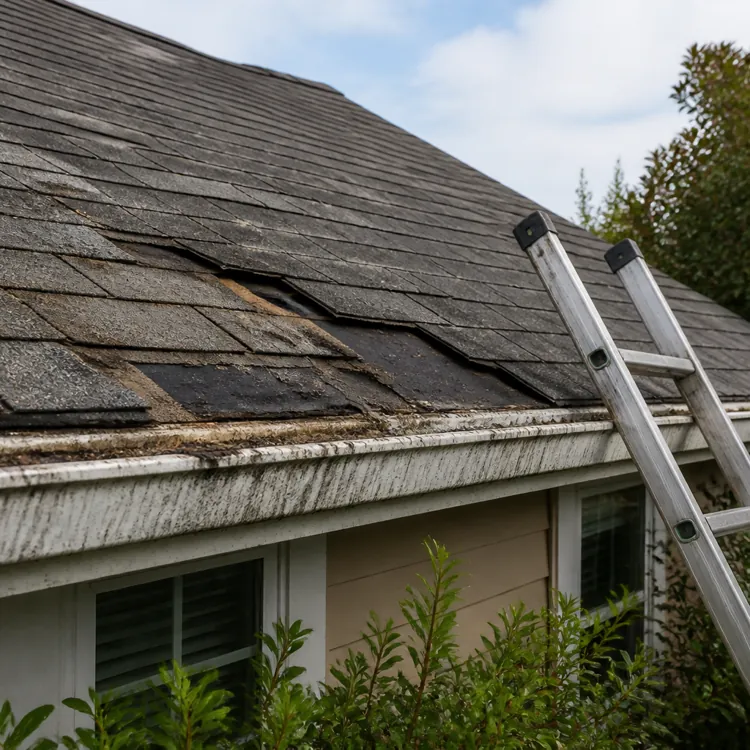
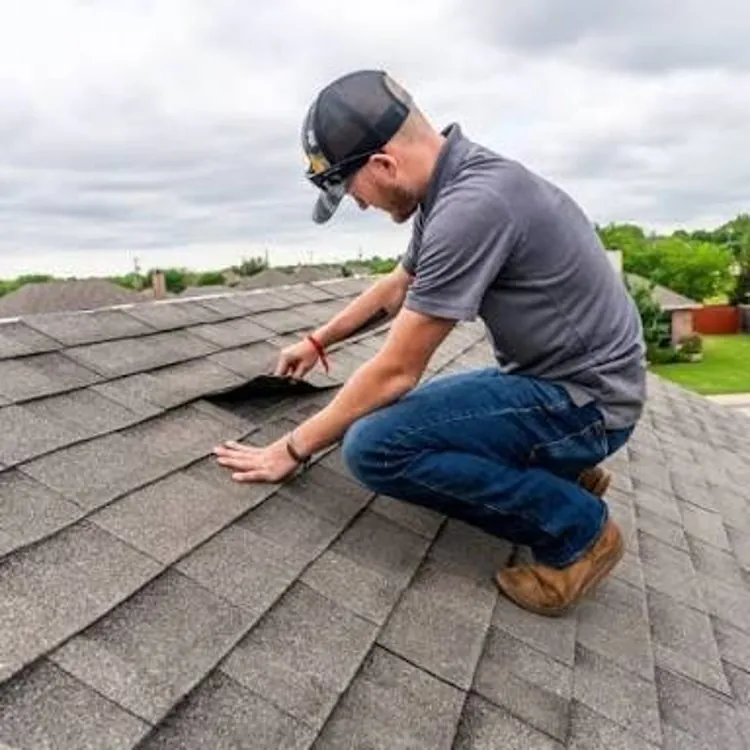
From the ground or a ladder, check for obvious signs of damage. Most of the time, you’re looking for missing, cracked or worn-down roofing materials, areas where the decking or underlayment is exposed or complete roof penetrations. You may also notice waviness, sloping or dipping in the roof lines or surfaces, which suggests structural problems.
3. Inspect flashing, vents and gutters
Some signs of roof failure show up at the flashing or around vents and gutters. Look for missing or damaged flashing, cracked or brittle vent boots, gutters that are pulling away from the fascia or discolored or crumbling fascia boards.
4. Check your attic for signs of roof issues
You should also check inside your home for signs of roof issues. The rooms on the upper floors or the attic are the best places to inspect. Look for signs of water damage on the ceilings or underside of the roof deck and for evidence of roof penetrations, including light that’s visible through the roof, water stains, mold growth, soggy insulation or musty odors.
Roof replacement warning signs
Once you have an idea of the roof issue you’re facing, you can decide if a repair or replacement would be a better option. In some cases, you can monitor the symptoms and see if they worsen, which lets you put off the cost of a repair or replacement until it’s absolutely necessary.
When the damage is obvious, you can get both a repair bid and a replacement bid. In general, go with a replacement if the repair bid is 20% to 25% or more of the replacement cost. However, it’s often difficult to decide between roof repair versus roof replacement, so you should know when warning signs suggest a replacement is a better option — and ask a pro.
Exterior signs you need a roof replacement
Here are some signs you might notice on the exterior of your home that usually suggest a roof replacement is necessary:
- Large areas of damaged or aging shingles: Look for broken shingles, rust spots on metal roofing, missing roofing materials, pockmarks from hail or any other abnormalities across your roof surface. The larger the affected area, the more likely you will benefit from a total replacement.
- Heavy granule accumulation in gutters or in front of downspouts: Check your gutters and downspouts for roof granules. A large accumulation could suggest it’s time for a roof replacement if your shingles are worn down to the asphalt layer.
- Curling or cracked shingles: These are both signs that your roof is at or beyond the end of its useful life, especially if they appear across your roof and not in one isolated area.
- Rust spots on metal roofing: Rust is a sign of corrosion, which suggests the material itself is breaking down.
- Sagging or wavy sections: Any irregularities in the roof lines or surfaces, like sagging or waviness, often suggest structural issues. A roof replacement will give your pro access to the decking and framing to assess for more severe issues.
Interior signs you need a roof replacement
Even if you don’t notice signs of damage on the outside of your home, you can complete an interior inspection to look for the following:
- Soggy or drooping insulation in the attic: Even if you don’t see obvious water stains, soggy or deteriorating insulation can be a clear sign of a moisture issue in your attic. This often indicates a roof leak, which could suggest that a replacement is necessary.
- Mold growth or musty odors: Similarly, you might notice mold growth in your attic or inexplicable musty odors in your home. Both can suggest ongoing roof leaks, and a roof replacement can help expose the issue and provide access for further repairs.
- Sudden increase in utility bills: A properly sealed and insulated roof will contribute to an energy-efficient home. If you notice a bump in heating and cooling costs that you can’t account for, roof damage might be leaking conditioned air to the outside.
- Water stains on the ceiling: Check the ceilings on your upper floors and the underside of the roof decking in the attic for water stains. These usually suggest roof leaks, and you may need a roof replacement, especially if they’re ongoing or appear in multiple locations.
- Peeling or bubbling paint: Finally, check for peeling or bubbling paint on the ceilings in your top-floor rooms. Some ceiling paint may show these signs instead of water stains, so be on the lookout for both.
Issues that could go either way
Not all evidence of roof damage suggests you need a total roof replacement. Make sure you understand the following signs and symptoms, which might only demand a repair in some cases.
- Leaks: You might be able to correct minor, isolated and one-off roof leaks with a repair, which will save you time and money. A repair is often the best option if your roof hasn’t reached 50% of its expected lifespan.
- Granule loss: All asphalt roofs will shed granules over time, but consider a total replacement if you notice heavy granule loss or large sections of shingles that are worn down to the black asphalt layer.
- Shingle damage: Damage to a few shingles from impact or severe weather is usually a good candidate for repair, while widespread issues like multiple cracked, missing or curling shingles could suggest a replacement.
- Roof age: Roof age is a good initial metric to use when deciding between a repair and a replacement, but it never tells the full story. Some roofs last longer or less than average in certain climates, so you should always ask a pro for their advice.
- Roof penetrations: If your roof is in generally good condition but loses integrity in one area due to impact, a repair is often possible and can correct the problem.
- Moss or algae: Moss and algae will grow on roofing that stays moist, especially in humid areas where the roof is shaded. In some cases, you can just schedule a light roof washing. If the moss is lifting up shingles, though, consider a replacement.
- Missing or flapping flashing or underlayment: Any visibly loose materials will need a repair, at the very least. If the issue occurred after a storm or some inclement weather, you can probably get away with a repair. If it’s an ongoing issue, consider a replacement.
Also, keep in mind that a single issue often doesn’t warrant a replacement. You’re more likely to need a replacement if you have multiple issues, one problem that’s appearing across your entire roof or an issue that keeps coming up.
Choosing repair vs. replacement
The best way to know if repair or a replacement is best for your specific situation is to get a professional opinion. However, there are a few rules of thumb you can use to help guide your decision.
1. The 25% rule for roof repairs
The 25% rule suggests that a repair is a better option if it costs less than 25% of what you’d pay for a roof replacement. Roof replacement costs an average of $5,841 to $12,835, so if your repair quote comes back with a cost between $2,125 and $3,209 or higher, a replacement might be a better long-term solution.
2. The square footage rule for roof replacement
You can also decide based on the square feet of damaged roof material. Generally speaking, isolated problems in one area of your roof mean a repair is probably best. Any time an issue is affecting 30% of your roof’s square footage or more, a replacement might be a better value.
3. The 80% rule for roof age
According to our experts, a roof repair is unlikely to provide sufficient value to justify the cost once your roof has reached 80% of its useful lifespan. For a standard asphalt shingle roof, that means a 20-year-old damaged roof is probably a good candidate for a replacement, even if the damage is isolated.
4. The added value
A new roof will boost your home’s curb appeal and property value, which means the added value should be something you consider. You’ll often get more property value from a roof replacement, so if you’re selling soon, err on the side of a replacement rather than a repair.
5. The insurance consideration
Finally, always consider if your homeowners insurance covers your roof work. Insurance will usually only kick in for sudden damage resulting from extreme weather, fallen trees or other unavoidable circumstances. Just pay attention to deductibles and long-term value.
FAQ
How do you know how old your roof is?
In some cases, you can get the age of your roof by finding installation invoices or warranty documentation. Otherwise, you can have a roof inspector check your roof for signs of aging. A professional won’t be able to tell exactly how old your roof is, but most can let you know how many years of useful life it has left before requiring replacement.
Is a 10-year-old roof considered old?
In most cases, a 10-year-old roof is not considered old, as the average asphalt shingle roof lasts between 20 and 30 years. However, for some roof options, like flat roof membranes on commercial properties or certain synthetic roofing materials for homes, 10 years could be approaching the end of its lifespan.
Is $30,000 too much for a new roof?
For a typical asphalt shingle roof, $30,000 is expensive, as the average cost including materials and labor is between $8,500 and $11,900. However, oversized roofs and higher-end materials, like metal, slate, clay or concrete, can routinely hit $30,000 or more. Your location also matters, with areas on the East and West Coasts being more expensive.
Should you replace your roof if it's not leaking?
It’s best to replace your roof before you notice signs of leaking, as a leak suggests you’ve already waited too long and have risked severe water damage. On average, you should replace an asphalt shingle roof every 15 to 25 years, or if you notice signs of damage or deterioration, whether it’s leaking or not. Consult with a roofing professional to see if it’s time to replace the roof on your home.
Article sources
ConsumerAffairs writers primarily rely on government data, industry experts and original research from other reputable publications to inform their work. Specific sources for this guide include:
- International Association of Certified Home Inspectors, "InterNACHI's Standard Estimated Life Expectancy Chart for Homes." Accessed Nov. 2, 2026.