

Glass break sensor types and differences
The main types of glass break sensors are acoustic, shock (vibration) and specialty sensors that combine technologies to improve accuracy. Each type serves a specific purpose, distinct from window open sensors. Understanding how glass breakage sensors work can help you choose the best option for your home and keep your home security system costs under control.
Acoustic window sensors
Audio glass break detectors (acoustic sensors) listen for the sound of breaking glass. They use an algorithm to compare sound frequencies and patterns. Some only listen for the sharp breakage sound, but flex-style — also called high frequency-low frequency — systems listen for the combination of a low-frequency thud followed by the sharp breakage sound.
Acoustic glass break sensors generally cover a 20 to 25-foot range, but more powerful models can cover up to a 100-foot radius or more. Some acoustic sensors also detect other sounds, such as smoke detector alarms, as part of environmental hazard monitoring.
Shock window sensors
Physical glass break sensors, also called vibration or shock sensors, monitor for vibrations in the glass. Rather than using a microphone, shock sensors measure the glass's movement and trigger an alarm when preprogrammed thresholds are reached.
These sensors must be mounted directly on the glass and cover only a single pane because any frame can partially mute or even stop vibrations. Shock sensors tend to suffer frequent false alarms from loud music or sometimes even high winds if not calibrated properly.
Specialty window sensors: Dual-technology detectors
Meant to work as a system of checks and balances to reduce false alarms, dual-technology sensors link a shock sensor to an acoustic sensor. Alarms are triggered only when both acoustic and vibration signals are detected, improving accuracy.
Some alarm manufacturers refer to flex-style sensors as dual-technology because they listen for two different frequency sounds. Though both are valid options for increasing home security, the way these glass-breakage sensors work differs.
| Sensor type | Pros | Cons | Best for |
|---|---|---|---|
| Acoustic window sensors | Can cover multiple windows with one sensor | Vulnerable to quiet intrusion, such as cut glass | Reducing the number of sensors needed |
| Flex-style acoustic window sensors | Creates fewer false alarms | More expensive | Applications where loud noises or frequent vibrations are common |
| Shock window sensors | Can be used on non-window glass, such as display cases | Requires one sensor for every pane of glass | Fixed windows and other non-opening glass cases |
| Dual-technology window sensors | Improves accuracy | No standardized labeling, so different companies may label flex-style/high-low frequency acoustic sensors as dual-technology | Applications where false alarms result in fines |
Glass breakage sensors work by detecting signals
Glass break sensors work by listening for sound or sensing vibrations. The exact mechanisms for sensing and processing sound and vibration vary, as does false alarm frequency.
Most home security systems offer different options for securing your home with glass break sensors.
Two-stage audio detection explained
Acoustic glass break sensors are essentially small computers with a microphone. They run comparative algorithms that match sound frequencies, decibels and changes over time — called temporal patterns — to stored profiles of breaking glass sounds. These comparisons allow the sensor to distinguish between breaking glass and other household noises, such as fire alarms.
Two-stage audio detection means the sensor’s algorithm looks for a pattern that shifts between a low-frequency infrasound thud — too deep for human ears — followed by the higher-frequency, sharp sound of glass breaking.
Sensors use a technology called zero-crossing detection (ZCD) or zero-point detection (ZPD) to identify the patterns where those frequencies change. From there, further analysis, called fast Fourier transform (FFT) analysis, examines those time patterns and compares them with known window-break patterns before triggering an alarm.
Vibration signals from impact and cracking
Vibration (shock) sensors vary widely in sophistication.
Some shock sensors are non-electric physical vibration detectors, similar to seismometers that measure ground displacement. They are activated when vibrations shake the sensor, tripping an internal trigger.
Others are piezoelectric accelerometers that measure vibration frequencies. Piezoelectric devices use ceramics or crystals to generate a small electrical charge when pressure is applied. Quartz watches, inkjet printers and gas grill starters use this technology.
Shock sensors don’t distinguish well between actual breaks and other vibration sources that shake glass. To reduce false alarms, most offer adjustable sensitivity settings.
When a glass break is detected
Once the glass break sensor detects glass breaking, it communicates with the home security system hub. For some systems, that hub is a cloud-based app. For others, such as smart home systems, there is a physical hub or control panel in your home, where the signal goes first before alerts are sent to apps.
If you subscribe to professional monitoring, the signal is sent to the monitoring service, which will usually attempt to confirm the alert with you before contacting emergency services. If you self-monitor, you’ll receive an alert to contact emergency services yourself.
» RELATED: Top home security systems
Where glass breakage sensors work best
Your home layout and the type and manufacturer of your glass break sensors determine how many you need and where to place them.
How many sensors do you actually need?
While manufacturer options and sensor models vary in range, you can estimate how many glass break sensors you’ll need for your home. Check sensor specifications before determining a final number.
Acoustic sensors: One per room or every 25-foot radius.
Shock sensors: One per pane of glass. Cover high-priority ground-floor windows or display cases with this type of sensor.
Dual-technology sensors or flex-style sensors: One per room or every 25-foot radius. Use in place of acoustic or shock sensors.
Where should you place your sensors?
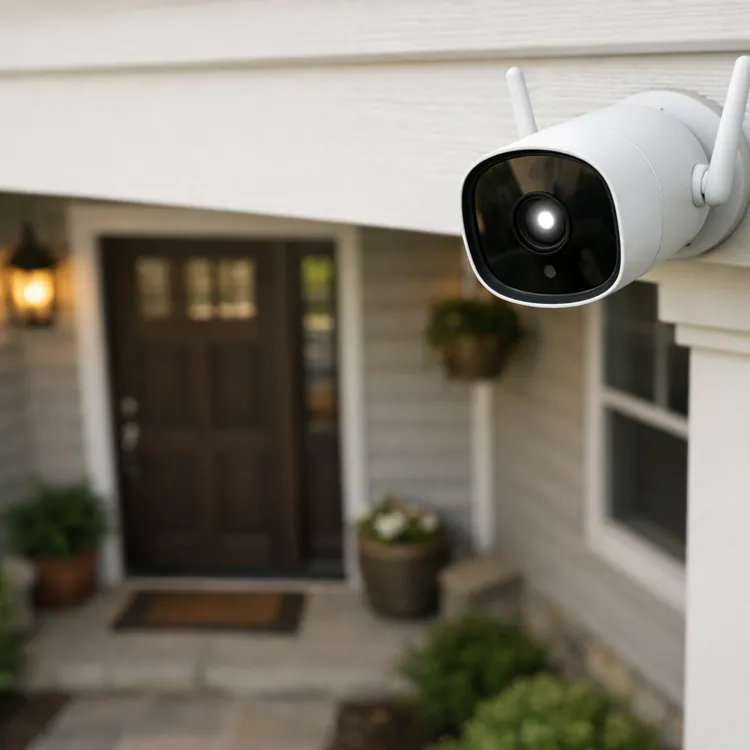
Security cameras serve as a visible deterrent to burglars; glass break sensors focus on alerting you to actual intrusions.
Placement varies by model and sensor type. But there are some best practices you can follow when installing your glass break sensors. Consider:
- Pane corners: Shock sensors are generally placed in one corner of a glass pane rather than in the middle of a side.
- Clean surfaces: Shock sensors placed on glass require a clean, condensation-free surface for proper adhesion.
- Line of sight: Acoustic sensors should be placed with a direct line of sight to covered windows to improve sound transmission.
- Head height: Acoustic sensors should be mounted a bit above head height to minimize sound interference.
- Ceiling hazards: Acoustic sensors mounted near ceiling fans sometimes trigger false alarms.
- Goldilocks zone: Acoustic sensors are generally placed four to 20 feet from the window, but you should follow the manufacturer's recommended distance.
With acoustic sensors, it’s also important to avoid potential obstructions, such as heavy curtains, as these can degrade sound transmission.
Glass break sensor false alarms and limitations
Locking windows and doors and using a home security system can help safeguard against intruders. And glass break sensors are an important part of a robust home security system. However, they have significant limitations. Under certain conditions, glass breakage sensors may fail to work properly and even cause false alarms.
Common causes of false alarms
Both acoustic and vibration sensors are susceptible to false alarms. False alarms frequently stem from thunder, barking dogs, dropped glasses or dishes, fireworks and even breaking glass on TV.
Preventing false alarms
Sensitivity settings and the quality of the detection algorithm play a major role in weeding out false alarms.
If you live in an area with frequent loud noises, a flex high-low frequency sensor or dual-technology sensor system may help reduce false triggers.
Regardless of sensor choice, testing and calibration are recommended. Most sensors offer at least high, medium and low sensitivity settings to better fit your environmental conditions.
Glass break sensor limitations
While flex-style (hi-low frequency) and dual-technology glass sensors help reduce false alarms, every sensor has limitations. These limitations can include:
Acoustic sensors
- Sound dampening: Curtains, blinds and furniture can drastically affect sound quality in a room and impact sensor accuracy.
- Distance: Acoustic sensors have limited ranges that vary by device and manufacturer.
- Walls: Acoustic sensors generally don’t detect sounds in other rooms well.
Shock sensors
- Environmental conditions: Frequent condensation on glass may interfere with the shock sensor adhesive and operation.
- Vibration dampening: Shock sensors are limited by frames or any other objects attached to glass surfaces.
- Wind: Shock sensors are less useful in areas that experience high winds — such as high-rise apartments — which can cause window vibrations and trigger false alarms.
Acoustic and shock sensors
- Loud noises: Areas with a lot of loud noises may confuse acoustic and shock/vibration sensors.
- Hub location: Unless wired, distance to the hub and the number of obstacles in the signal path may affect quality.
- Installation: Improper sensor installation and poor window installation can affect sensor performance.
FAQ
What triggers a glass break sensor?
Glass break sensors are triggered by sound, vibration or a combination of the two.
Are glass break sensors better than window sensors?
Glass break sensors and window sensors serve different purposes. Glass break sensors alert to broken glass. Window sensors warn when a window is open.
Can glass break sensors detect tempered glass breaking?
Yes, some glass break sensors detect tempered glass breaking. It depends on the sensitivity of the shock sensor and the algorithms of the acoustic sensors.
Do glass breakage sensors work on sliding glass doors?
Yes, glass break sensors work on sliding glass doors, display cases and windows similarly. Glass break sensors react to vibrations or sound regardless of the glass application.
Article sources
ConsumerAffairs writers primarily rely on government data, industry experts and original research from other reputable publications to inform their work. Specific sources for this article include:
- Texas Instruments, "Connect: Building Security With Glass Break Detection." Accessed April 30, 2026.
- U.S. Department of Homeland Security, Office of State and Local Government Coordination and Preparedness, "Intrusion Detection Sensors." Accessed April 30, 2026.
- Defense Advanced Research Projects Agency, Joint Program Steering Group, "Perimeter Security Sensor Technologies Handbook." Accessed April 30, 2026.
- APC International, "How Do Piezoelectric Sensors Work?" Accessed April 30, 2026.