

Stair lift speed limits, DIY risks and safe adjustments
Stair lifts are designed to move slowly. Their top speeds vary by model, rail configuration and local regulations, but passenger safety is the main consideration.
Why stair lifts are slow
Standards from the American Society of Mechanical Engineers (ASME) outline safety best practices for designing and operating stairway chairlifts and platform lifts, including overspeed protection. Local regulations may also impose lower speed limits.
But the primary reason stair lifts are slow is safety. Most stair lifts operate well below the maximum speed allowed to keep the passenger safe. Falls from stair lifts can cause limb and serious head injuries. In one study of patients entered into a major trauma database after stair lift accidents, more than 15% died.
Governing stair lift speeds helps prevent:
- Users from feeling dizzy while riding
- Users falling out of the stair lift, especially during starts and stops or turns
- Injuries from stair lifts striking obstacles
- Injuries from pets not being able to get out of the way
Stair lift speeds
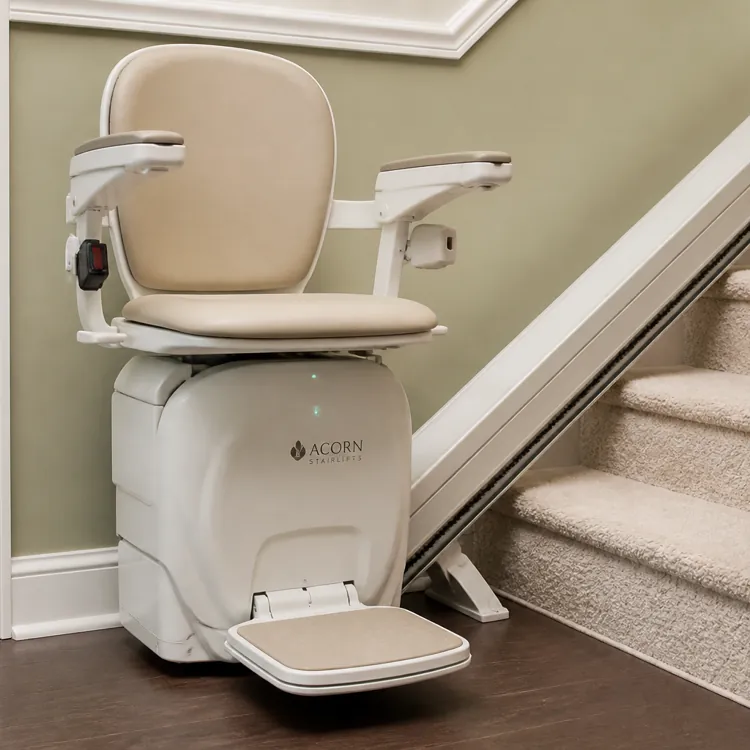
Some models travel more slowly, so factor speed into your decision when choosing a stair lift for your home. A residential stair lift typically takes 45 to 60 seconds to travel up a 20-step staircase. Models from Acorn Stairlifts, for example, have a maximum speed of 0.34 mph, or just under 30 feet per minute.
For stair lifts that use speed governors, ASME A18.1 requires the safety mechanism to activate by 75 feet per minute (0.85 mph). This is an emergency cutoff, not a recommended operating speed.
Factors affecting stair lift speed or total travel time include:
- Local regulations
- Rail configuration (straight vs. curved)
- Angle of rail curves
- Steepness of the stairs
- Number of floors or landings
- Passenger weight
» MORE: Top-ranked stair lift companies
Can you adjust stair lift speeds?
Because speed limits on stair lifts are due to safety concerns, stair lifts typically aren’t designed to allow users to adjust the speed. In fact, many stair lifts will automatically slow down during transit as they negotiate turns or approach the end of the track.
However, many stair lifts do have some wiggle room, and if they do, a certified technician can help you. Speeds should be adjusted during testing when your stair lift is installed, but if you later decide you want a higher speed within the chair’s limits, contact your stair lift provider and schedule a service appointment.
Risks of DIY stair lift speed hacks
While it might be technically possible to remove speed governors or overcharge a motor with extra power for more speed, it’s a big risk. At the very least, DIY modifications and hacks will void your stair lift warranty.
The biggest risk is safety. Modern stair lifts work using a motor, power supply and built-in safety controls. Tampering with these components can cause malfunctions, falls or fires.
In some cases, it might also affect home, health or life insurance coverage as well if an injury or death occurs.
Why stair lifts slow down
Common reasons a stair lift slows down include:
- Battery problems: Stair lift batteries typically charge at a docking point at the top or bottom of the stairs. When the chair is fully docked, the battery charges. If a chair is left in the undocked position too long, it may run out of power.
- Track obstructions: Debris or excessive dirt on the stair lift track or chair base may slow your stair lift or stop it completely. Most stair lifts use safety sensors to slow or stop your stair lift if an object or pet is detected within the stair lift pathway.
- Lubrication: Gears and chains typically need small amounts of lubricant every four to six months to operate smoothly, although some models are self-lubricating. Many models allow you to add lubrication as part of regular stair lift maintenance, but check your manual first.
- Motor and part wear: Motor parts can wear out over time, causing stair lifts to slow, but this typically takes a long time under proper operating conditions. Technicians typically catch this as stair lifts age, or before they become a problem, when lifts are replaced or upgraded.
- Weight limit exceeded: Most stair lifts accommodate between 250 and 300 pounds depending on model and stair configuration. A few bariatric models offer weight limits up to 600 pounds. If you operate the stair lift with too much weight, it often strains the motor and chain, leading to slowdowns, damage to its parts or a broken chain.
- Extreme temperatures: Though it’s more common with outdoor stair lifts than indoor stair lifts, extreme temperatures can strain the motor, reduce battery performance and interfere with track lubrication. Temperature changes may also cause condensation on the track, affecting the lift’s operation and lifespan.
Troubleshooting a slow stair lift
Before calling a certified technician to diagnose and repair your stair lift, take a few minutes to run through basic troubleshooting. Be sure to consult your stair lift owner’s manual as well for model- and brand-specific troubleshooting tips.
Before calling a technician
Look for error codes, verify the battery charge and clear debris from the track.
- Look for error codes: Stair lifts typically have a small digital readout somewhere on the bottom of the chair. If you find a code, see if it’s mentioned in your owner’s manual.
- Check the seat swivel lock: If your stair lift has a seat swivel, it must be properly locked in place in order to move at full speed. Some models have automatic locks while others have paddles or levers that must be locked in place. Debris around the swivel mechanism or a seat that isn’t fully returned to the travel position can prevent the lift from operating properly.
- Inspect footrest sensors: As with seat swivels, unlocked footrests will slow or stop a stair lift. Most stair lift footrests should audibly click into place when locked. Check for any debris that might be preventing a solid connection.
- Confirm weight limit: Just like an overloaded vehicle will struggle to travel up hills, using a stair lift with too much weight on it will cause it to struggle. Check that your stair lift's weight limit matches your needs.
- Verify charge: If your chair stops and starts again in the middle of a run or slows down for no apparent reason, the battery may need to be charged. If the battery won’t charge when docked, it’s time for a service call.
- Clear the track: Remove any debris from the stair lift path, and wipe down the track with a clean, dry rag.
- Reset your lift: When nothing else works, it might be time to reset your stair lift. Resetting may resolve error messages caused by a power outage or a sensor that mistakenly detects an obstruction. Your owner's manual will show the reset button's location, but on many models it’s under the armrest.
- Test without an occupant: Finally, run the stair lift without anyone in the chair. Listen for unusual squeaks or sounds, and note when and where the lift slows down. This information can help a technician pinpoint the problem.
FAQ
Can I make my stair lift go faster?
You usually can’t make a stair lift go faster than its factory-set maximum speed. If it’s moving more slowly than normal, troubleshooting may help restore its intended speed.
How does weight affect stair lift speed?
Weight affects stair lift speed if you max out the weight or overload a stair lift because it strains the motor.
Why is my stair lift slowing down?
Typical causes of stair lift slowdowns include weak batteries, exceeding the weight limit and dirty tracks.
Are straight stair lifts faster than curved models?
Yes. Straight stair lifts tend to be faster than curved stair lifts. However, the angle of the stairs (how steep they are) and the stair lift model can also affect speed.
Article sources
ConsumerAffairs writers primarily rely on government data, industry experts and original research from other reputable publications to inform their work. Specific sources for this article include:
- The American Society of Mechanical Engineers, "A18.1 - Safety Standard for Platform Lifts and Stairway Chairlifts." Accessed Aug. 10, 2026.
- National Library of Medicine, "Mortality and morbidity of stairlift injuries: Analysis of the UK TARN database." Accessed Aug. 10, 2026.
- Intertek, "Standards Update Notice (SUN) for ASME A18.1: Safety Standard for Platform Lifts and Stairway Chairlifts." Accessed Aug. 10, 2026.