


Key insights
Adding a shower to a walk-in tub can be achieved with various kits and accessories.
Jump to insightChoosing the right showerhead is crucial for maximizing comfort and accessibility.
Jump to insightProfessional installation ensures safety and optimal performance.
Jump to insightWays to add a shower to a walk-in tub
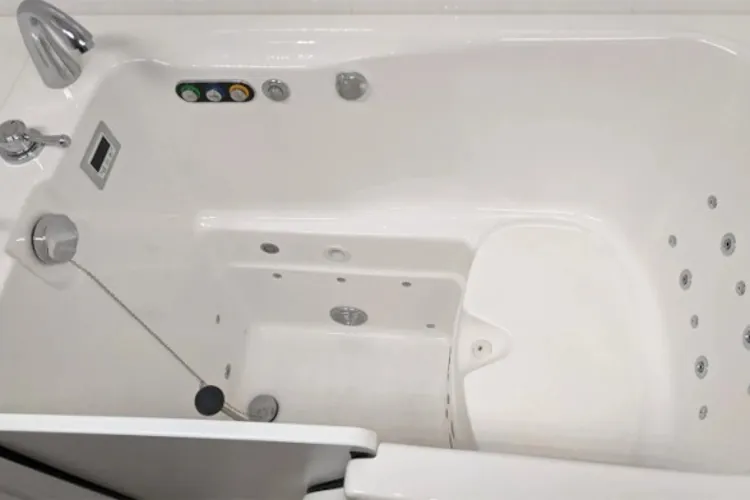
The simplest method of adding showering functionality is by attaching a hand-held shower wand directly to your existing tub faucet. This lets you use the wand while sitting or standing in the tub.
However, keep in mind that shower wands aren't universal. To ensure a proper fit and avoid leaks, it's highly recommended to purchase the shower wand directly from your walk-in tub's manufacturer. It can provide a compatible model designed for your specific tub's plumbing.
You’ll get the best fit and avoid leaks by ordering your showerhead directly from the manufacturer.
If you prefer the convenience of a wall-mounted showerhead (either fixed or hand-held) for yourself or other household members, you'll need a more comprehensive shower conversion kit designed for walk-in tubs. This allows you to have a more traditional showering experience.
These conversion kits typically include:
- Showerhead: You can choose between a fixed showerhead mounted to the wall or another hand-held showerhead for more flexibility. Many walk-in tubs already come with a basic hand-held wand, but a kit allows for enhanced features or more aesthetically pleasing options.
- Shower curtain rod or shower doors: These are essential for containing water and preventing splashes outside the tub area.
- Wall panels: Installing waterproof wall panels around the shower area is critical. They protect your bathroom walls from water damage and are often part of a complete conversion.
You’ll also need a diverter valve, which is likely purchased separately from a conversion kit. A diverter valve redirects the water flow from the tub’s faucet to the showerhead.
» COMPARE: Top hybrid walk-in shower-tubs
Choosing the right showerhead for your walk-in tub
When choosing a showerhead for your walk-in tub, you have several options, each offering distinct features to suit your preferences and needs.
- Hand-held showerheads: These are the most popular choice for walk-in tubs, providing maximum control and flexibility. You can hold the showerhead to direct water precisely where it's needed, which is useful for seated bathing or washing hair. Many models also offer adjustable spray patterns, such as a gentle mist, a massaging pulse or a wide coverage spray, allowing you to customize your comfort.
- Rainfall showerheads: Often part of a larger shower conversion kit, rainfall showerheads deliver a wider, gentler stream of water that mimics natural rainfall. While traditionally ceiling-mounted, some designs can be wall-mounted with an extended arm to get a similar effect.
- Shower column systems or dual showerheads: These comprehensive systems typically feature both a fixed showerhead (which can be a rainfall or a standard fixed head) and a hand-held showerhead mounted on a sliding bar. It provides both the convenience of an overhead shower along with the flexibility of a hand-held wand that can be adjusted for height and removed for direct use.
Installation tips for walk-in tub showers
Adding a full shower to a walk-in tub is a complicated undertaking, and it's highly recommended to hire an experienced plumber.
As Patrick Fee, co-founder of Mr. Drain, a Sacramento-based residential plumbing company, said, “Adding a shower to a walk-in tub involves several complex systems, and mistakes can lead to leaks, mold growth or even structural damage.” Mistakes like this can end up costing more to fix than the initial professional installation.
Fee added that do-it-yourself installation might void your walk-in tub's manufacturer's warranty, especially since some manufacturers require professional installation for warranty validity, which is a significant risk given that walk-in tubs typically cost between $2,000 and $20,000.
Something else to consider with a DIY project is the required permits. “You’d be surprised how many home improvement projects are subject to local codes and require permitting,” Fee said, adding that your “plumber or contractor can help you ensure your project is up to code.”
However, if you're still planning to DIY the installation of a hand-held showerhead or wand into an existing port on your tub, you must consult the manufacturer’s manual for specific instructions.
Here are some basic steps along with the materials you'll need:
- Gather your materials:
You’ll need the following:
- Hand-held shower wand kit, which includes a hand-held shower wand, a flexible shower hose (with preinstalled washers and gaskets), a showerhead holder or cradle, washers and gaskets
- Adjustable wrench or pliers
- Plumber's tape
- Towels
- Bathroom-grade, mildew-resistant silicone sealant
- Safety glasses
- Prepare and disconnect: Shut off the water supply, relieve water pressure by opening the tub faucets, and clear the area.
- Connect new components: Apply plumber's tape to the threads, then connect the new flexible shower hose to the tub's diverter port. Next, attach the hand-held shower wand to the hose and tighten securely — but avoid overtightening.
- Install holder: Install the new showerhead holder by placing it into a predrilled deck hole and tightening the nut from underneath the tub deck. Apply silicone sealant around the base to protect against water leaks.
- Test for leaks: Slowly restore the water supply, check all connections for leaks, test the shower wand's functionality and spray settings, and then place the wand in its holder.
Enhancing safety and accessibility
Walk-in tubs already include safety features like low-entry thresholds, built-in seating and slip-resistant flooring. Adding a shower can enhance that safety by letting users bathe without standing for long periods or moving around as much.
A hand-held shower in particular allows users to direct the water flow right where it's needed, without having to twist and turn, which could lead to loss of balance in a traditional shower.
When adding a shower, you can customize the setup for mobility-impaired users by including features like:
- Grab bars to ensure stability when entering and exiting the tub
- Anti-scald technology, which maintains safe water temperatures
- Nonslip mats for secure exiting when standing
Cost considerations and budgeting
The cost to add a shower to a walk-in tub varies greatly based on the tub's current plumbing setup. If your tub is already equipped with the correct diverter and port, a hand-held shower kit typically costs between $40 and $300 or more. Hiring a licensed plumber for this straightforward installation would add $45 to $200 per hour in labor fees.
However, installing a more complex shower kit, such as one with a fixed or adjustable showerhead, is a more involved project. This could require several hours to multiple days of work, depending on necessary plumbing modifications, leading to labor costs ranging from $90 to over $2,000. The kit itself for such an installation usually starts at $400 or more.
DIY vs. professional installation
- DIY kit: $40 to $300
- Professional labor: $45 to $200 per hour
- Full conversion kit and labor: $400 to $2,300
Despite the potential investment, adding a shower to your walk-in tub might increase your home's value. “From my experience, absolutely yes, it is worth the cost,” Fee said. “The convenience and safety benefits are significant, especially for older adults or those with mobility issues." Fee also noted the added flexibility that a bath-and-shower combination provides for parents with young children.
FAQ
Is it possible to add a shower to any walk-in tub?
Yes, it’s possible to add a shower to your existing walk-in tub. It’s recommended to have a licensed plumber install either a hand-held showerhead or a shower column kit.
How long does it take to install a shower in a walk-in tub?
The time required for showerhead installation varies depending on the type you choose. For instance, a plumber might only need about an hour to install a simple hand-held showerhead, but a more complex shower column kit could take several hours or even days, depending on the plumbing changes required.
Can a walk-in tub with a shower fit in a small bathroom?
Yes, there are compact walk-in tubs available that can fit into smaller bathrooms. Many of these models also come equipped with a hand-held shower wand.
How do you clean a walk-in tub showerhead?
You can easily clean your showerhead using a microfiber cloth or a toothbrush with dish soap for light grime. For more persistent mineral deposits affecting water flow, fill a plastic bag with white vinegar, secure it around the showerhead with a rubber band, and let it soak for a few hours. Afterward, remove the bag and simply wipe away the loosened deposits with a cloth or toothbrush.
Article sources
ConsumerAffairs writers primarily rely on government data, industry experts and original research from other reputable publications to inform their work. Specific sources for this article include:
- American Home Shield, “What is a Shower Diverter Valve?” Accessed Aug. 1, 2025.
- Kohler Walk-In Bath, “Multifunction Handheld Showerhead.” Accessed Aug. 1, 2025.
- Patrick Fee, Conversation via Qwoted. Accessed Aug. 1, 2025.
- Lowes Home Improvement, “Walk-In Tub Manual.” Accessed Aug. 1, 2025.
- Safe Step Walk-In Tub, “How Do Walk-In Tubs Work?” Accessed Aug. 1, 2025.
- Lifespan Bath Remodel, “Top 12 Safety Features to Look for in a Walk-In Bathtub.” Accessed Aug. 1, 2025.
- New Jersey Department of Health, “Guidance for Removing and Cleaning a Shower Head.” Accessed Aug. 1, 2025.