

When to consider alternatives to debt consolidation
A debt consolidation loan can simplify repayment by moving several balances into one place, but it isn’t the only way to reduce your debt or pay it off. Other debt consolidation options may make more sense if a loan won’t lower your interest rate or you can’t qualify at a reasonable APR. Some methods also let you consolidate debt without a loan.
“If your credit’s taken a knock, the loan on offer can end up costing more than what you’re already paying,” said Sam Foster, head of marketing and communications at Evlo. “And if the underlying problem is that your debt payments are higher than your income, borrowing again won’t fix it. It’ll just move the money around.”
» COMPARE: Top debt consolidation loan companies
Debt consolidation alternatives at a glance
Here are five alternatives to debt consolidation at a glance:
| May work best for | Main drawback | |
|---|---|---|
| 0% balance transfer card | People who qualify for 0% APR and can repay before it ends | Transfer fees and potentially higher rates after promotion |
| Home equity loan | Homeowners with sufficient equity | Your home serves as collateral |
| Debt management plan | People who need lower payments on unsecured debt | Repayment period of three to five years |
| Debt settlement | Debt you can repay only in part | Significant credit damage |
| Bankruptcy | Debt with no realistic repayment path | Long-term credit damage and possible loss of assets |
Balance transfer cards for consolidating debt
If you have excellent credit, you may be able to streamline your debt payments with a balance transfer card. This lets you move existing credit card balances to a new card that charges 0% interest for a set promotional period.
“During the initial 0% window, everything you pay comes straight off the balance rather than the interest, so it clears faster, assuming you keep the discipline up,” Foster said. But beware: Once the promotional period ends, the rate climbs, and any remaining balance starts gathering interest again.
You’re also likely to be subject to a transfer fee of 3% to 5% of the balance you move. The interest-free window itself usually runs somewhere between 12 and 21 months, according to Foster, so it's worth running the numbers before you commit. “If the fee ends up bigger than the interest you'd save, or you can't realistically clear the balance before the rate resets, it may not be worth it.”
Run the numbers first
If the transfer fee is higher than your interest savings or you can’t repay the entire balance before the promotional period ends, the transfer probably isn’t worth it.
Home equity loans for consolidating debt
If you’re a homeowner who’s built some equity in your house, you can use that equity to pay down and consolidate debt through a home equity loan. “Because the borrowing is secured against the home, the rate tends to come in well below what credit cards charge,” Foster said.
Here too, though, there’s a downside: “The big one is that you're turning unsecured debt into debt that's secured against your home,” Foster said. And when you stretch a short-term debt out over 15 or 20 years, you’ll ultimately end up paying more, even at a lower interest rate.
» COMPARE: Top-ranked home equity lenders
Debt management plans instead of consolidation loans
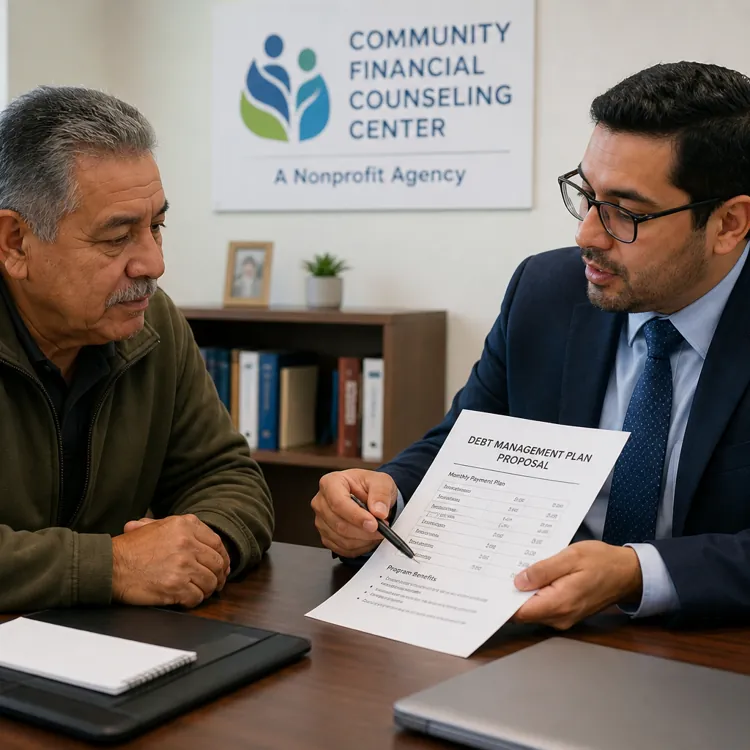
A debt management plan (DMP) is a great option if you’re hoping to reduce debt without taking on more. Instead, you’ll work with a credit counseling agency that will help you go over your budget and then approach your creditors to lower the interest and waive fees where they can.
After that, you’ll make one payment a month to the agency, which they’ll split between your creditors. “Most plans run their course in three to five years,” said Foster, “and these plans typically only cover unsecured debt like credit cards and personal loans, so your mortgage and car finance sit outside it.”
The biggest advantage of a debt management plan is you don’t have to be up to date on your payments in order to make use of this type of plan. “Most creditors would rather get some money back through a structured plan rather than nothing at all,” Foster said. “But it pays to act early rather than get too far behind.”
Debt settlement as a consolidation alternative
One key difference between settlement and consolidation is that settlement involves asking creditors to accept less than the full amount owed rather than combining debts into a new loan. A creditor might be willing to pause payments for a period of time or extend the repayment period, resulting in lower monthly payments.
If you can still repay some of the debt, a settlement will leave your credit in better shape than bankruptcy.”
In some cases, a creditor may agree to accept less than the full amount owed through a lump-sum payment or repayment plan. Keep in mind that creditors aren’t required to accept settlement offers.
Expect your credit score to take quite a hit if you have debt forgiven. However, Foster said that “If you can still repay some of the debt, a settlement will leave your credit in better shape than bankruptcy.”
Bankruptcy as a consolidation alternative
Deciding between bankruptcy and debt consolidation depends partly on whether you can realistically repay what you owe. Bankruptcy may become an option when your debt can’t be managed another way. The two most common types of personal bankruptcy are Chapter 7 and Chapter 13.
- Chapter 7: This type of bankruptcy allows you to erase certain debts, but you may have to give up property that bankruptcy laws don’t protect.
- Chapter 13: If you have a regular income, you may be able to follow a court-approved plan to repay all or part of your debt over three to five years. You can usually keep your property while making the required payments.
Foster summarized the difference between the two bankruptcies this way: “One’s a clean break, the other’s a phased catch-up.”
FAQ
How do I pay off $30,000 in debt in one year?
To pay off $30,000 in one year, you’ll need to put at least $2,500 per month toward the debt, plus enough to cover interest and fees. That may require cutting expenses, increasing your income or selling items. If that amount isn’t realistic, consider a longer payoff timeline.
How to get out of debt without consolidation?
You can use the debt snowball or debt avalanche method to get out of debt without consolidating. With the snowball method, you put extra money toward your smallest balance while making minimum payments on your other debts. The avalanche method targets the debt with the highest interest rate instead.
After paying off one debt, start paying off the next one until you run out.
Can I qualify for a DMP if I’m behind on payments?
Yes, being behind on payments doesn’t disqualify you from a DMP. A credit counselor will look at what you owe and what you can afford each month to see if a DMP could work for you.
Article sources
ConsumerAffairs writers primarily rely on government data, industry experts and original research from other reputable publications to inform their work. Specific sources for this article include:
- Federal Reserve Bank of New York, "Household Debt Balances Decreased Slightly; Credit Card Delinquency Transition Rates Remained Steady." Accessed Sept. 17, 2026.
- Administrative Office of the United States Courts, "Chapter 7 - Bankruptcy Basics." Accessed Sept. 16, 2026.
- Administrative Office of the United States Courts, "Chapter 13 - Bankruptcy Basics." Accessed Sept. 16, 2026.