
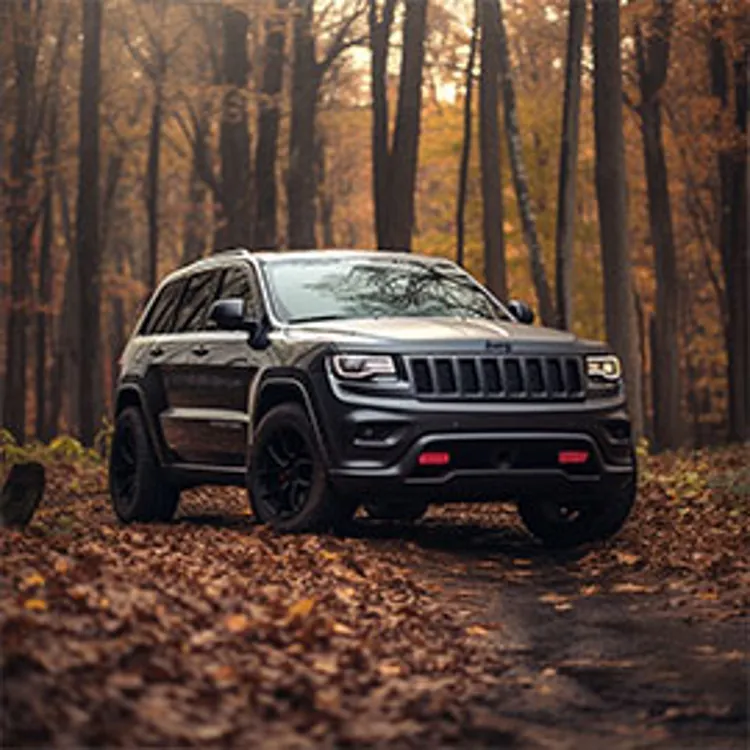
Grand Cherokee extended warranty coverage
An extended warranty functionally “extends” the factory warranties your vehicle comes with. For Jeep Grand Cherokees, those include:
- A three-year/36,000-mile bumper-to-bumper warranty, which covers over 5,000 parts but not anything designed to wear out over time (like tires or brake rotors)
- A five-year/60,000-mile powertrain warranty, which covers your engine, transmission and drive axle(s)
For context, three years of bumper-to-bumper coverage is both the industry standard and the least you’ll get from a major manufacturer, so you might find yourself wanting extra coverage for your Grand Cherokee. If so, you have two main options:
- Buy an official, Jeep-backed extended warranty from a company called Mopar (which handles parts and warranties for Jeep, Chrysler, Fiat, Dodge, Ram and Alfa Romeo).
- Buy an unofficial plan from a third-party warranty company. These plans can offer similar (or better) coverage but with the added benefit of letting you go to any ASE-certified mechanic for repairs (not just a dealership).
» LEARN: What to know about manufacturers’ extended warranties
Before we move on, we want to make a quick note about auto warranties in general. Namely, they only ever cover repairs needed due to factory defects.
What does that mean? If your air conditioner suddenly stops working due to failing recirculation doors — a common problem on Grand Cherokees, according to RepairPal — that repair would likely be covered under warranty. But, if you install a lift kit that damages your suspension, or spill a drink on your infotainment system, neither repair would be covered under warranty since both stemmed from outside damage.
» MORE: What does a car warranty cover?
A ConsumerAffairs investigation found that most drivers surveyed couldn’t afford to pay cash for a $1,000 repair bill, and 13% of respondents simply had no way to handle a bill that large — even with credit.
What’s covered and not covered by each Jeep extended warranty plan
Extended Jeep warranties (Mopar Vehicle Protection) offer tiered coverage levels so you can choose how much protection you want beyond the factory warranty. Below is a breakdown of what each major plan typically includes and excludes.
| Plan | Coverage | Inclusions | Exclusions | Notes |
|---|---|---|---|---|
| Maximum Care | Most comprehensive | 5,000+ components including engine, transmission, steering, suspension, brakes, electrical systems, HVAC, instrumentation, power & luxury groups | Routine maintenance, wear items (brake pads, wipers, tires), cosmetic/body items, glass, filters, accessories (snowplows, trailer hitches), damage from misuse, collisions or improper maintenance | Ideal for long-term owners and frequent drivers; closest to bumper-to-bumper coverage |
| Added Care Plus | Midtier | 850+ components including powertrain plus electrical, steering, suspension, braking, HVAC, engine cooling, fuel delivery | Advanced electronics (touchscreens, cameras), cosmetic parts, routine maintenance, wear items, some luxury/interior mechanisms | Broad mechanical protection without full luxury or infotainment coverage |
| Powertrain Care Plus | Basic protection | Core powertrain components: engine, transmission, driveline, drive axles, related seals & gaskets; often includes roadside/towing & first-day rental benefits | Non-powertrain systems (suspension, HVAC, braking, electrical), interior/exterior trim, accessories | Budget-friendly option focusing on the most expensive core components |
How much does a Jeep Grand Cherokee extended warranty cost?
While researching this article, we found the lowest quote we received for a three-year/36,000-mile bumper-to-bumper warranty on our sample Jeep (a 2022 Grand Cherokee Limited with 40,000 miles) was $2,145. That was for one of Jeep’s official plans through Mopar, specifically a Maximum Care plan offered by Zeigler Auto Group.
In a bit of a surprise, the quotes we received from two dedicated extended warranty companies we contacted were considerably more expensive, averaging around $3,500 overall. A price gap that wide might invite some skepticism, but according to a representative from Zeigler Auto Group, the company’s high sales volume enables it to sell official Mopar warranties at low prices.
Get quotes from multiple providers when you’re ready to buy to see who’s offering the best deal.
Just keep in mind that these are quotes for a 2022 Grand Cherokee Limited, so your cost may vary. If your Grand Cherokee is a newer model with fewer miles, you may pay less. (Extended warranties tend to get more expensive as your factory warranty runs out.) Likewise, a more expensive trim, like an Overland or Summit, may result in higher warranty prices since those trims are equipped with more features that may eventually need fixing.
If you're able to score a similar deal, $2,150 is well below the average cost of $1,000 per year of coverage. But is it worth the cost?
» LEARN MORE: Where can you use an extended auto warranty?
Deductible options and their impact on warranty pricing
When evaluating a Jeep Grand Cherokee extended warranty, the deductible you choose directly affects your overall cost and out‑of‑pocket expenses. A $0 deductible means you pay nothing at the repair shop for covered breakdowns, but plans with no deductible typically carry higher upfront or monthly premiums to balance the risk for the provider. Conversely, a $100 deductible usually lowers your premium because you agree to pay more at the time of a covered repair.
Pros of a $0 deductible:
- No repair‑day costs on covered claims. This is good for frequent repairs.
- Greater predictability with covered repairs
Pros of a $100 deductible:
- Lower overall warranty price or monthly payment.
- Still modest out‑of‑pocket at the time of repair.
For example, choosing a $100 deductible instead of $0 could reduce your premium significantly, especially on comprehensive coverage plans, but you should weigh that against how often you expect to use the warranty. Higher deductibles lower premiums but increase out‑of‑pocket costs when repairs occur, while lower deductibles do the opposite.
Is a Grand Cherokee extended warranty worth it?
An extended warranty may be worth it for your Grand Cherokee, but it depends on a few factors. We’ll explain things below so you can make the decision for yourself.
First, as a general rule, an extended auto warranty has a better chance of being worth it if:
- Your vehicle has below-average reliability scores.
- The cost of the extended warranty is less than or comparable to the expected cost of repairs.
- A big, unexpected repair bill could be financially catastrophic to you.
- You don’t mind paying a few thousand dollars exclusively for extra peace of mind.
Since we can’t assume whether you related to the third and fourth bullets, let’s look at the first two points when it comes to Grand Cherokees.
For starters, Jeeps don’t rank well for long-term dependability in general. J.D. Power ranked the brand 28th out of 30 automakers based on the overall reliability of 2022 model-year vehicles.
» MORE: Jeep maintenance: cost, plans and service schedule
As for the Grand Cherokee specifically, RepairPal rated it 3.5 out of 5. According to the site’s 2019 data, Jeep Grand Cherokees tend to cost owners $666 ($956 in 2025 when adjusted for inflation) per year in repairs, which is barely more than the $888-per-year industry average. Both the frequency and severity of Grand Cherokee repairs were also reportedly average.
Consumer reviews of the Grand Cherokee indicate a less-than-reliable ownership experience. While we acknowledge that online reviews tend to be negatively biased, some of these stories do show why you might want extra protection.
My wife, a teacher, has been a huge fan of Jeep since she has had her driver’s license. … Last week she suggested that we move over to a more dependable brand such as Toyota after this debacle.”
Taylor, a reviewer from Colorado, wrote: “My wife, a teacher, has been a huge fan of Jeep since she has had her driver’s license. She has personally financed over 5 different models of Jeep Cherokees since our marriage. Already last week she suggested that we move over to a more dependable brand such as Toyota after this debacle.”
“I bought a Jeep Grand Cherokee in October 2022. 5 months, 6,500 miles later, it breaks down in the middle of nowhere,” wrote Nicholas, a reviewer in Minnesota. “The dealership has run the initial diagnosis and can't figure out what's wrong with it. There's no ETA on when they can do further diagnostics on it. I haven't had a vehicle all week.”
» READ MORE: How to choose an extended car warranty
(Now might also be a good time to mention that Mopar’s extended warranties also come with a $45 per day car rental allowance, 24/7 roadside assistance and up to $1,000 in trip interruption protection.)
All things considered, Grand Cherokees tend to exhibit below-average reliability and, in rare cases, may need some extremely expensive repairs. For that reason, an affordable extended warranty might be worth considering for the added protection, benefits and overall increased peace of mind it can provide. Just make sure to get enough coverage and shop around for a good price.
» MORE: Pros and cons of extended auto warranties
Extended auto warranty alternatives
Not sure if an extended auto warranty is right for you? There are other ways to prepare for surprise vehicle repair costs:
- Emergency savings: Maintain a savings buffer for automotive expenses.
- Mechanical breakdown insurance (MBI): Insurers sometimes offer this as an alternative to warranties.
- Prepaid maintenance plans: Budget-friendly for routine service but not for unexpected issues.
- Credit access: Helpful in a pinch, credit can cover costs but should be used carefully.
- DIY repairs or local mechanics: Avoid dealership markups with do-it-yourself fixes or trusted shops.



FAQ
Is a Jeep Grand Cherokee extended warranty transferable to a new owner?
Yes, most Jeep extended warranties can be transferred to a new owner, adding resale value and peace of mind. To transfer, contact your Jeep dealer with the buyer’s information and the original contract. Some plans may charge a small transfer fee. Completing the transfer ensures coverage continues seamlessly for the new owner, protecting against mechanical failures and maintaining the vehicle’s warranty-backed appeal. Always verify transfer eligibility and any required paperwork before finalizing the sale.
What geographical and dealer-specific factors affect availability and pricing?
Jeep extended warranty costs and availability can vary significantly depending on your location and the dealership you work with.
- Regional labor and parts costs: Urban areas with higher labor rates or limited parts supply may charge more for comparable coverage.
- Dealer policies: Some dealerships offer exclusive promotions, financing options or discounts that others do not.
- Local demand: High-demand regions may see higher pricing, while rural areas may have fewer plan options.
- State regulations: Certain states have rules governing warranty sales, affecting plan terms and eligibility.
Comparing multiple dealers and regions helps ensure you get the best value for your Jeep warranty.
What are the eligibility requirements and limitations?
Before purchasing a Jeep extended warranty, it’s important to understand the common eligibility rules that providers enforce:
- Vehicle age: Most plans require the Jeep to be under 10 to 12 years old, though some providers may allow older vehicles with limited coverage options.
- Mileage: Coverage often has mileage limits, typically ranging from 100,000 to 150,000 miles for full plans. High-mileage vehicles may qualify only for powertrain or basic plans.
- Ownership: Some plans are only available to the original owner, while others allow transfers to subsequent owners within a set time frame.
- Vehicle condition/inspection: Many providers require a mechanical inspection before approval. Preexisting mechanical issues can disqualify your Jeep or restrict coverage.
Checking these requirements in advance helps avoid wasted quotes and ensures your Jeep qualifies for the desired plan.
» MORE: Jeep Wrangler extended warranty: cost, coverage and plans
What are some common exclusions and limitations?
Jeep extended warranties provide valuable coverage, but several items are typically excluded:
- Wear-and-tear items: Brakes, tires, wiper blades and clutch components.
- Routine maintenance: Oil changes, fluid flushes, filters and tune-ups.
- Preexisting conditions: Any issues present before warranty purchase.
- Misuse or modifications: Damage from racing, off-roading beyond factory limits or aftermarket parts.
- Environmental and cosmetic damage: Rust, corrosion, or cosmetic scratches not affecting function.
- Other limitations: Coverage may vary by plan, so always consult the warranty booklet for complete terms.
Understanding exclusions helps avoid surprises and ensures the warranty matches your Jeep’s needs.
Article sources
ConsumerAffairs writers primarily rely on government data, industry experts and original research from other reputable publications to inform their work. Specific sources for this article include:
- RepairPal, “Jeep Grand Cherokee Repair & Maintenance Costs.” Accessed Dec. 14, 2025.
- J.D. Power, “Vehicle Dependability Still Suffering Due to Pandemic Aftershocks, J.D. Power Finds.” Accessed Dec. 14, 2025.
- RepairPal, “Jeep Grand Cherokee Reliability Rating.” Accessed Dec. 14, 2025.
- Insurify, “Average Cost of Extended Auto Warranties.” Accessed Dec. 14, 2025.
- Cuvrd, “No Deductible Car Warranty: Is “$0 at the Shop” Really Worth It?” Accessed Dec. 14, 2025.