
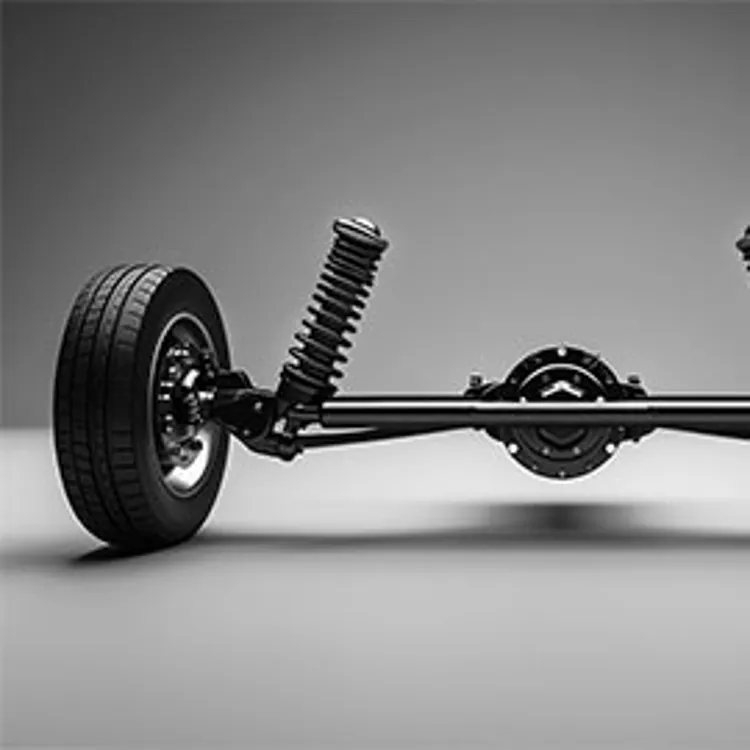
Axle warranty coverage
Axles are generally covered by auto warranties because they're part of the car's powertrain and drivetrain system.
Factory warranty coverage
Axles are typically covered by factory powertrain warranties. For context, when you buy a new car, it will come with a powertrain warranty and a bumper-to-bumper warranty. Powertrain warranties typically last for five years or 60,000 miles, but some last up to 10 years or 100,000 miles. Bumper-to-bumper warranties typically last three years or 36,000 miles, and typically cover more parts than powertrain warranties.
Extended warranty coverage
Similar to factory warranties, axles are covered under most extended warranty plans. They typically fall under powertrain warranties, though it’s best to check which parts are covered before purchasing a plan.
When is an axle not covered by a warranty?
There are some circumstances when an axle might not be covered. For example, if you get into a car accident, then your axle replacement or repair will not be covered, even if you have an auto warranty. In that case, you would have to utilize your auto insurance for help with payment.
Also, if your axle was damaged due to neglecting routine maintenance, misusing your vehicle or a road hazard like hitting a pothole, auto warranties generally won’t cover repair or replacement. Many extended warranties also won’t cover components that failed due to preexisting conditions, or conditions that started before the policy was active.
How much does it cost to replace an axle?
The average cost to replace an axle is between $974 and $1,094, according to RepairPal. However, costs could be lower or higher than that depending on the extent of the damage, what type of car you drive and which axle needs to be replaced. Generally, drive axles are more costly to fix or replace, though costs can also vary depending on if you need a new front or rear axle.
» MORE: Extended car warranty cost factors
Typical axle shaft replacement costs
The table below shows typical axle shaft replacement costs for a range of vehicles, according to RepairPal.
| Vehicle model | Total cost |
|---|---|
| Ford F-150 | $599 to $702 |
| Jeep Grand Cherokee | $678 to $759 |
| Toyota Tacoma | $1,262 to $1,463 |
| Chevrolet Impala | $564 to $632 |
» RELATED: 10 most expensive car repairs
Customer experiences with axle warranty coverage
Many ConsumerAffairs reviewers have had positive experiences with getting an axle repair or replacement covered. However, others have faced challenges with claim denials, delays in approvals and issues with coverage for specific related parts.
For example, Darktide, a reviewer from Florida, said: “I just bought a 2011 Toyota Tundra and the dealership encouraged me to buy an extended warranty, which I did for over [$4,000] for the platinum warranty. About a week later [...] the entire front end (rack and pinion, ball joints, cv joints, and axles) all were [...] in need of repair. According to my platinum warranty, all that needed to be done was covered except for one issue. Fidelity warranty services denied my claim due to pre-existing conditions. They said none of that stuff goes out after driving 300 miles, even though it did.”
Compare extended warranty coverage for axles
Compare some of the best extended auto warranty companies for axle coverage:
| Company | Customer rating | Axle coverage available | |
|---|---|---|---|
 Endurance Warranty | Get Pricing | 4.5 |  |
 American Dream Auto Protect | Get Pricing | 4.1 | |
 olive | Learn More | 2.2 | |
 Omega Auto Care | Learn More | 3.8 | |
 Toco Warranty | Learn More | 3.9 | |
» MORE: Compare mechanical breakdown insurance vs. extended warranties
FAQ
Are axles considered part of the powertrain?
Generally, axles are considered to be a part of the powertrain since this includes the engine and parts that power the engine. If you have an active powertrain warranty, it should cover most axle repairs or replacements.
What are some common signs of axle problems?
Some common signs of axle problems include loud clanking or clunking sounds as you try to move your vehicle, an inability to move your car, grease leaking around the wheels or difficulty turning your vehicle.
Is it worth fixing a broken axle?
It’s not worth fixing a broken axle if it’s cheaper to replace it than repair it. Sometimes, replacing an axle can be cheaper than repairing it, and sometimes it can be more expensive. It’s best to ask an experienced mechanic about repair versus replacement costs, and then weigh the quotes and advice you receive against your vehicle’s age and value. For example, if your vehicle is 10 years old and facing a lot of expensive problems, it may be worth trading it in for a newer car.
Can I still drive with a broken axle?
It’s not recommended to drive with a broken axle since it will be more difficult to control the vehicle. If one of your axles is completely broken, you may not be able to move your car at all.
Article sources
ConsumerAffairs writers primarily rely on government data, industry experts and original research from other reputable publications to inform their work. Specific sources for this article include:
- RepairPal, “Axle Shaft Replacement Cost Estimate.” Accessed March 25, 2026.