

Solar cost calculator inputs to gather
Before you can use an online solar calculator, you’ll need some basic information about how much power you currently use, your home’s roof size and the amount of sun you typically get.
Every solar power calculator asks for different inputs; the ones from private solar panel providers are typically streamlined, while government-provided calculators, such as the one from the National Laboratory of the Rockies, ask for more in-depth and technical information.
Most solar cost calculators estimate the solar energy a system on your roof may produce, along with estimated costs and annual savings. The cost and savings portion will vary widely depending on financing and ownership options.
Your current electric bill and usage
Keep your current electric bill handy before loading a solar calculator to make things faster. Calculators typically ask for either your current bill in dollars or your current kilowatt-hour (kWh) usage. If it asks for a dollar total, the calculator is estimating your kWh usage using average power rates in your area.
If the solar power calculator asks for kWh, look on your bill for a usage summary or the meter reading section. If your bill only shows the meter reading start and end, subtract the start number from the ending number to calculate your usage that month.
Roof space, location and sun exposure
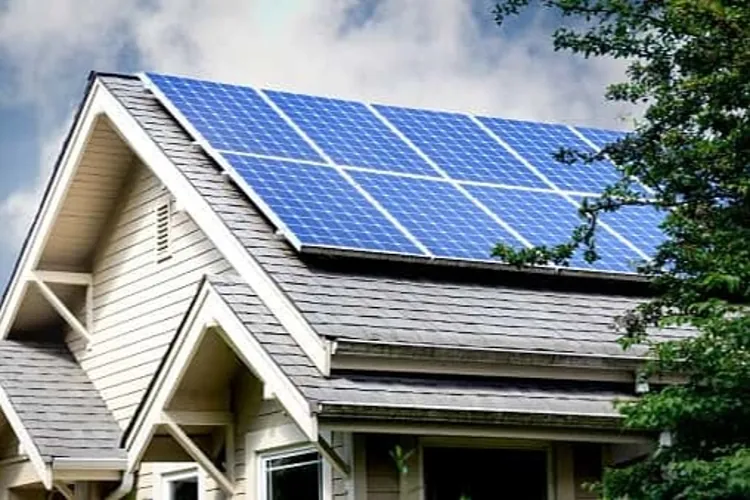
Thanks to publicly available satellite imagery, many solar calculators automatically pull your roof size estimate and use data from sources such as the NLR National Solar Radiation Database (NSRDB) or private alternatives to estimate sun exposure based on your location.
Many solar calculators pull your roof size estimate from publicly available satellite imagery.
Some only ask for your zip code and use baked-in behind-the-scenes estimates, while others ask for your exact address and are typically more accurate. Your roof’s shape, slope and orientation will also affect sun availability.
You may need to provide information about roof shading in some cases. Some calculators may ask for a percentage of the roof in shade, and others may ask for hours of shade. Every reputable solar power provider should follow up with a professional assessment of your home so your best guess will get you close, but the solar provider may adjust your estimate later.
Solar cost calculator formulas explained
At their core, solar cost calculators start with formulas to calculate the power you need and how many solar panels are required to generate that power. Then, calculators look at cost factors around that power to estimate how long it would take for you to realize savings from a home solar system.
Solar cost calculator formula factors include:
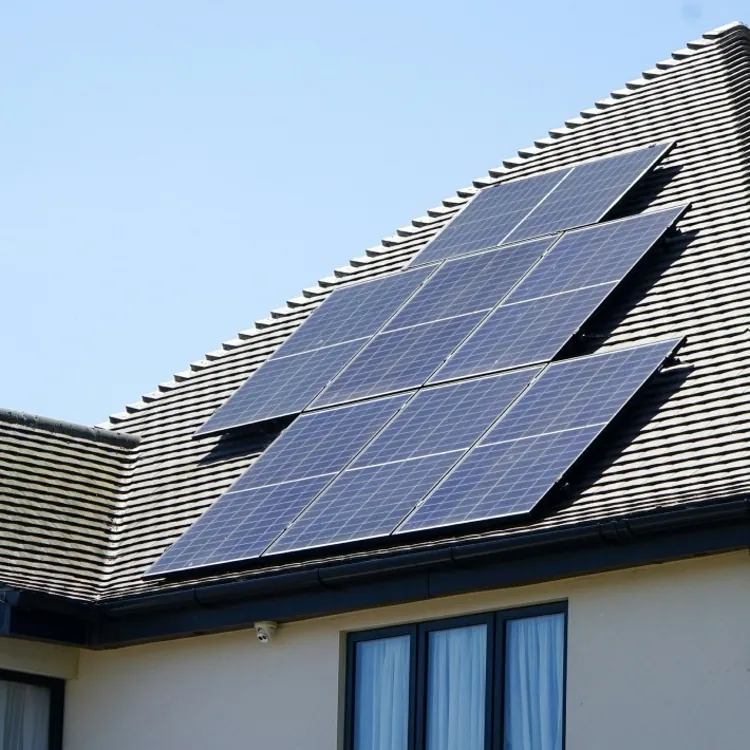
- How many solar panels can fit on your roof
- How much energy each solar panel can produce (based on panel type and sun availability)
- Any caps on wattage production for your area
- How much energy your home uses
- Whether your area has Solar Renewable Energy Certificate (SREC) or net metering programs to sell excess kWh
- Your financing and ownership choices
- Available incentives
System wattage
Solar panel system wattage estimates how many kWh each panel should produce and multiplies that by the number of panels to get a total. Likewise, you can take your estimated kWh need and divide it by kWh per panel to calculate the number of panels needed.
System cost and payback
System cost and payback help you determine how long it will be until you recoup your investment in solar power. It's a way to compare the cost of panels and other equipment, type of installation and cost of generated solar power (depends on financing/ownership plan) compared to your cost if buying power from your local utility.
The payback period formula then takes that number and divides it by the value of solar power the system produces compared to what you would have spent on power otherwise.
Costs and savings are typically presented as cost per watt, a monthly total and a savings estimate. Many solar power providers also include expected payback periods for different financing options and your return on investment (ROI) details.
Solar system cost estimates and incentives
Typical home solar power energy system costs vary considerably by state, with typical installations ranging from around $14,000 to well over $72,000. Most systems are roughly priced based on how much power they produce, with average cost per watt ranging between $2.50 and $3.50.
Solar system incentives have become less common in the last few years after the biggest incentive, the Federal Residential Clean Energy Credit, expired on Dec. 31, 2025. However, several Federal commercial credits are helping to keep rates per watt lower on leased and lease-to-own financed systems thanks to companies passing through discounts.
Federal commercial credits may save you money on leased and lease-to-own financed systems.
These third-party owner arrangements are common in solar financing under power purchase agreements (PPA) with third-party ownership (TPO) or loans with prepaid leases. In addition to potentially benefiting from lower wattage costs, these arrangements frequently include system maintenance as well.
Many energy companies also offer Solar Renewable Energy Certificates (SRECs) or net metering. Net metering offers you a credit for excess solar power you feed back into the grid, while SRECs work more like a tradable stock based on how much excess power you produce.
How to interpret solar calculator results
Most solar calculators are provider-based and work as sales tools. A full quote will be needed for accurate pricing. Calculators typically break down costs for one or more financing methods, expected power output and how long it will take for savings to offset costs.
When reading solar power calculator results, be sure to check for information bubbles and asterisks to read full details of what the numbers mean. For example, some calculators list net cost as your cost after incentives and rebates but do not specify which incentives and rebates are used in the calculations. Or, some may list $0 net cost instead of $0 down payment.
Total solar panel and system savings often means savings over a 25-year period based on your energy cost savings minus the system cost to get a basic solar power (ROI) number.
FAQ
Is a solar cost calculator accurate?
No, because most solar power cost calculators use assumptions and minimal data; they are estimates, not hard numbers. An on-site assessment is typically required for more accurate numbers.
What is the 33% rule in solar panels?
The 33% solar panel rule is a rule of thumb based on rules from the National Fire Protection Association (NFPA), International Residential Code (IRC) and International Fire Code (IFC), limiting solar panel coverage of a roof to 33% or less. The actual maximum coverage varies by location due to state and municipal codes.
Can I install solar panels myself to save money?
Yes, you can DIY solar panel installation. However, the process is complex and may require hiring an electrician, getting permits and dealing with your local energy company to ensure your system doesn’t improperly backfeed into the grid and cause a hazardous condition. There are also risks of roof damage and lack of labor warranty to consider.
Why do solar cost estimates vary between calculators?
Solar panel and power costs vary between calculators because calculators don’t use all of the variables needed, and each focuses on different data. Calculators ask for minimal information and use assumptions and averages to create a ballpark number meant as a sales lead generator, not a solid cost quote.
Bottom line
Solar cost calculators are a good starting point when researching solar energy options and deciding if solar power is worth it for your home. While solar power calculators aren't as accurate as a quote, they often provide enough information for homeowners to determine whether solar energy is out of your budget range.
When researching, pick three or four calculators from providers in your area to get a range of rough costs and savings to better compare options before getting full quotes. Try inputting multiple scenarios, such as comparing winter and summer power usage and sun percentages, to get a fuller picture of costs and potential savings.
Article sources
ConsumerAffairs writers primarily rely on government data, industry experts and original research from other reputable publications to inform their work. Specific sources for this guide include:
- Integrated Energy Systems Office, United States Department of Energy, "Quarterly Solar Industry Update." Accessed Oct. 13, 2026.
- National Laboratory of the Rockies, "Solar Installed System Cost Analysis." Accessed Oct. 13, 2026.
- University of Nebraska–Lincoln Extension, "Economics of Solar Photovoltaic Systems." Accessed Oct. 13, 2026.
- National Association of Home Builders, "Solar System Sizing and Production Estimates." Accessed Oct. 13, 2026.
- Modesto Irrigation District, "Solar Program." Accessed Oct. 12, 2026.
- California Building Standards Commission, "Codes." Accessed Oct. 12, 2026.
- Internal Revenue Service, "Residential Clean Energy Credit." Accessed Oct. 12, 2026.
- Department of the Treasury, Internal Revenue Service, "Clean Energy Tax Incentives for Businesses." Accessed Oct. 12, 2026.
- International Code Council, "ICC Digital Codes." Accessed Oct. 12, 2026.
- National Fire Protection Association, "Why Can’t Solar Panels Cover the Entire Roof of One- and Two-Family Dwellings and Townhouses?" Accessed Oct. 12, 2026.