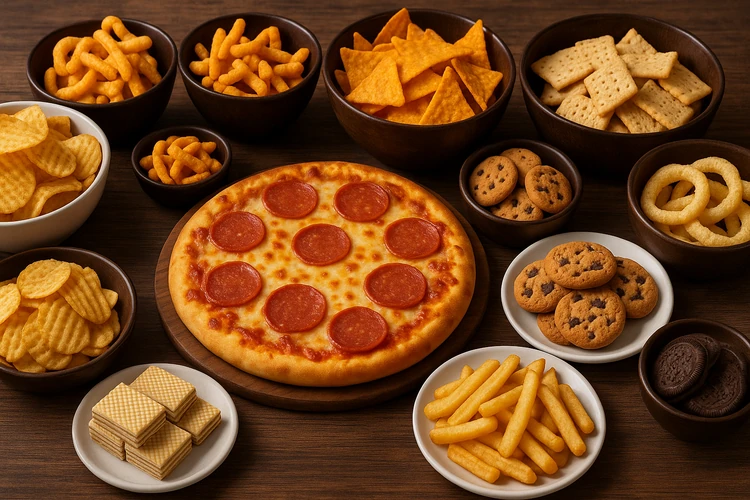

Ultra-processed foods are engineered for taste and convenience, not nutrition, often packing high levels of sugar, salt, and unhealthy fats into products that are stripped of fiber and essential nutrients.
Industrial additives — including emulsifiers, artificial sweeteners, and flavor enhancers — may disrupt digestion, metabolism, and even the gut microbiome.
Mounting research links heavy consumption of ultra-processed foods to obesity, heart disease, diabetes, depression, and premature death.
HHS Secretary Robert Kennedy’s emphasis on “healthy” food has focused a lot of attention on so-called ultra-processed food, which makes up a significant portion of the American diet. But, what exactly is ultra-processed food, and what makes it unhealthy?
For starters, it’s everywhere. Walk down almost any grocery store aisle and you’ll find them: brightly packaged snacks, frozen meals, sugary cereals, soft drinks, and ready-to-eat meats.
These ultra-processed food products now make up more than half of the calories consumed in the typical American diet, according to some research. They’re convenient, affordable, and engineered to taste irresistible.
They’re also increasingly associated with serious health risks. The Mayo Clinic produced the video below explaining the problems with ultra-processed food:
What counts as ultra-processed’?
The term comes from the NOVA food classification system, developed by Brazilian researchers. Ultra-processed foods are formulations made mostly or entirely from substances extracted from foods — such as oils, starches, and sugars — along with additives like flavorings, colorings, emulsifiers, and preservatives. They typically contain little or no whole food.
Examples include:
Sugary breakfast cereals
Packaged snack cakes and cookies
Hot dogs and chicken nuggets
Instant noodles
Sweetened beverages
Unlike minimally processed foods — such as frozen vegetables or canned beans — ultra-processed products are industrial creations designed for long shelf life and hyper-palatability.
Nutritional imbalance by design
One of the biggest concerns is nutritional quality. Ultra-processed foods tend to be high in added sugars, refined carbohydrates, sodium, and unhealthy fats, while being low in fiber, protein, and micronutrients.
Fiber, found in whole grains, fruits, and vegetables, helps regulate blood sugar, supports gut health, and promotes fullness. When foods are heavily refined, fiber is often stripped away. The result: products that digest quickly, spike blood sugar, and leave people hungry again soon after eating.
Many ultra-processed foods are also energy-dense, meaning they pack a large number of calories into small portions. This combination — high calories, low satiety — can promote overeating.
In a widely cited clinical trial conducted by the National Institute of Health, participants allowed to eat as much as they wanted consumed significantly more calories and gained weight on an ultra-processed diet compared with a minimally processed diet, even though both were matched for sugar, fat, and salt. Researchers concluded that processing itself may influence how much people eat.
The additive effect
Beyond macronutrients, scientists are examining the role of food additives.
Emulsifiers, which help ingredients blend smoothly, have been shown in some animal studies to alter gut bacteria and promote inflammation. Artificial sweeteners may interfere with the body’s glucose response and appetite regulation. Flavor enhancers and texturizers are designed to create a rewarding sensory experience that encourages repeat consumption.
While many additives are approved as safe individually, researchers are increasingly asking whether long-term exposure to combinations of these substances could have unintended consequences.
Links to chronic disease
Large observational studies from the United States and Europe have found associations between higher intake of ultra-processed foods and increased risks of:
Obesity
Type 2 diabetes
Cardiovascular disease
Certain cancers
Depression
Early mortality
While these studies cannot prove cause and effect, the consistency of the findings across populations has raised alarms among public health experts.
Some researchers suspect multiple mechanisms are at play: excess calorie intake, blood sugar spikes, chronic inflammation, altered gut microbiota, and even changes in brain reward pathways.
Why they’re so hard to avoid
Ultra-processed foods are often cheaper and more accessible than fresh produce and lean proteins. They require little preparation, have long shelf lives, and are heavily marketed — especially to children.
For busy families and people living in food deserts, these products can seem like the only practical option.
Public health advocates argue that addressing the issue requires more than individual willpower. It may also demand changes in food policy, marketing regulations, and agricultural subsidies.