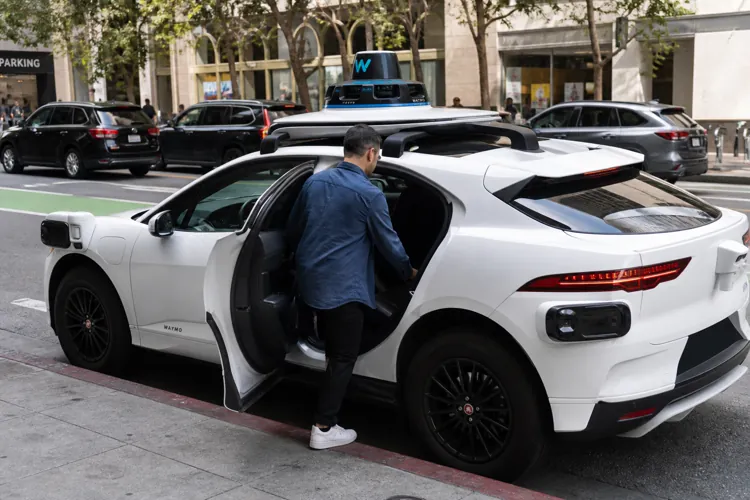

Waymo’s driverless vehicles were involved in 68% fewer police-reportable crashes per mile than human-driven vehicles in the same areas and years, an IIHS study found.
Their rate of crashes involving injuries was 81% lower, though the results cover Waymo’s operations in four cities rather than all self-driving vehicles.
Researchers say better reporting of crashes and miles driven is needed to monitor safety as robotaxi services expand.
Waymo’s driverless cars were involved in fewer crashes than human-driven vehicles in the places where they operated, according to a recent study from the Insurance Institute for Highway Safety.
Measured per mile traveled, Waymo vehicles operating without a human driver had a 68% lower rate of crashes that a person would typically report to police. Their rates of crashes involving injuries and single vehicles were 81% and 85% lower, respectively.
The researchers compared Waymo’s operations in Phoenix, San Francisco, Los Angeles and Austin with human driving in the same areas and years. Waymo logged about 50 million driverless miles during the study period; human drivers traveled about 222 billion miles in those locations.
The results varied by city. Waymo’s crash involvement rate was 76% lower than the human-driver rate in Phoenix, 71% lower in Los Angeles and 35% lower in San Francisco. In Austin, it was 4% higher, though IIHS cautioned that the sample there was relatively small.
The study concerns crash involvement, which includes incidents a Waymo vehicle may not have caused. It also applies to Waymo’s driverless vehicles under the conditions in which they operated. It does not establish that every self-driving system is safer than a human driver. The driver-assistance features available in many personal vehicles still require an attentive driver and are a different type of technology.
Why crashes are hard to compare
Companies operating self-driving vehicles generally must report incidents that ordinary drivers might never report to police. To make a more comparable measure, IIHS researchers reviewed federal crash reports and assessed which incidents a reasonable person would likely have reported. They estimated that only 22% of 736 reported crashes involving automated vehicles on public roads met that standard.
The researchers could calculate a driverless crash rate for Waymo because it voluntarily provides data on miles traveled without a driver. Other companies do not have to disclose comparable mileage, making their crash rates difficult to assess.
That gap matters as robotaxi services grow. IIHS said the current reporting system does not provide a practical way to keep comparing automated vehicles with human drivers at a larger scale. The Waymo findings are encouraging, the researchers said, but consistent crash and mileage data will be needed to see whether that safety record continues.