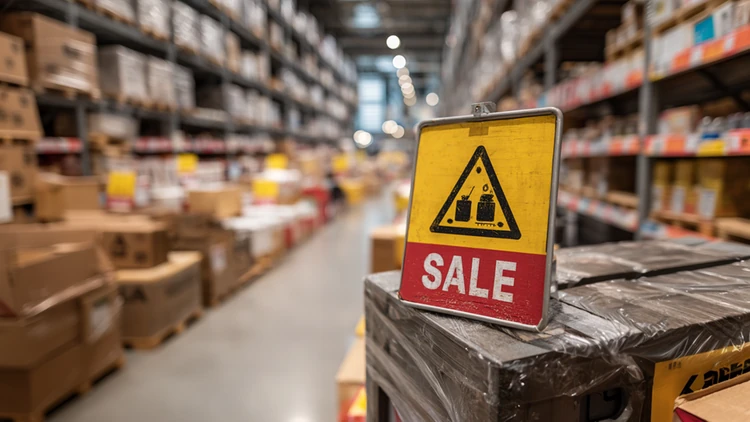

Many “60% off” sales are fake — Consumer Checkbook found lots of items are “on sale” more than half the time, so that “sale” price is really the everyday price
“List” and “regular” prices are often fantasy numbers based on past, future, or hypothetical prices almost no one actually pays
Treat sales as marketing: compare prices, use price trackers, and don’t let “today only!” hype push you into impulse buys
Wording like “60% OFF”, “Today only”, and “Doorbuster deal” all sounds exciting, but it turns out most of it is completely fake.
Consumers’ Checkbook spent six months tracking prices at 25 major retailers. The big takeaway: at most of these stores, the “sale” price is really just the everyday price dressed up to look like a deal. And this problem has gotten worse over the past decade, not better.
How the fake sales actually work
Retailers will show you a high “regular,” “original,” or “list” price, then put a lower “sale” price next to it. The message to your brain quickly becomes, “Look how much money I’m saving.”
But Checkbook’s researchers found that at most stores, the items they tracked were offered at those supposed discounts more than half the time.
Specifically, at 12 of the 25 companies, more than half the items were on “sale” every week or almost every week they checked. In other words, the so-called sale price was really just the normal price.
Some stores were especially bad: Bass Pro Shops, Bed Bath & Beyond, Dick’s, Foot Locker, Gap, JCPenney, Michaels, Nordstrom, Old Navy, and Wayfair had items that were essentially always on sale.
Interestingly, only three retailers stood out for consistently honest discounts:
- Apple
- Costco
- Dell
Walmart landed right in the middle with almost half of their items marked as “on sale,” which means their discount signage is still aggressive, but less extreme than many of their competitors.
Why “List” and “Regular” prices don’t mean much
On some retailer websites, Checkbook couldn’t find any explanations at all for how stores set their “list” prices. If an explanation was found, it was very vague and buried deep in their terms and conditions.
Some of these explanations are almost comical. One major department store said its “regular” or “original” price can be a former or future price that they, or another retailer, might someday charge.
Another big-name electronics chain says its “comparable value” is tied to what the product was (or will be) priced at.
The takeaway being that your “savings” is often based on a price that hardly any shopper ever paid. Or worse yet, a price that doesn’t even exist yet.
How to protect yourself from fake sales
The FTC has some clear rules in place against this deceptive practice, but unfortunately they are not being enforced.
Until the rules are enforced, you have to treat most “sales” as marketing, not math. Here’s how to fight back:
- Never assume a “sale” is a deal. In other words, if something always seems to be 40% off, that’s not a sale price, that’s the real price with a costume on.
- Always compare prices. Get in the habit of doing a quick price search at a couple other major retailers before you buy. Utilize tools like shopping comparison sites and price trackers (including CamelCamelCamel for Amazon) as they can show you real price history, not those fantasy “regular” prices.
- Ask for a price match. Many stores will match a lower price you find elsewhere, including online rivals. That way you can shop where you prefer without overpaying.
- Take your time. Even when a sale has an end date, some stores will extend the price or honor it later, especially if you ask politely. The “today only” urgency is often exaggerated.
- Ignore the emotional hype. All the fake discounts are designed to make you feel like you’re winning so you’ll buy more. Even if you score a good deal, don’t let that “savings high” push you to toss extra stuff into your cart.
- Call or email for big-ticket items. Because of minimum advertised price (MAP) rules, the lowest prices on appliances, electronics, and other big buys often aren’t shown online. Independent retailers sometimes quote better prices over the phone, via email, or to loyalty members.