2024 Internet News

Article Image

Be careful of fake websites when holiday shopping, report says

Scammers register numerous fake domains ahead of the holiday season to trick shoppers.

There have been hundreds of suspicious domains registered in 2024 that target top brands and products, including iPhones, Prada clothing and Clinique beauty products, according to digital-risk firm BrandShield. 

"We’re seeing fraudsters across the globe continue to exploit the holiday season by targeting consumers, who are spending increasingly more on holiday gifts year after year," said Yoav Keren, CEO and co-founder of BrandShield.

"With the rise of AI-enabled threats, bad actors have even more sophisticated means of tricking shoppers into buying fakes and counterfeits, and in many cases, they’ll take their money and send nothing at all," he added. "Consumers must exercise caution to ensure they buy from legitimate sources."

Registrations of fake websites in October targeting iPhone shoppers were the highest with 606 domains, followed by 239 registrations for Prada, 215 for Hermes, 191 for sneaker brand Hoka and 159 for beauty brand Clinique, BrandShield said.

How to avoid fake shopping websites

BrandShield said there are some simple steps to avoid fake shopping websites:

  • URL typos: If the website URL, or address, contains typos, such as “targett.com” or “eBaay.com”
  • Spelling or grammar errors: If the website has spelling or grammatical errors throughout. Legitimate retailers and merchants will invest in ensuring that the website is free of errors such as these.
  • Messages from third parties: If you receive a text or a private message through social media, email, text or instant messaging, offering a deal for a product that seems too good to be true, avoid clicking the links. Try finding the special offer directly at the website of the company you would like to buy from.
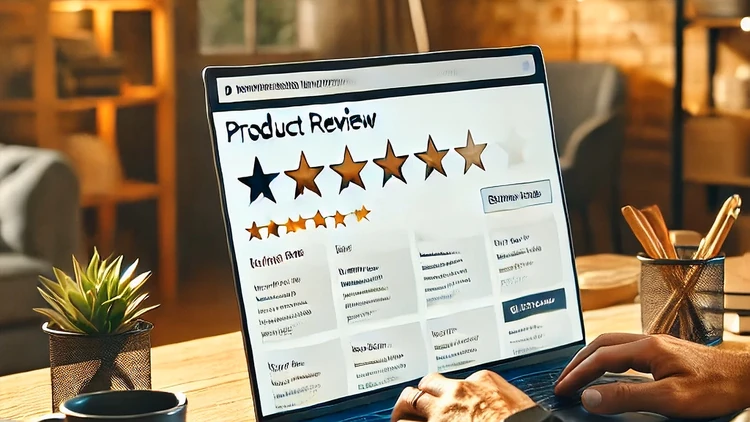
  • Negative reviews: If a website or company has many negative reviews, it may be a scam. Also, look for fake positive reviews trying to balance out real warnings from scam victims, and err on the side of caution when purchasing from unknown sellers.
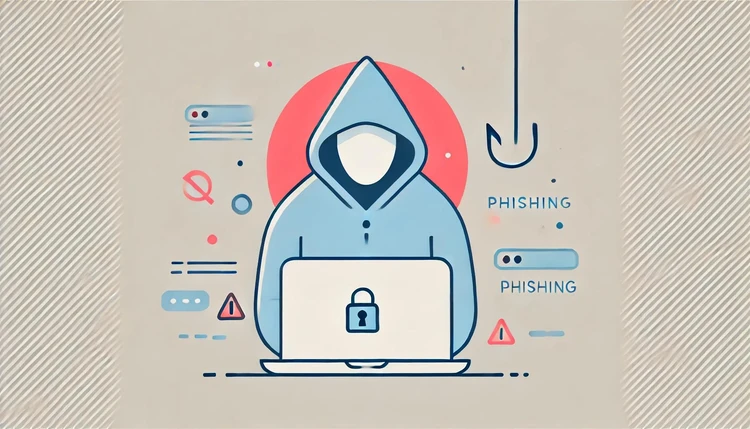
  • No URL padlock: If a website does not have a padlock image to the left of its URL. That being said, many phishing websites now have padlocks next to the left of their URLs, so this doesn’t necessarily indicate that a website is safe.
Article Image

Here’s how much fake reviews could be costing you

Federal regulators have made a concerted effort to crack down on fake reviews, posted by people who are paid to express a positive opinion about a product or service. Now, the Transparency Company, a firm that provides review verification technology, has calculated the cost to consumers who make purchase decisions based on bogus reviews.

Its report, "The High Cost of Review Fraud: An Economic Analysis of Consumer Harm," says fraudulent reviews inflict over $300 billion in annual consumer harm. Millions of consumers are misled into selecting unreliable service providers based on deceptive online reviews, undermining trust in digital platforms and disadvantaging ethical businesses.

"The financial impact of these fraudulent practices is staggering, and we hope this report encourages both consumers and businesses to be more vigilant," said Dr. Roberto Cavazos, Clinical Associate Professor at the University of North Texas.

The report found that nearly 14% of online reviews in critical sectors are highly suspicious or likely fake. This deception leads to an estimated $2,385 in economic harm per U.S. household annually. Furthermore, the proliferation of AI-generated reviews, which have grown by 80% month over month since June 2023, makes the problem worse.

Greg Sterling, a co-founder of Near Media and an expert in local digital marketing, highlighted the distortion caused by fake reviews. 

"Honest businesses are at a disadvantage, and consumers are increasingly misled,” he said. It's critical that platforms and stakeholders work together to mitigate this issue."

Analyzed millions of reviews

The Transparency Company's algorithms, which analyzed over 73 million reviews, reveal how fake reviews skew consumer choices. In the home services sector, for instance, unethical providers with inflated reviews may charge exorbitant fees for subpar work, leaving consumers with additional repair costs. 

Similarly, in the medical field, patients might be misled into selecting practitioners with falsified reputations, potentially resulting in harmful or unnecessary treatments.

In June 2023, The Federal Trade Commission proposed a new rule to stop marketers from using bogus review and endorsement practices such as using fake reviews, suppressing honest negative reviews, and paying for positive reviews, which deceive consumers looking for real feedback on a product or service and undercut honest businesses.

In its notice of proposed rulemaking, the FTC cited examples of clearly deceptive practices involving consumer reviews and testimonials from its past cases and noted the widespread emergence of generative AI, which is likely to make it easier for bad actors to write fake reviews.

The rule was finalized in August.

Article Image

Warning: Web browsing may be harmful to your mental health

A new study found that people with poorer mental health are more likely to browse negative content online, which worsens their mood and creates a cycle of negative behavior.

The study, published in Nature Human Behaviour, shows that this relationship is both causal and two-way: browsing negative content can worsen mood, and a bad mood leads to browsing more negative content.

Key Findings:

  • Researchers analyzed the web browsing history and mental health data of over 1,000 participants.
  • People with worse moods browsed more negative content, and doing so made their mood even worse.
  • In experiments, participants exposed to negative websites reported worse moods and then chose to view more negative content, showing a feedback loop.

Intervention

The researchers tested adding "content labels" to Google search results, similar to nutrition labels on food. These labels informed participants about the emotional impact of a webpage (positive, negative, or neutral).

“We are accustomed to seeing content labels on our groceries, providing nutritional information such as sugar, calories, protein, and vitamins to help us make informed decisions about what we eat. A similar approach could be applied to the content we consume online, empowering people to make healthier choices online,” co-lead author Professor Tali Sharot  of UCL, London, and Massachusetts Institute of Technology said.

Participants were more likely to choose positively-labeled websites, and their mood improved afterward.

Tool Development

The team created a free browser extension called Digital Diet, which adds labels to Google search results, helping users make informed and healthier choices about the content they view online.

“Our results show that browsing negatively valenced content not only mirrors a person’s mood but can also actively worsen it. This creates a feedback loop that can perpetuate mental health challenges over time,” Sharot said.

About the study

Over 1,000 study participants answered questions about their mental health and shared their web browsing history with the researchers. Using natural language processing methods, the researchers analysed the emotional tone of the webpages participants visited. 

They found that participants with worse moods and mental health symptoms were inclined to browse more negative content online, and after browsing, those who browsed more negative content felt worse.

In an additional study, the researchers manipulated the websites people visited, exposing some participants to negative content and others to neutral content. They found that those exposed to negative websites reported worse moods afterward, demonstrating a causal effect of browsing negative content on mood.

When these participants were then asked to browse the internet freely, those who had previously viewed negative websites—and consequently experienced a worse mood—chose to view more negative content. This finding highlights that the relationship is bi-directional: negative content affects mood, and a worsened mood drives the consumption of more negative content.

Article Image

Facebook and Instagram suffered brief blackouts

Facebook and Instagram, two social media platforms owned by Meta suffered outages this week. A company spokesman said the glitch was a “technical issue” and it was resolved within two hours.

It comes on the heels of another communication outage when AT&T Wireless lost service for several hours in late February. The two outages appear to be unrelated.

Outage detector Downdetector reported the outage and said it appeared to affect about 500,000 users. The outage affecting Instagram was about 10% of that total.

Some Facebook users reported getting messages saying they had been logged out of their accounts. Some users found they could not upload new posts, to either Facebook or Instagram.

The Downdetector chart below shows the outages spiked around 11:00 a.m. ET but quickly recovered by the afternoon.

Most of the reported problems had to do with the inability to log into accounts. About 17% of the reported problems concerned the app.

Article Image

Your internet provider may be pulling a fast one on you

One of the under-reported frontiers in the government's junk fees crusade is the unnecessary fees that cable companies and internet service providers (ISPs) are charging consumers – fees that can jack up a basic month’s service as much as 25%. 

But that’s all about to change in April. Or – at least, it’s supposed to change.

The Federal Communications Commission (FCC)’s new Broadband Consumer Labels regulation requires providers to display clear, easy-to-understand, and accurate information about the cost and performance of broadband services by April 10, 2024.

Providers with 100,000 or fewer subscriber lines must do so by October 10, 2024. Those points of sale include online and in-store.

What a tangled web we weave when first we practice to deceive'

That would make a good slogan for providers that have their hands in this cookie jar. See for yourself – get out your latest internet bill and check if you find any of these disguised charges anywhere: 

  • Overage Charges

  • Equipment Rental Fees

  • Installation Fees

  • Administrative Fees

  • Early Termination Fees

  • Customer Service Fees

  • Regulatory Fees

  • Technology Service Fees

If any of those sound vague, then they’ve done their job. The less you understand what the heck they mean, the happier the provider is. 

Keep that in mind once your first bill after April 10 lands in your mailbox.

“Comcast and other ISPs objected to a requirement that ISPs ‘list all recurring monthly fees’ including ‘all charges that providers impose at their discretion, i.e., charges not mandated by a government,’” said Jon Brodkin of ArsTechnica. 

“They complained that the rule will force them to display the pass-through of fees imposed by federal, state, or local government agencies on the consumer broadband label.’”

Did you know that you can get Big Tech broadband for half the price?

When April rolls around and the new rules come into play, any ISP has to itemize the fees they add to base monthly prices, even the fees related to government programs they choose to "pass through" to consumers, such as fees related to universal service or regulatory fees.”

But the fact is that you’ve probably been paying too much for too long anyway. On the low end – the one where a consumer uses email, watches a little YouTube, and not much more – you can probably find a monthly $20 internet package. However, most consumers pay about $70 which seems to be the average monthly price for decent internet that can handle streaming.

What most consumers don’t even realize is that there are local ISPs that buy internet service in bulk from the Big Tech providers like AT&T and then resell it to their customers at incredible savings.

For example, IgLou – an ISP in Louisville Ky., – resells AT&T fiber service for $49.95, plus a $3.33 legit telecom access cost recovery fee.

And, guess who comes out to set it up? Yep, AT&T. They run the wire, they install the modems, they do everything they would do if you were dealing with them directly.

Plus, local ISPs often have smaller customer bases, allowing for more personalized attention and quicker response times when you need help. They also tend to have a better grip on the local challenges that providers have – like terrain or interference – which you’d be hard-pressed to find from someone sitting in a tech support center a half world away working for a large branded ISP.

If you’re going to explore this option

The pricing flexibility that you’re handed with a local ISP is probably the strongest suit. Most have far simpler and more transparent plans than large companies, with fewer hidden fees and easier-to-understand terms.

Be sure to explain to the sales rep all that you need your internet to do. If it’s just email and some YouTube videos and the occasional Facebook post, that could be a lot less than if you needed to stream Netflix at hi-rez or you’re going to be using it for work and uploading and downloading a lot of files. 

One thing to keep in mind: While the promise of going the local route sounds inviting, all providers are not the same. Make sure you carefully research what other consumers think of the ISP and compare plans, features and pricing offered by both local and national providers before making a decision.