2022 Gas Prices and Trends

Article Image

Gas prices are still falling. Here’s why

In case you haven’t noticed, it costs a lot less to fill your car’s gas tank. The price of gasoline has consistently fallen over the last several weeks.

AAA reports the national average price of regular gas is $3.44 a gallon, three cents a gallon less than Thursday. Compared to one year ago the average price of regular is just seven cents a gallon more.

The average price of a gallon of gasoline is now below $3 in Texas, Arkansas, Mississippi, Georgia, and Oklahoma. It’s right at $3 a gallon in Louisiana and Missouri.

So what’s happened since the average price hit a record high of $5.01 a gallon back in June? It’s not that Americans are driving less.

This week’s report from the Energy Information Administration (EIA) shows demand for gasoline held steady at 3.2 million barrels a day last week. At the same time, refineries were busy producing more motor fuel.

Supplies are increasing

Government data show total domestic gasoline stocks rose by a little more than 1%. With demand the same, there is less pressure to send prices higher.

But how low can prices go? Many industry analysts think prices at the pump can continue to fall throughout the holiday season, helping motorists cope with rising prices elsewhere.

“The next 60 days look really, really hospitable for consumers,” Tom Kloza, global head of energy analysis for OPIS, told the Wall Street Journal.

Patrick DeHaan, head of petroleum analysis at GasBuddy, also expects gas prices to continue falling, holding out the possibility of a national average price of $2.99 a gallon by Christmas.

“All the metrics look very positive for motorists as this week is likely to continue seeing falling gasoline prices, with many areas falling to the lowest level since Russia’s invasion of Ukraine in February,” DeHaan said.

What about that invasion?

But what about the Russian invasion of Ukraine in February, which sparked international sanctions on Russian oil sales? At the time, there were fears that if Russia couldn’t sell its oil it would lead to worldwide shortages.

It hasn’t worked out that way. Russia has found new customers in the non-Western world so the total supply of oil has remained fairly stable. Currently, the price of U.S.-produced WTI is around $80 a barrel after rising well over $100 earlier this year.

China has also kept oil prices from rising very much. The government there has shut down economic activity in several major cities in an effort to stamp out COVID-19. That has led to a reduction in Chinese oil demand.

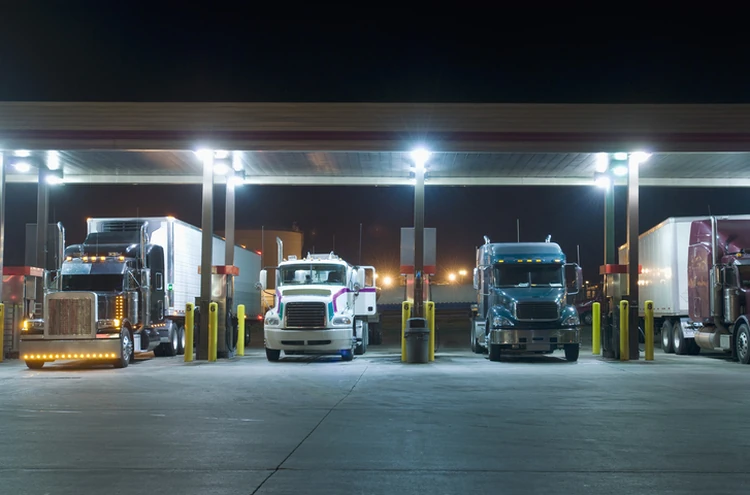
And, there’s more good news. The price of diesel fuel, which has remained stubbornly high, has also begun to fall. Just over a month ago the government reported the U.S. had just a few weeks' supply of diesel on hand. Since then refiners have stepped up production.

The national average price of diesel is still over $5 a gallon but has declined by 18 cents a gallon in the last 30 days. Economists warned that if diesel fuel prices continued to rise it threatened to make it more expensive to deliver food and consumer goods, increasing inflation.

Article Image

Holiday motorists will encounter record-high Thanksgiving gas prices this week

Thanksgiving holiday motorists will encounter the highest gasoline prices on record this week but that isn’t expected to deter travel, even amid rising inflation and worries about an impending recession.

In its annual projection, AAA predicts 54.6 million people will travel at least 50 miles from home this Thanksgiving. That’s an increase of 1.5% over 2021 and 98% of pre-pandemic travel volumes. In fact, this could be the third busiest year for Thanksgiving travel since AAA started tracking in 2000.

“Families and friends are eager to spend time together this Thanksgiving, one of the busiest for travel in the past two decades,” said Paula Twidale, AAA’s senior vice president of Travel. “Plan ahead and pack your patience, whether you’re driving or flying.

Most will drive

AAA predicts most travelers will drive to their destinations, much like last year. Nearly 49 million people are expected to travel by car. 

While Thanksgiving road trips have slightly risen – up 0.4% from 2021 – car travel remains 2.5% below 2019 levels. This year, the price at the pump may be a contributing factor.

The AAA daily survey shows the national average price of regular gas is $3.66 a gallon, the highest on record. But trends are moving in motorists’ favor. Prices are falling each day and are now more than 11 cents a gallon less than seven days ago.

On Friday, Patrick DeHaan, head of petroleum analysis at GasBuddy, reported the average price of regular had fallen more than four cents a gallon from Thursday, calling it the largest one-day drop ever recorded.

Prices are highest in California

Drivers will encounter the highest fuel prices in the nation in California. The statewide average price of regular is $5.25 a gallon. Hawaii is not far behind with a statewide average of $5.20 a gallon, followed by Nevada at $4.87.

Motorists in Texas will find the cheapest gas prices in the nation, the only state with a two-handle statewide average of $2.99 a gallon. Mississippi is close behind with an average price of $3.12 a gallon, followed by Arkansas at $3.13.

AAA reports air travel for Thanksgiving week is expected to be up 8% over 2021, with 4.5 million Americans flying to their Thanksgiving destinations this year. That’s an increase of more than 330,000 travelers and nearly 99% of the 2019 volume. 

“Airport parking spaces fill up fast, so reserve a spot ahead of time and arrive early,” Twidale said. “Anticipate long TSA lines. If possible, avoid checking a bag to allow for more flexibility if flights are delayed or you need to reschedule.”

Article Image

Ford tops list of SUVs with the best gas mileage

Even though gas prices have fallen over the last few weeks, they remain historically high. This is causing car shoppers to make fuel economy more of a priority. SUVs aren’t really known for fuel economy, but those powered by a hybrid engine get jaw-dropping miles per gallon (MPG).

Automotive publisher Edmunds.com has ranked the 2022 SUVs with the best MPG, and the Ford Escape Hybrid came out on top with a combined city/highway 41 MPG. With a starting price of $28,030, the Escape is also the least expensive of the high-mileage SUVs.

The Toyota RAV4 Hybrid impressed the experts at Edmunds with its combined 40 MPG rating. It also has a consumer-friendly sticker price, starting at $29,075.

The 2022 Ford Escape Plug-in Hybrid also clocks in at a combined 40 MPG. When pure battery power is factored into the equation, it gets the equivalent of 105 MPG. This vehicle, like some others that make the list, has the advantage of being able to charge the battery by plugging it into a power source instead of just relying on gasoline. However, it’s a bit pricier than its hybrid cousin, starting at $33,075.

Honda CR-V Hybrid boosts MPG over the gas-powered model

The Honda CRV Hybrid doesn’t quite hit 40 MPG, but it comes close. “Honda took one of our favorite SUVs on sale today and upped the efficiency with the CR-V Hybrid,” the Edmunds editors said. 

The EPA estimates that the CR-V Hybrid will get 38 combined MPG, while the standard CR-V gets 29 MPG. Prices start at $31,610.

The sticker price rises significantly when you buy the next SUV on the list, the Toyota RAV4 Plug-in Hybrid. Like the Escape plug-in, it gives owners a full-electric option. But unlike the Ford plug-in, the starting price is just under $40,000. It provides a combined 38 MPG and the equivalent of 94 MPG.

The Hyundai Tucson also comes as a plug-in hybrid, delivering a combined 38 MPG and the equivalent of 80 MPG. A fully-charged battery provides 33 miles of range and a 261 horsepower engine that gets you the rest of the way. The price starts at $34,900.

Rounding out the list is the 2022 Subaru Crosstrek Plug-in Hybrid. It’s one of the smaller crossover SUVs and may be closer to a hatchback. It gets 35 MPG, or the equivalent of 90 MPG. Prices start at $35,845.

Article Image

Average gas price drops by 16 cents per gallon this week

The price of gasoline remains much higher than normal, but at least it’s moving in the right direction. Prices fell sharply just about everywhere this past week.

AAA’s daily fuel price survey shows that the national average price of regular gas is $4.25 a gallon, down from $4.41 a week ago. Despite the rapid decline over the last three weeks, the average price remains above the previous record price of $4.11 a gallon that was set in July 2008.

The average price of premium gas is $5.00 a gallon, which is 16 cents lower than last Friday. The average price of diesel fuel is $5.31 a gallon, which is 14 cents less than last week.

Prices have fallen for two reasons: Oil prices have retreated from recent highs, and demand has fallen. With motorists driving less, fuel supplies remain plentiful. But there are signs that this situation could change in the coming days.

Patrick DeHaan, head of petroleum analysis at GasBuddy, reported Thursday that U.S. gasoline demand is up 1.04% from last week and is the highest of any Sunday through Wednesday period so far this year, exceeding the week ahead of July 4. That could mean prices at the pump will level off soon. In the meantime, many states enjoyed large declines in gas prices.

The statewide average price of regular dropped by 25 cents a gallon in Oklahoma and Kansas this week. The average price dropped by 18 cents in Illinois and Kentucky; 17 cents in Texas, Arkansas, and Tennessee; and 16 cents a gallon in South Carolina.

States with the most expensive gas

These states currently have the highest prices for regular gas, according to AAA:

  • California ($5.66)  

  • Hawaii ($5.48)    

  • Alaska ($5.18)   

  • Oregon ($5.11)  

  • Nevada ($5.10)    

  • Washington ($5.06)  

  • Idaho ($4.95)  

  • Utah ($4.87)       

  • Illinois ($4.73)    

  • Maine ($4.60)   

States with the cheapest gas

AAA reports that these states currently have the lowest prices for regular gas:

  • Texas ($3.78)  

  • South Carolina ($3.79)   

  • Georgia ($3.82)  

  • Mississippi ($3.83)

  • Tennessee ($3.85)    

  • Alabama ($3.86)   

  • Arkansas ($3.86)     

  • Louisiana ($3.88) 

  • Oklahoma ($3.88)  

  • Kentucky ($3.91)    

Article Image

Gas prices remain in a freefall

Oil prices are down, and so is demand for gasoline. As a result, the price at the pump continued its welcome slide this week.

AAA’s daily fuel price survey shows that the national average price of regular gas is $4.41 a gallon, 16 cents lower than last Friday and 54 cents less than a month ago.

The average price of premium gas is $5.16 a gallon, also 16 cents less than a week ago. The average price of diesel fuel is $5.45 a gallon, 12 cents less than last week.

Patrick DeHaan, head of petroleum analysis at GasBuddy, notes that Libya is ramping its oil production back up and could provide 1.2 million daily barrels to the world’s oil supply. At the same time, he says total U.S. oil stocks are down more than 66 million barrels from a year ago.

Many states saw double-digit declines in average pump prices this week. The statewide average price of regular gas fell by 19 cents a gallon in Kentucky and Tennessee; 18 cents in Texas; 17 cents in Illinois, Alabama, and Arkansas; 16 cents in South Carolina; 15 cents in North Carolina, Alaska, Georgia, and Utah; and 14 cents a gallon in California, Arizona, Mississippi, and Louisiana.

States with the most expensive gas

These states currently have the highest prices for regular gas, according to AAA:

  • California ($5.81) 

  • Hawaii ($5.59)    

  • Alaska ($5.27)   

  • Oregon ($5.23)  

  • Nevada ($5.20)    

  • Washington ($5.18)  

  • Idaho ($5.08)  

  • Utah ($4.98)       

  • Illinois ($4.91)    

  • Arizona ($4.75)   

States with the cheapest gas

AAA reports that these states currently have the lowest prices for regular gas:

  • Texas ($3.95)  

  • South Carolina ($3.95)   

  • Georgia ($3.96)  

  • Mississippi ($3.98)    

  • Alabama ($4.01)   

  • Louisiana ($4.02)    

  • Tennessee ($4.02)  

  • Arkansas ($4.03)  

  • Kentucky ($4.09)    

  • North Carolina ($4.10)   

Article Image

Gas prices plunged this week

Faced with record-high gasoline prices last month, Americans drove a lot less. As a result, motorists are seeing some of the fastest price declines on record.

AAA’s daily fuel price survey shows that the national average price of regular gasoline is $4.57 a gallon, 15 cents less than last Friday. A month ago, the average price hit a record $5.01 a gallon.

The average price of premium gas is $5.32 a gallon, 13 cents less than a week ago. The average price of diesel fuel is $5.57 a gallon, 10 cents less than last week.

In California, the statewide average fell by 19 cents a gallon this week. It's now below $6 a gallon for the first time in over a month. Patrick DeHaan, head of petroleum analysis at GasBuddy, reported Thursday that at least one station in 26 states was selling regular for less than $4 a gallon.

Industry analysts say there are two big reasons for the sharp drop in prices at the pump. Demand has fallen sharply, increasing supplies. At the same time, oil prices have fallen well below $100 a barrel because market traders are betting that the world economy will enter a recession and demand for oil will continue to fall.

In the last seven days, several states saw major price declines. In the last week, the statewide average price is down 21 cents a gallon in Arizona. The average price is down 20 cents a gallon in Texas, 19 cents in California, 18 cents in Kentucky, 16 cents in Alabama and Tennessee, and 15 cents a gallon in Georgia, Alabama, and Illinois.

States with the most expensive gas

These states currently have the highest prices for regular gas, according to AAA:

  • California ($5.95)  

  • Hawaii ($5.60)    

  • Alaska ($5.42)  

  • Oregon ($5.34) 

  • Nevada ($5.33)     

  • Washington ($5.30)  

  • Idaho ($5.17) 

  • Utah ($5.13)        

  • Illinois ($5.08)     

  • Arizona ($4.89)   

States with the cheapest gas

AAA reports that these states currently have the lowest prices for regular gas:

  • Georgia ($4.11)  

  • South Carolina ($4.11)   

  • Mississippi ($4.12)   

  • Texas ($4.13)   

  • Louisiana ($4.16)    

  • Alabama ($4.18)   

  • Arkansas ($4.20)  

  • Tennessee ($4.21)     

  • North Carolina ($4.25)   

  • Kentucky ($4.28)   

Article Image

Gas prices dropped sharply just about everywhere this week

The price of gasoline continues to come down, just not as quickly as it went up. A decrease in demand has increased supplies and removed some of the upward pressure on prices, at least in the short run.

AAA’s daily fuel price survey shows that the national average price of regular gas is $4.72 a gallon, a decline of 12 cents a gallon in the last seven days. But it’s still $1.58 a gallon more than a year ago.

The average price of premium gas is $5.55 a gallon, 10 cents less than a week ago. The average price of diesel fuel is $5.67 a gallon, nine cents a gallon less than last week.

“Domestic gasoline demand dipped recently, which took some of the pressure off of pump prices,” said Andrew Gross, AAA’s spokesperson. “About 80% of stations are now selling regular for under $5 a gallon,”  “But July is typically the heaviest month for demand as more Americans hit the road, so this trend of easing prices could be short-lived.” 

But Patrick DeHaan, head of petroleum analysis at GasBuddy, believes prices have more room to fall. On Twitter, he reports that 15 states now have at least one gas station selling regular fuel for below $4 a gallon. Nationwide, he says the average gas price could fall another 20 to 35 cents a gallon.

Illinois saw one of the biggest price drops this week, with the statewide average declining 14 cents a gallon. The statewide average fell 13 cents in Texas; 12 cents in Alabama; 11 cents in Tennessee and Kentucky; and 10 cents a gallon in South Carolina, North Carolina, and Mississippi.

States with the most expensive gas

These states currently have the highest prices for regular gas, according to AAA:

  • California ($6.18) 

  • Hawaii ($5.61)    

  • Alaska ($5.54)  

  • Nevada ($5.47)     

  • Oregon ($5.44)   

  • Washington ($5.42) 

  • Idaho ($5.24)     

  • Illinois ($5.23)     

  • Utah ($5.23)   

  • Arizona ($5.10)   

States with the cheapest gas

AAA reports that these states currently have the lowest prices for regular gas:

  • Georgia ($4.26)  

  • South Carolina ($4.25)   

  • Mississippi ($4.27)  

  • Arkansas ($4.33)    

  • Louisiana ($4.31)    

  • Alabama ($4.34)   

  • Tennessee ($4.37)  

  • Texas ($4.33)    

  • North Carolina ($4.39)   

  • Kentucky ($4.46)   

Article Image

Oil prices are falling, and gas prices could soon follow

After rising to $130 a barrel and taking gas prices to a record high, oil prices slipped below $100 a barrel in Tuesday’s trading.

West Texas Intermediate (WTI) crude, the main U.S. oil product, dropped 8.24% Tuesday to around $99.50 per barrel. At one point during the trading session, WTI was off more than 10%, hitting its lowest level since mid-May.

Brent crude, the type of oil used internationally, stayed above $100 a barrel -- but not by much. It fell by 9.45%.

Why the turnaround? Isn’t the world still struggling to fill the gap caused by the loss of Russian oil? It is, but analysts say U.S. production has started to increase.

Recession fears

Patrick DeHaan, head of petroleum analysis at GasBuddy, says there’s another reason for oil’s price retreat. The market increasingly believes the U.S. is headed for a recession if it isn’t already in one.

“Recession is part of it, a big part, but we have seen refined product inventories rising in recent weeks amidst high refinery utilization rates,” DeHaan told ConsumerAffairs.

The combination of increased refining and a drop in demand before the Fourth of July weekend is sending gasoline prices lower. The national average price of regular is down 23 cents a gallon from its record high of $5.01 a gallon on June 14. It has fallen every day since then.

Below $4 a gallon?

While the price at the pump is still very high by historical standards, DeHaan says he thinks it is very possible consumers could see the average price back below $4 before long.

“I think right now it's a potential before the end of the year, barring major hurricanes,” DeHaan said. “So iffy, but I do see it right now.”

Analysts point to recent declines in gasoline demand, suggesting that the high prices are causing motorists to drive less. They previously suggested that a small increase in online ordering in the second quarter was partly due to consumers reducing their number of trips to the store.

The main driver of this year’s spike in oil prices – sanctions on Russian oil because of its war with Ukraine – appears no closer to resolution. Analysts also point to structural issues that have limited oil production. They say prices could reverse course and head higher again at any time.

Article Image

Holiday travelers will find record high gas prices for July Fourth

For motorists gassing up for a Fourth of July road trip, there’s good news and bad news. The good news is the national average price of gas this week registered its sharpest decline in months.

The bad news? The price is at a record high for the Independence Day holiday.

AAA’s daily fuel price survey shows the national average price of regular gas is $4.84 a gallon, down 8 cents a gallon over the last seven days. Last year, holiday travelers paid an average of $3.12 a gallon.

The average price of premium gas is $5.55 a gallon, also 8 cents lower than last Friday. The average price of diesel fuel is $5.76 a gallon, 4 cents lower than last week.

After peaking at $5.01 a gallon in June, the price of regular gas has drifted lower, falling more quickly in some states than others. Industry analysts attribute the decline to falling demand – perhaps caused by near-record high prices – and a recent pullback in oil prices.

Patrick De Haan, head of petroleum analysis at GasBuddy, said U.S. refiners also have more oil to work with. In a Twitter post, he said U.S. oil production is now at the highest level since before the pandemic.

While many states reported mostly stable gas prices this week, some motorists enjoyed large drops in the price at the pump. The statewide average price of regular gas fell 19 cents a gallon in Tennessee. The average price dropped 12 cents a gallon in Texas, North Carolina, and Arizona; 11 cents in Arizona; 8 cents in Illinois, Georgia, and Alabama; and 7 cents a gallon in Mississippi, Arkansas, and Louisiana.

Utah bucked the trend of lower prices, as the statewide average rose 5 cents a gallon over the last week.

States with the most expensive gas

These states currently have the highest prices for regular gas, according to AAA:

  • California ($6.27) 

  • Hawaii ($5.61)    

  • Nevada ($5.56)     

  • Alaska ($5.56)    

  • Oregon ($5.48) 

  • Washington ($5.47)     

  • Illinois ($5.37)      

  • Utah ($5.26)   

  • Idaho ($5.25) 

  • Arizona ($5.21)   

States with the cheapest gas

AAA reports that these states currently have the lowest prices for regular gas:

  • Georgia ($4.35)  

  • South Carolina ($4.35) 

  • Mississippi ($4.37) 

  • Arkansas ($4.40)    

  • Louisiana ($4.40)     

  • Alabama ($4.45)   

  • Tennessee ($4.46)  

  • Texas ($4.46)    

  • North Carolina ($4.49)   

  • Oklahoma ($4.55)  

Article Image

Motorists got a slight break at the gas pump this week

A dramatic drop in oil prices translated into instant savings at the gas pump this week, as the price of gasoline retreated from its record high.

Fears that the U.S., along with the rest of the world, is facing a recession sent the oil market into a tailspin, with the price of oil falling by about $18 a barrel.

AAA’s daily fuel price survey shows that the national average price of regular is $4.92 a gallon, about eight cents a gallon lower than a week ago. A year ago, the price was $3.07.

The average price of premium gas is $5.63 a gallon, five cents lower than last Friday. The average price of diesel fuel is $5.80 a gallon, a penny more than last week.

“The recent high prices may have led to a small drop in domestic gasoline demand as fewer drivers fueled up last week,” said Andrew Gross, AAA’s spokesperson. “This dip, coupled with less costly oil, has taken some steam out of surging pump prices. And this is happening right before drivers gas up for what AAA forecasts will be a busy July 4th travel weekend.” 

Nearly every state has lower gasoline prices compared to last week. The statewide average fell by 12 cents a gallon in Indiana, 10 cents in South Carolina and Michigan; nine cents in Alabama, eight cents in Illinois and Louisiana, and seven cents a gallon in California.

States with the most expensive gas

These states currently have the highest prices for regular gas, according to AAA:

  • California ($6.35)    

  • Nevada ($5.61)     

  • Alaska ($5.58)    

  • Hawaii ($5.56) 

  • Washington ($5.51)      

  • Oregon ($5.51)     

  • Illinois ($5.47)  

  • Arizona ($5.34)   

  • Idaho ($5.20) 

  • Utah ($5.19)   

States with the cheapest gas

AAA reports that these states currently have the lowest prices for regular gas:

  • Georgia ($4.43)  

  • Mississippi ($4.45)

  • Arkansas ($4.48)    

  • Louisiana ($4.48)     

  • South Carolina ($4.48) 

  • Alabama ($4.54)   

  • Texas ($4.60)    

  • Oklahoma ($4.61)  

  • Kansas ($4.62)    

  • Tennessee ($4.66)  

Article Image

White House asks Congress to suspend federal gas tax for three months

President Biden is asking Congress to suspend the federal gasoline tax for three months to provide help to consumers who are struggling to fill their tanks.

The price at the pump peaked last week at $5.01 per gallon but has since pulled back slightly. Today, the national average for regular gas is $4.95 a gallon.

The proposal so far has been met with some skepticism. Chris Robinson, a senior analyst at Lux Research, says the federal tax holiday would provide minimal relief.

“Prices at the pump have increased from roughly $3.00 per gallon one year ago to roughly $5.00 per gallon nationally today,” Robinson told ConsumerAffairs. “As the federal gasoline tax is only $0.18, it only addresses a small fraction of the increase in prices to consumers.”

How much would consumers save?

If the average consumer purchases 50 gallons of gasoline per month, the savings would amount to $9 per month – or less than $30 over the three-month period. It’s also not clear whether every station would lower the price of gasoline by 18 cents per gallon. There is no federal rule that would require them to do so.

Assuming all gas stations passed along the full savings of the tax holiday to consumers, Patrick DeHaan, head of petroleum analysis at GasBuddy, has done a deeper dive into drivers of specific vehicles and has posted estimated three-month savings on Twitter. Here's what he says drivers could save:

  • Pickup truck: $66.24

  • Fullsize SUV: $55.20

  • Minivan/Mid-size SUV: $44.16

  • Fullsize: $35.28

  • Compact: $26.52

$6.3 billion in lost revenue

DeHaan also estimates that a federal gas tax holiday would cost the federal highway trust fund $6.3 billion in lost revenue.

The proposal comes amid the president’s war of words with leaders of the petroleum industry. In recent weeks, Biden has accused oil refiners of taking advantage of the oil shortage to increase profits. Oil executives have countered by pointing out that refineries are operating at near capacity. These officials have criticized the Biden administration's energy policy for being hostile to their industry.

“While the Biden administration has put some pressure on oil and gas companies to respond to high prices with increased supply, companies are hesitant to invest capital into refining capacity due to the threat of a decrease in demand from electric vehicle sales,” Robinson said.

Article Image

Gas prices may have peaked, at least for now

Americans got little relief at the gas pump this week, but at least the pace of rising prices has leveled off near its record high.

AAA’s daily fuel price survey shows the national average price of regular gas is $5.01 a gallon, the same price as Thursday and only 2 cents higher than last Friday.

The average price of premium gas is $5.68 a gallon, 4 cents more than a week ago. The average price of diesel fuel is $5.79 a gallon, 4 cents a gallon more than last week.

According to Patrick DeHaan, head of petroleum analysis at GasBuddy, no one should be in a hurry to fill their tanks. In a Twitter post, DeHaan said he expects prices to begin drifting lower and could hit $4.75 to $4.85 a gallon by the July 4th holiday.

President Biden this week challenged major refiners to produce more gasoline and diesel fuel, even if this means lower profits.

"At a time of war, refinery profit margins well above normal being passed directly onto American families are not acceptable," Biden wrote in the letter to the CEOs of major refining companies.

Motorists witnessed more stable prices this week and over the previous two weeks. The statewide average price of regular rose 12 cents a gallon in Missouri; 11 cents in Arizona; 10 cents in Oklahoma; 9 cents in Alaska; and 8 cents in Nevada.

States with the most expensive gas

These states currently have the highest prices for regular gas, according to AAA:

  • California ($6.42)    

  • Nevada ($5.67)     

  • Alaska ($5.61)     

  • Washington ($5.56)      

  • Oregon ($5.55)     

  • Illinois ($5.55)

  • Hawaii ($5.55)

  • Arizona ($5.39)   

  • Michigan ($5.21) 

  • Indiana ($5.20)   

States with the cheapest gas

AAA reports that these states currently have the lowest prices for regular gas:

  • Georgia ($4.49)  

  • Mississippi ($4.51)

  • Arkansas ($4.53)    

  • Louisiana ($4.56)     

  • South Carolina ($4.58)

  • Alabama ($4.63)

  • Tennessee ($4.64)    

  • Kansas ($4.67)  

  • Oklahoma ($4.67)  

  • Missouri ($4.69)    

Article Image

The average gas price closes in on $5 a gallon

It was another week of escalating fuel prices, as the national average price of regular gas closed in on $5 a gallon.

AAA’s daily fuel price survey shows that the national average price of regular hit $4.99 a gallon on Friday, another 22-cent gain. The average price has gained 61 cents in the last 30 days.

The average price of premium gas is $5.64 a gallon, a 25 cents per gallon increase over the last week. The price of diesel fuel is $5.75 a gallon, 18 cents higher than a week ago.

“Spot gasoline markets pushing higher again, up 8-12c/gal while diesel spots up 13c/gal,” GasBuddy’s Patrick DeHaan tweeted on Thursday. “We hit $5/gal and (it) won't stop there.”

Still-rising oil prices are partly to blame, but gasoline demand is also higher and drawing down stockpiles. Refiners, meanwhile, are performing a balancing act by diverting more oil to produce enough diesel fuel to keep transportation costs from spiraling out of control.

A number of states saw huge one-week increases in prices at the pump. The price of regular rose 34 cents a gallon in Kansas this week, 33 cents in Arizona, 32 cents in Virginia, 30 cents in Michigan, Illinois, and Oklahoma, 29 cents in South Carolina, and 28 cents a gallon in Tennessee.

States with the most expensive gas

These states currently have the highest prices for regular gas, according to AAA:

  • California ($6.42)    

  • Nevada ($5.60)    

  • Illinois ($5.57)  

  • Washington ($5.52)      

  • Oregon ($5.52)     

  • Alaska ($5.52)     

  • Hawaii ($5.51)

  • Arizona ($5.28)   

  • Indiana ($5.25)   

  • Michigan ($5.23)  

States with the cheapest gas

AAA reports that these states currently have the lowest prices for regular gas:

  • Georgia ($4.42)

  • Mississippi ($4.51)

  • Arkansas ($4.51)    

  • Louisiana ($4.52)     

  • Oklahoma ($4.57)   

  • Missouri ($4.57)    

  • South Carolina ($4.60)    

  • Kansas ($4.61)   

  • Alabama ($4.62)      

  • Tennessee ($4.64)     

Article Image

Gas price increases hit the accelerator this week

Motorists found no relief at the gas pump this week. With higher demand because of the Memorial Day weekend and surging oil prices, gas prices are setting daily record highs.

The AAA daily fuel price survey shows that the national average price of regular gas is a record $4.76 a gallon, an increase of 17 cents over last Friday. That’s about 56 cents a gallon higher than a month ago. The average price of premium gas is $5.39 a gallon, a 14-cent gain over a week ago. The average price of diesel fuel is $5.58, just five cents a gallon higher than last week.

A handful of states suspended their state gas tax this week, providing residents some immediate relief. Drivers in New York saw the price of regular drop by 11 cents a gallon.

But in most of the country, prices were moving higher. The statewide average price surged by 37 cents a gallon in Michigan, 31 cents in Illinois, 19 cents in Nebraska, 17 cents in Oklahoma, 15 cents in California and Kansas, 14 cents in Arizona, Arkansas, and Missouri, 13 cents in Nevada, and 10 cents in Oregon.

On Thursday, GasBuddy’s Patrick DeHaan reported on Twitter that U.S. gasoline inventories had ended May at their lowest level since 2014, suggesting that there will be no letup in pain at the pump.

States with the most expensive gas

These states currently have the highest prices for regular gas, according to AAA:

  • California ($6.24)       

  • Hawaii ($5.46)     

  • Nevada ($5.37)  

  • Washington ($5.28) 

  • Oregon ($5.28)   

  • Illinois ($5.27)   

  • Alaska ($5.25)

  • Arizona ($5.06)  

  • Michigan ($4.93) 

  • Indiana ($4.92)      

States with the cheapest gas

AAA reports that these states currently have the lowest prices for regular gas:

  • Georgia ($4.20)

  • Mississippi ($4.25)

  • Arkansas ($4.25)       

  • Oklahoma ($4.27)  

  • Kansas ($4.27)   

  • Louisiana ($4.29)  

  • Missouri ($4.31)    

  • South Carolina ($4.31)

  • Nebraska ($4.37)      

  • Tennessee ($4.36)       

Article Image

New York joins other states in suspending gas tax

Effective immediately, New York state has suspended its gas tax for the rest of the year – a move that will automatically roll back the price per gallon of gas by as much as 16 cents.

The move should come as a relief to residents of the state, who are paying an average of $4.93 a gallon. Those living in New York City have it even worse, paying $5.03 per gallon. That's nearly 30 cents per gallon higher than the national average.

Fortune reports that there are areas of New York where drivers could see even bigger discounts at the pump because some counties have their own gas taxes and are capping how much they collect per fill-up at between $2 and $3 per gallon.

Those who commute to New York from Connecticut are extra lucky because of Connecticut’s recent decision to suspend its 25-cent-per-gallon gas tax. Those who come in from New Jersey aren't so lucky because officials in that state have not made the move to suspend the gas tax.

A smattering of other states across the country – Florida, Maryland, and Georgia – have also suspended gas taxes, and there are proposals in Michigan, Alaska, Illinois, California, Minnesota, and Virginia to do the same. 

Will the federal government take the same approach?

If you’re thinking that the White House should just wave its magic wand and suspend gas prices across the country, don’t bet on it. When asked about the possibility, President Biden says the problem we’re facing with gas prices is tied to the pandemic and global tensions surrounding Russia.

“When COVID struck, demand for oil plummeted, so production slowed down worldwide. Because of the strength and the speed of our recovery, demand for oil shot back up much faster than the supply.  That’s why the cost of gas began to rise last year,” Biden remarked.   

“At the start of this year, gas was about $3.30 a gallon. Today, it’s … nearly a dollar more in less than three months. And the reason for that is because of Putin’s war. Our prices are rising because of Putin’s actions. There isn’t enough supply. And the bottom line is: If we want lower gas prices, we need to have more oil supply right now.”

Biden concluded by saying U.S. oil companies are also partly responsible for current struggles at the pump. 

"U.S. oil companies ... are recording their largest profits in years, [and] they have a choice," he said. "They can put those profits to productive use by producing more oil, restarting idle wells, or producing on the sites they already are leasing."

Article Image

Gas prices increase despite weaker demand

Consumers who are looking to hit the road over the Memorial Day weekend will have to pay high prices when they go to fill up.

AAA’s daily fuel price survey shows that the national average price of regular gas is $4.60 per gallon, which is a penny higher than last week. The average price of premium gas is $5.25 per gallon, which is two cents higher than last week. The price of diesel fuel went down slightly, falling to $5.53 per gallon from $5.57 per gallon last week. 

The Energy Information Administration (EIA) reports that gasoline demand decreased by approximately 200,000 barrels per day. However, officials say demand is likely to spike over the weekend as consumers travel over the holidays. As long as demand falls again after the weekend, they say pump price increases should be limited. 

States with the most expensive gas

These states currently have the highest prices for regular gas, according to AAA:

  • California ($6.07)    

  • Hawaii ($5.43)     

  • Nevada ($5.24)

  • Washington ($5.21) 

  • Alaska ($5.19)

  • Oregon ($5.18)   

  • Illinois ($4.96) 

  • New York ($4.92)    

  • Arizona ($4.92)   

  • District of Columbia ($4.84)   

States with the cheapest gas

AAA reports that these states currently have the lowest prices for regular gas:

  • Oklahoma ($4.10) 

  • Arkansas ($4.11)     

  • Kansas ($4.12)

  • Georgia ($4.13) 

  • Missouri ($4.17)  

  • Mississippi ($4.17)

  • Nebraska ($4.19)   

  • Louisiana ($4.21)     

  • Minnesota ($4.22) 

  • Colorado ($4.23)       

Article Image

Surging gas prices post another record high

With more oil being diverted to diesel fuel to bring down raging transportation costs, motorists endured still more pain at the pump this week as gasoline prices hit yet another record high.

AAA’s daily fuel price survey shows that the national average price of regular gas is $4.59 a gallon, eclipsing the previous record set earlier in the month. The price has gained nearly 50 cents a gallon in just the last 30 days.

The average price of premium gas is $5.23 a gallon, gaining 16 cents in the past week. The average price of diesel fuel is $5.57, only a penny a gallon more than a week ago. The price of diesel fuel went down slightly at one point this week, the first decline in over a month.

What’s notable this week is that every state now has an average gas price of over $4 a gallon. Five states have a statewide average greater than $5 a gallon, and the average price in California is now more than $6 a gallon.

“The high cost of oil, the key ingredient in gasoline, is driving these high pump prices for consumers,” said Andrew Gross, AAA spokesperson. “Even the annual seasonal demand dip for gasoline during the lull between spring break and Memorial Day, which would normally help lower prices, is having no effect this year.”

Most states experienced double-digit price increases for another week. Alaska set the pace, with the average price rising 34 cents a gallon. Washington’s average price rose by 30 cents.

States with the most expensive gas

These states currently have the highest prices for regular gas, according to AAA:

  • California ($6.08)    

  • Hawaii ($5.37)     

  • Nevada ($5.25)

  • Washington ($5.20)  30

  • Alaska ($5.16)   34

  • Oregon ($5.15)   

  • Illinois ($4.99) 

  • New York ($4.92)    

  • Arizona ($4.85)   

  • Pennsylvania ($4.77)   

States with the cheapest gas

AAA reports that these states currently have the lowest prices for regular gas:

  • Oklahoma ($4.05) 

  • Kansas ($4.06)     

  • Arkansas ($4.14)

  • Colorado ($4.15) 

  • Georgia ($4.15)  

  • Missouri ($4.16)

  • Minnesota ($4.16)   

  • Nebraska ($4.17)     

  • North Dakota ($4.18) 

  • Mississippi ($4.20)      

Article Image

Fuel prices surged again this week

The sticker shock at the gas pump continued for another week in every region of the nation. The prices of gasoline and diesel fuel remain at record highs.

AAA’s daily fuel price survey shows that the national average price of regular gas is $4.43 a gallon, an increase of 16 cents a gallon since last Friday. The average price of premium gas is $5.07 a gallon, 15 cents more than a week ago.

Rising diesel fuel prices slowed this week, but they're still at a record high of $5.56 a gallon. The one-week increase is only five cents a gallon. 

According to Patrick DeHaan, head of petroleum analysis at GasBuddy, U.S. consumers are spending $125 million more per day on gasoline than they did just a month ago.

Several states saw head-spinning price increases at the gas pump this week. The statewide average soared by 26 cents a gallon in Illinois, 25 cents a gallon in Illinois, and 20 cents a gallon in Texas.

The average price increased 18 cents in Georgia and Minnesota; 16 cents in Arkansas, Mississippi, Missouri, and Louisiana; and 15 cents in Washington, Oregon, and Oklahoma.

States with the most expensive gas

These states currently have the highest prices for regular gas, according to AAA:

  • California ($5.85)    

  • Hawaii ($5.30)     

  • Nevada ($5.12)

  • Washington ($4.90)  

  • Oregon ($4.88)   

  • Alaska ($4.81)   

  • Illinois ($4.80)    

  • Arizona ($4.70)   

  • New York ($4.66)  

  • Idaho ($4.50)   

States with the cheapest gas

AAA reports that these states currently have the lowest prices for regular gas:

  • Georgia ($3.94)   

  • Kansas ($3.98)  

  • Oklahoma ($4.00) 

  • Arkansas ($4.00)  

  • Mississippi ($4.00)  

  • Missouri ($4.01)    

  • Louisiana ($4.07)  

  • Nebraska ($4.07)  

  • Texas ($4.10)     

  • Minnesota ($4.10)  

Article Image

Gasoline and diesel fuel prices are at record highs and still rising

The pain for consumers and truck drivers continues at the fuel pump. The average price of both regular gas and diesel fuel hit record highs this week and show no sign of slowing.

According to AAA, the national average price of regular gas is $4.40 a gallon, while the average price of diesel is $5.55 a gallon. One reason for the surge is the high price of oil, which is a result of the shortage caused by the loss of Russian petroleum from the market.

When refiners receive a barrel of oil, they can choose to produce gasoline or diesel fuel. With fewer COVID-19 cases manifesting than in previous months, consumers are driving more and using more gasoline. However, the trucking industry's demand for fuel has never been higher due to supply chain backlogs.

Benjamin Dierker, director of Public Policy at the Alliance for Innovation and Infrastructure, says gasoline and diesel fuel are different markets competing for the same barrel of oil. He said refineries often respond to “market signals” to determine whether to produce more gas or diesel fuel. Lately, the market has signaled a need for more diesel fuel.

“Falling inventory and high demand for distillates in the supply chain and for air travel are spiking diesel costs,” Dierker told ConsumerAffairs. 

‘Kink in the hose’

So with less available oil, refiners have to choose between producing gasoline or diesel fuel. Patrick DeHaan, head of petroleum analysis at GasBuddy, says there’s an additional problem: The nation’s oil refineries aren’t producing as much of either fuel.

“Refining is the kink in the hose, and we're down 1 million barrels a day of refining capacity vs early 2019,” he wrote on Twitter.

Fuel prices were already fairly high before Russia invaded Ukraine earlier this year, provoking international sanctions. But since the invasion, gasoline prices have risen another 25%.

If consumers can take any consolation, today’s record-high pump prices aren’t really a record when adjusted for inflation. The U.S. Energy Information Administration reports that the 2008 high of $4.11 a gallon is actually $5.30 in today’s money.
Article Image

Gas prices surge wildly in last seven days

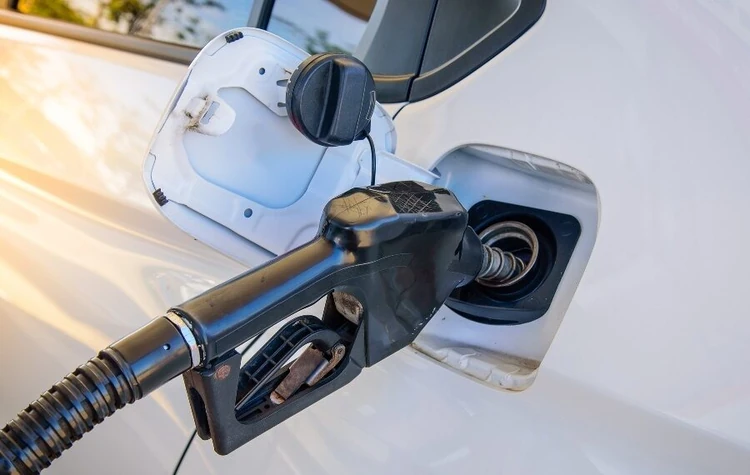
Whether you drive an SUV or a big rig, the last week has been painful when it was time to fill up. The price of gasoline and diesel fuel continued to rise.

AAA’s daily fuel price survey shows that the national average price of regular gas is $4.28 a gallon, 12 cents a gallon higher since last Friday. The average price of premium gas is $4.92 a gallon, 10 cents higher than a week ago. 

But it's the price of diesel fuel that is the most stunning, reaching another record high. Today, the national average price is $5.51 a gallon, an increase of 76 cents per gallon since last week and $3.13 higher than a year ago.

Truckers in the Northeast are paying a lot more. The average price of diesel in New York, where there is a shortage, is $6.25 a gallon, an increase of 83 cents a gallon in just the last seven days.

While the average gas price is rising at a more moderate pace, some states have experienced wild price swings in the last week. The statewide average price of regular is up 30 cents a gallon in Michigan, 19 cents in Ohio, 15 cents in Illinois, 12 cents in Wisconsin, and 11 cents in Texas.

The Senate Judiciary Committee Thursday approved the so-called “NOPEC” bill, which if passed would allow the U.S. to sue OPEC for antitrust and monopolistic behavior. In a tweet, Patrick DeHaan, head of petroleum analysis at GasBuddy, predicted such a law would result in even higher fuel prices.

While oil companies don’t set oil prices, they are benefitting from the rise in prices. This week, both Shell and BP reported near-record earnings.

States with the most expensive gas

These states currently have the highest prices for regular gas, according to AAA:

  • California ($5.76)  

  • Hawaii ($5.27)     

  • Nevada ($5.10)

  • Washington ($4.75)  

  • Oregon ($4.73)   

  • Alaska ($4.68)   

  • Arizona ($4.59) 

  • Illinois ($4.54)    

  • Utah($4.51)

  • Idaho ($4.46)   

States with the cheapest gas

AAA reports that these states currently have the lowest prices for regular gas:

  • Georgia ($3.76) 

  • South Carolina ($3.81) 

  • Arkansas ($3.84)  

  • Mississippi ($3.84) 

  • Missouri ($3.85)    

  • Oklahoma ($3.85) 

  • Kansas ($3.86)   

  • Texas ($3.90)     

  • Louisiana ($3.91)  

  • Minnesota ($3.92)  

Article Image

Several factors are driving diesel fuel prices to record highs

Motorists have kept an eye on rapidly rising gasoline prices over the last couple of months, but they may not have paid much attention to the price of diesel fuel, which has soared to a record high.

But even if you aren’t filling your tank with diesel fuel, the nation’s truckers are. That means rising fuel costs are adding to inflation since higher costs for truckers make it more expensive to deliver products.

According to AAA, the national average price of diesel fuel is $5.32 a gallon, a 25 cents per gallon increase in the last week. One year ago, the average diesel price was $3.09.

While the price change may seem sudden, Benjamin Dierker, director of public policy at Alliance for Innovation and Infrastructure, says economic forces affecting the price have been gathering for some time.

“Obviously, federal limitations on exploration and production and a ban on Russian imports – diesel in particular – are adding pressure right now, but domestic distillate inventories have been falling since 2020,” Dierker told ConsumerAffairs.

Other government policies

Other government policies have also contributed to the price spike. Dierker says environmental and climate policies have forced some refineries to close. Since the distillate inventory is separate from gasoline, lower supply for the same or higher demand is pushing prices for diesel up faster relative to the gasoline market.

“It's also important to note that gasoline and diesel are different markets,” Dierker said. “The price is determined the same way, through supply and demand, depending on crude production, refining capacity, inventory, and demand. But refineries also respond to market signals to determine whether to produce more gasoline or distillates.”

Kunal Sawhney, CEO of Kalkine Group, agrees that the problem with diesel fuel is multi-fold.

"First, there have been persistent supply issues due to low inventories," Sawhney told us. "Second, the demand has picked up over the past some months after countries have progressed from COVID-induced lockdowns. This is a double whammy." 

Right now, diesel fuel supplies are down and truckers feeding the supply chain are adding to demand. With COVID-19 cases in retreat in the U.S., more Americans are traveling again. The airlines are busy and using more jet fuel.

According to the Department of Energy’s Energy Information Administration (EIA), retail gasoline prices have risen 26% since the start of the year. During that same period, the price of diesel fuel has risen by 42.8%. 

Article Image

Price of diesel fuel hits another record high

Motorists saw very little movement in the price of gasoline early in the week, but the price of fuel has gained momentum in the last 24 hours, especially the price of diesel fuel. 

AAA’s daily survey of gas prices shows that the national average price of regular gas is $4.16 a gallon, four cents more than last Friday. It’s eight cents a gallon cheaper than a month ago.

The average price of premium gas is $4.82 a gallon, also four cents a gallon more than a week ago. But the average price of diesel fuel is now at a record-high of $5.18 a gallon, 11 cents higher than a week ago.

In fact, diesel fuel prices have remained stubbornly high, even as gas prices have moderated a bit. Patrick DeHaan, head of petroleum analysis at Gasbuddy, says it puts diesel users at a big disadvantage.

“The difference between the average price of a gallon of diesel and gasoline has just hit a new record, 98.4c/gal,” DeHaan wrote on Twitter. “It will likely surpass $1/gal soon.”

Diesel fuel is at a new record high after gas prices, which topped out at a record $4.31 a gallon in March, have moderated. Even if you don’t drive a diesel vehicle, you’re paying for diesel’s rise in price because the trucks that deliver all manner of consumer goods use it as fuel. CNBC estimates that truck drivers, who were paying $10,000 a week for fuel, are now paying closer to $18,000 – contributing to inflation.
States with the most expensive gas

These states currently have the highest prices for regular gas, according to AAA:

  • California ($5.68)  

  • Hawaii ($5.25)     

  • Nevada ($5.07)   

  • Alaska ($4.65)   

  • Washington ($4.69)

  • Oregon ($4.66)   

  • Arizona ($4.54)   

  • Utah($4.49)

  • Idaho ($4.43)   

  • Illinois ($4.39)   

States with the cheapest gas

AAA reports that these states currently have the lowest prices for regular gas:

  • Georgia ($3.71) 

  • Arkansas ($3.75) 

  • Missouri ($3.76)   

  • Kansas ($3.77)    

  • Mississippi ($3.77) 

  • South Carolina ($3.78) 

  • Oklahoma ($3.78)  

  • Texas ($3.79)     

  • Kentucky ($3.80)  

  • North Carolina ($3.81)  

Article Image

Gas prices are rising once again

Gas prices, which had been falling in the last couple of weeks, have started rising again. Oil industry experts predict that it could be a bumpy ride for motorists as the summer driving season approaches.

AAA cites its daily survey of fuel prices to show that the national average price of regular gas is $4.12 a gallon, five cents a gallon more than last Friday. That’s still 13 cents less than a month ago.

The average price of premium gas is $4.78 a gallon, three cents higher than last week. The average price of diesel fuel is $5.07, six cents a gallon more than a week ago.

Some states saw little movement in prices in the last week while others suffered sticker shock. Maryland’s gas tax holiday ended, sending the price at the pump up 36 cents a gallon. 

Elsewhere, the statewide average gas price rose 12 cents a gallon in Missouri, Kansas, and Wisconsin, while Oklahoma motorists paid 11 cents a gallon more. The average price was up nine cents in Illinois but down four cents in Ohio.

Andy Lipow of Lipow Oil Associates predicts that the decline in gas prices is probably over for now, with the national averages returning to between $4.15 and $4.20 per gallon in the near future.

U.S. oil producers are now ramping up their production to meet shortfalls. Patrick DeHaan, head of petroleum analysis at GasBuddy, reported on Twitter that domestic oil production has ticked higher again and is close to reaching 12 million barrels a day. 

States with the most expensive gas

These states currently have the highest prices for regular gas, according to AAA:

  • California ($5.69)  

  • Hawaii ($5.24)     

  • Nevada ($5.08)   

  • Alaska ($4.65)   

  • Washington ($4.68)

  • Oregon ($4.67)   

  • Arizona ($4.56)   

  • Utah($4.50)

  • Idaho ($4.43)   

  • Illinois ($4.40)   

States with the cheapest gas

AAA reports that these states currently have the lowest prices for regular gas:

  • Missouri ($3.76)   

  • Kansas ($3.77)    

  • Oklahoma ($3.78)  

  • Arkansas ($3.74)  

  • Texas ($3.77)   

  • Ohio ($3.76)     

  • South Carolina ($3.79)    

  • Georgia ($3.72)  

  • Kentucky ($3.81) 

  • Mississippi ($3.78) 

Article Image

Gas prices fall as oil prices rise once again

The price of gasoline continued to drop from its recent record high this week. According to GasBuddy’s Patrick DeHaan, Americans are now spending $100 million less on gasoline every day than they did a month ago.

AAA’s daily gas price survey shows that the national average price of regular gas is $4.07 a gallon, six cents less than last Friday. The price hit its record high of $4.33 a gallon a month ago.

The average price of premium gas is $4.75 a gallon, seven cents a gallon less than last week. The average price of diesel fuel is $5.01 a gallon, five cents less than a week ago.

Even though oil prices have recently gone up again, analysts say the price at the pump is beginning to react to the drop in crude prices from its recent highs. However, it’s not clear how much lower prices can go in the short-term future since the summer driving season is approaching and European nations are seriously debating an outright embargo on Russian oil.

Several states enjoyed steep drops in gas prices this week. The statewide average fell 10 cents a gallon in Connecticut, South Carolina, and Georgia. The average price is nine cents lower in California, eight cents lower in Wisconsin, Illinois, and Michigan, and seven cents a gallon lower in Maryland and Kansas.

States with the most expensive gas

These states currently have the highest prices for regular gas, according to AAA:

  • California ($5.71)  

  • Hawaii ($5.23)     

  • Nevada ($5.08)   

  • Alaska ($4.66)   

  • Washington ($4.65)

  • Oregon ($4.63)   

  • Arizona ($4.58)   

  • Utah($4.49)

  • Idaho ($4.39)   

  • Illinois ($4.31) 

States with the cheapest gas

AAA reports that these states currently have the lowest prices for regular gas:

  • Missouri ($3.64)   

  • Kansas ($3.65)    

  • Oklahoma ($3.67)  

  • Arkansas ($3.68)  

  • Texas ($3.69)

  • Maryland ($3.69)     

  • South Carolina ($3.71)  

  • Georgia ($3.71)  

  • Wisconsin ($3.73) 

  • Mississippi ($3.77) 

Article Image

Biden looks to combat high gas prices with more E15 fuel production

President Biden wants to combat the high gas prices that Americans are paying at the pump, and he thinks he may be able to do it with ethanol.

In remarks made in Menlo, Iowa, on Tuesday, the president said he wants to use the ethanol produced by U.S. farms via corn production to produce more E15 gasoline that can be used to bolster the nation's fuel supply.

“It reduces our reliance on foreign oil. By adding this fuel to our gasoline – 10% or 15%, even more – it stretches the supply,” Biden stated. “It [also] gives you a choice at the pump. When you have a choice, you have competition; when you have competition, you have better prices.”

The president added that using ethanol as a fuel source would create more jobs, lower greenhouse gas emissions, and provide more grain to be used as animal feed for cattle producers. Currently, the conflict between Russia and Ukraine is forcing the price of grain to rise. 

The questions and answers around E15

To try and make sense of the whole ethanol landscape as it affects consumers, ConsumerAffairs dove into some common questions that readers may have about the fuel type. Here’s what we found…

What’s the difference between E10 and E15? Most U.S. drivers who use ethanol pump what's referred to as E10 – a blend that contains 10% ethanol and 90% gasoline. E15 is a blend that includes anywhere from 10.5% to 15% ethanol. A more important difference is that a gallon of E15 doesn't carry a driver quite as far as a gallon of E10, as the U.S. Department of Energy says the higher blend has slightly less energy.

How available is E15? At the moment, E15 gas is currently available at about 2,300 fueling stations in 30 states, according to the Department of Energy. However, Biden said the U.S. will invest $100 million in biofuel infrastructure to create more stations.

Can all vehicles use E15? No. The only vehicles approved for E15 use so far are flexible fuel vehicles and conventional vehicles produced during the 2001 model year or after. The vehicles prohibited from using E15 are much greater in number. They include:

  • All motorcycles.

  • All vehicles with heavy-duty engines, such as school buses and delivery trucks.

  • All off-road vehicles, such as boats and snowmobiles.

  • All engines in off-road equipment, such as chainsaws and gasoline lawn mowers.

  • All conventional vehicles older than the 2001 model year.

Will E15 be cheaper? Yes. According to the Des Moines Register’s coverage of Biden’s visit, consumers will pay less for E15 than E10 at the pump. However, the difference is only reported to be around 3%. For those who are interested in how much it might save them at their local pump, the Renewable Fuels Association provides an online calculator that helps consumers figure it out.

Article Image

Gas prices headed lower again this week following record highs

The price of gasoline is still well above $4 a gallon in most places, but prices began to moderate this week as the U.S. and its allies moved to release oil reserves into the market. The price of crude oil dropped accordingly.

The AAA daily fuel price survey shows that the national average price of regular gas is $4.14 a gallon, seven cents a gallon lower than last Friday. But it’s still nine cents a gallon higher than four weeks ago.

The average price of premium gas is $4.82 a gallon, six cents lower than a week ago. The price of diesel fuel is $5.06 a gallon, down four cents from last week.

Some of the biggest drops in fuel prices this week occurred in the Midwest. The statewide average for regular fell 11 cents a gallon in Michigan and Ohio, and prices were 10 cents a gallon cheaper in Wisconsin.

The average price this week also fell by 10 cents a gallon in Georgia; nine cents a gallon in California and Nevada; seven cents a gallon in Illinois, New York, Kansas, and Oklahoma; and six cents a gallon in Arizona and Missouri.

It remains to be seen how much lower prices will fall in the short term. The summer driving season begins next month, and refineries are in the process of switching over to more expensive summer fuel blends.

States with the most expensive gas

These states currently have the highest prices for regular gas, according to AAA:

  • California ($5.80)  

  • Hawaii ($5.23)     

  • Nevada ($5.14)   

  • Alaska ($4.72)

  • Washington ($4.69)

  • Oregon ($4.67)   

  • Arizona ($4.62)   

  • Illinois ($4.39)     

  • Idaho ($4.41)   

  • New York ($4.26)  

States with the cheapest gas

AAA reports that these states currently have the lowest prices for regular gas:

  • Missouri ($3.70)  

  • Kansas ($3.72)  

  • Arkansas ($3.74)

  • Oklahoma ($3.73)  

  • Maryland ($3.76)     

  • Nebraska ($3.82)

  • Iowa ($3.84)  

  • South Carolina ($3.81)

  • Wisconsin ($3.81)

  • Georgia ($3.81)

Article Image

Gas price blame game in full swing in Washington

With mid-term elections just months away and gasoline prices still near record highs, Republicans and Democrats are blaming one another for consumers’ pain at the pump.

The conflict was on full display at Wednesday’s House hearing on gas prices, where top U.S. oil company executives were called to testify. 

Democrats accused the oil companies of ripping off consumers by raising the price of oil. Democrats on the Energy and Commerce Subcommittee on Oversight and Investigations posed pointed questions to the CEOs of Exxon Mobil, Chevron, Pioneer, and Shell

“It’s often stated that oil is a global commodity and its price is determined by the global marketplace. We don’t dispute that,” said subcommittee Chair Diana DeGette (D-Colo.). “But the price of oil, alone, is not what’s alarming most of us on this panel. It’s the price at the pump.”

No control over the market price

The chief executives immediately defended their pricing practices by pointing out that current market conditions are leading to higher costs.

“We do not control the market price of crude oil or natural gas, nor of refined products like gasoline and diesel fuel, and we have no tolerance for price gouging,” Chevron CEO Michael Wirth told the lawmakers.

In fact, oil prices are mostly set by the oil futures market. And while other factors go into the price of gasoline, the price of oil does in fact make up a significant part of it.

Republicans on the committee pointed fingers at Democrats, accusing them of discouraging exploration and production of oil in favor of renewable forms of energy. In particular, Rep. Morgan Griffith (R-Va.) blamed President Biden directly.

“Rather than deflect blame, President Biden should consider his own culpability for higher energy prices,” Griffith said.

Oil expert weighs in

Patrick DeHaan, head of petroleum analysis at GasBuddy, says he found the hearing hard to watch.

“They [the lawmakers] may have a political science degree, but many seem to lack any substantive understanding of economics,” DeHaan posted on Twitter.

So what’s the real reason for the spike in oil prices? DeHaan says a lot of it is simply due to the economic dislocation caused by the COVID-19 pandemic.

“The primary reason prices remain elevated are the effects of COVID shutting down the economy for 2020 and stifling oil demand, leading oil companies to make long term cuts,” DeHaan told ConsumerAffairs.

At one point early in the pandemic, when people were no longer commuting to work, there was so much excess oil that oil companies ran out of storage room and paid their customers to take it off their hands.

“But demand came roaring back in 2021, quickly absorbing the excess and then leading to a worsening imbalance between supply and demand since then,” DeHaan said. “This year, the imbalance has been made worse by Russia's war on Ukraine amidst a new urgency to cut Russia's oil supply off, leading to even less oil supply as the global economy continues to recover.”

Oil prices have also been volatile because of international tension and uncertainty, causing markets that set the price of refined products to shy away from lowering prices too quickly. Even so, prices at the pump are beginning to fall.

AAA reports that the national average price of regular gas is $4.15 a gallon, down seven cents a gallon in the last seven days. However, it’s only 16 cents a gallon lower than its record high of $4.33 a gallon.

Article Image

Gas prices holding steady near record highs

Americans continued to endure pain at the gas pump this week, but at least prices didn’t get any higher. Meanwhile, the White House promised action that it said could lower prices.

AAA’s daily fuel price survey shows that the national average price of regular gas is $4.21 a gallon, three cents less than last week. It’s down from its record high of $4.33 a gallon over the last three weeks.

The average price of premium gas $4.88 a gallon, two cents less than last Friday. The average price of diesel fuel is still climbing, with the average price coming in five cents higher than a week ago at $5.11 a gallon.

In a statement Thursday, the White House said President Biden would begin releasing oil from the Strategic Petroleum Reserve to help make up the shortfall from the loss of Russian oil. The plan calls for selling 1 million barrels a day for the next six months.

“The scale of this release is unprecedented: the world has never had a release of oil reserves at this 1 million per day rate for this length of time,” the White House said in a statement. “This record release will provide a historic amount of supply to serve as a bridge until the end of the year when domestic production ramps up.” 

Russia produced about 10 million barrels of oil a day last year, most of which was sold in Europe. The war in Ukraine has resulted in disruptions in supply, as well as some reductions caused by sanctions.

Even though U.S. gas prices remain high, some of the volatility subsided this week. However, the statewide average price jumped 11 cents a gallon in Hawaii and rose six cents a gallon in Nevada.

States with the most expensive gas

These states currently have the highest prices for regular gas, according to AAA:

  • California ($5.89)   

  • Hawaii ($5.19)     

  • Nevada ($5.23)   

  • Alaska ($4.73)

  • Washington ($4.72)

  • Oregon ($4.70)   

  • Arizona ($4.68)   

  • Illinois ($4.46)     

  • Idaho ($4.42)   

  • New York ($4.33)  

States with the cheapest gas

AAA reports that these states currently have the lowest prices for regular gas:

  • Missouri ($3.77)

  • Kansas ($3.79)

  • Arkansas ($3.80)

  • Oklahoma ($3.80)

  • Maryland ($3.81)     

  • Nebraska ($3.86)

  • Iowa ($3.89)

  • South Carolina ($3.90)

  • Minnesota ($3.91)   

  • Mississippi ($3.89) 

Article Image

Gas prices likely won't follow falling oil prices, expert says

Crude oil prices have dropped sharply this week, falling below $100 a barrel at one point. Does that mean lower gasoline prices are in your future? Don’t count on it.

Oil prices are a big factor in the price of gasoline, but Patrick DeHaan, head of petroleum analysis at GasBuddy, says we are not in normal times. He says there are a couple of reasons oil prices fell this week.

“Part of the reason was the lockdown in Shanghai, leading the market to worry that there's going to be demand destruction in China,” DeHaan told ConsumerAffairs. “There was a cease-fire in Saudi Arabia, suspending rebel attacks on Saudi Arabia's oil infrastructure. There's also been talk of Russia pulling back a bit in Ukraine."

All of these factors could lead to a rather dramatic pullback in oil prices. But DeHaan says the well-known “rocket-feather” phenomenon is in play. Gas prices may rise like a rocket, but they usually fall like a feather. These days, that situation is even more pronounced.

“We have seen incredible volatility with wholesale prices moving up and down,” DeHaan said. “I mean, the price of diesel fuel jumped by a dollar a gallon in one day. Station owners are trying to stay ahead of it but they don't want to drop prices and then have to quickly raise them again when the price changes. The last thing station owners want to do is to anger motorists by cutting prices 30 cents a gallon one day and then raising them 70 cents the next.”

Challenges for producers

The volatility of the market is exacerbating the problem for gasoline retailers. For example, the wholesale price of gas fell 35 cents a gallon over the last couple of days, but consumers shouldn't expect gas stations to instantly lower prices.

“The problem is, a station owner may not access those prices for several days until they fill their storage tanks with the cheaper fuel," DeHaan said.

So why aren’t oil companies stepping up production, especially since the price of oil is so high? DeHaan says drillers currently face a lot of supply chain challenges that don't allow them to move quickly.

There are upfront costs that have increased in recent months. Drillers also need a huge supply of sand to break the shale formations that contain oil and gas, and that sand has suddenly gotten scarce and more expensive. 

DeHaan says motorists could see some short-term relief at the gas pump. However, it probably won’t come as soon as many consumers would like, and prices may not be as low as most consumers might hope.

Article Image

Gas prices were lower this week depending on where you live

The price of gasoline remains at record highs, but the national average price continued to fall this week.

AAA’s daily gas price survey shows that the national average price of regular gas has fallen three cents a gallon from last Friday to $4.24 a gallon. It’s still 69 cents a gallon more than four weeks ago.

The average price of premium gas is $4.90, also three cents a gallon less than a week ago. The average price of diesel fuel is $5.07 a gallon, down a penny from last week.

Maryland drivers got the biggest break at the gas pump this week. Gov. Larry Hogan signed a measure suspending the state’s gasoline tax, sending prices sharply lower. Maryland became the state with the fourth-cheapest gas prices, with the statewide average falling by 35 cents a gallon.

Motorists in California and Nevada weren’t quite so lucky. The statewide average rose 14 cents a gallon in Nevada and 10 cents a gallon in California.

“Usually this time of year, with warmer weather and longer days, we’d see an uptick in gasoline demand as more people hit the road,” said AAA spokesperson Andrew Gross. “But we had a slight drop in demand last week, which may be due to higher pump prices.

States with the most expensive gas

These states currently have the highest prices for regular gas, according to AAA:

  • California ($5.88)   

  • Hawaii ($5.08)     

  • Nevada ($5.17)   

  • Washington ($4.73)

  • Oregon ($4.71)  

  • Alaska ($4.71)      

  • Arizona ($4.66)   

  • Illinois ($4.49)     

  • Idaho ($4.39)   

  • New York ($4.35)  

States with the cheapest gas

AAA reports that these states currently have the lowest prices for regular gas:

  • Kansas ($3.77)

  • Missouri ($3.76)  

  • Oklahoma ($3.78)

  • Maryland ($3.79)     

  • Arkansas ($3.82)

  • Nebraska ($3.87)

  • Iowa ($3.88)

  • North Dakota ($3.90)

  • Minnesota ($3.92)   

  • Mississippi ($3.92) 

Article Image

Gas prices retreated from their record high this week

After last week’s record surge in gasoline prices, some motorists found a little relief this week depending on where they live. For the short-term at least, prices appear to have peaked.

The AAA daily gas price survey shows that the national average price of regular gas today is $4.27 a gallon, six cents less than last Friday. Last week, the average price topped out at $4.33 a gallon.

The average price of premium gas is $4.93 a gallon, two cents lower than a week ago. The average price of diesel fuel is $5.08 a gallon, seven cents less than last week.

Tristan Kruth, director of Marketing at FuelCloud, which makes fuel management systems, says gas prices sometimes move with oil prices. However, he says that’s not always the case.

“The current spike in oil prices is being driven by Wall Street speculation, not an actual lack in supply or increase in demand,” Kruth told ConsumerAffairs. “When fuel prices are volatile, the most likely outcome in the short term is continued price volatility. However, given that oil supply is still reliable, our expectation is that fuel prices will come back to earth in the reasonably near future."

In the last week, motorists in some states experienced wild price swings. Prices surged 31 cents a gallon in Hawaii, making it once again the second-most expensive state for gasoline behind California, which saw the average price rise nine cents a gallon this week.

The average price jumped 15 cents a gallon in Nevada while a number of states saw prices fall, or at the very least remain stable. The statewide average gas price fell nine cents a gallon in Connecticut, while it was seven cents lower in New York.

States with the most expensive gas

These states currently have the highest prices for regular gas, according to AAA:

  • California ($5.78) 

  • Hawaii ($5.12)     

  • Nevada ($5.02)   

  • Washington ($4.73)

  • Oregon ($4.71)  

  • Alaska ($4.71)      

  • Arizona ($4.61)   

  • Illinois ($4.53)     

  • Connecticut ($4.39)   

  • New York ($4.40)  

States with the cheapest gas

AAA reports that these states currently have the lowest prices for regular gas:

  • Kansas ($3.79)

  • Missouri ($3.79)  

  • Oklahoma ($3.82)

  • Arkansas ($3.86)

  • Nebraska ($3.88)

  • North Dakota ($3.89)

  • Iowa ($3.89)

  • Minnesota ($3.93) 

  • South Dakota ($3.95)   

  • Colorado ($3.96)     

Article Image

Motorists stunned by record rise in gas prices

Even though oil prices have pulled back from their recent high, gasoline prices are still catching up. That's causing motorists everywhere to suffer sticker shock at the gas pump this week.

With most Russian oil finding no buyers because of that country’s war against Ukraine, fuel prices have yet to find a top. AAA reports that the national average price of regular gas today is $4.33 a gallon, up 50 cents from last Friday.

The average price of premium gas is $4.95 a gallon, 57 cents a gallon higher than a week ago. The average price of diesel fuel has risen even faster, with the average price now sitting at $5.13 a gallon, up 87 cents over the last seven days.

While every state saw double-digit increases in average gas prices, in some states the move was stunning. The statewide average increased by 65 cents a gallon in Arizona, 62 cents a gallon in California, and 50 cents a gallon in Alaska.

New survey data from AAA shows that two-thirds of Americans believed gas prices were too expensive just a few weeks ago at $3.53 per gallon. With the national average at an all-time high, AAA says Americans may have reached a tipping point. 

Patrick DeHaan, head of petroleum analysis at GasBuddy, reported on Monday that demand had fallen sharply – as much as 11%. He said it was too early to tell whether the sharp increase in prices was destroying demand.

States with the most expensive gas

These states currently have the highest prices for regular gas, according to AAA:

  • California ($5.69)   

  • Nevada ($4.87)  

  • Hawaii ($4.81)      

  • Oregon ($4.72)  

  • Washington ($4.70)      

  • Alaska ($4.68)   

  • Illinois ($4.57)   

  • Arizona ($4.55)      

  • Connecticut ($4.48)   

  • New York ($4.47) 

States with the cheapest gas

AAA reports that these states currently have the lowest prices for regular gas:

  • Kansas ($3.82)

  • Oklahoma ($3.85)

  • Missouri ($3.85)

  • North Dakota ($3.89)

  • Arkansas ($3.90)

  • Nebraska ($3.91)

  • Iowa ($3.92)

  • Colorado ($3.95)

  • South Dakota ($3.95)   

  • Minnesota ($3.96)      

Article Image

Gas prices top $4 a gallon for first time since 2008

The surge in the price of gasoline, which began last week, picked up speed over the weekend. The AAA national average price of regular today is $4.06 a gallon, the highest level since just before the financial crisis in 2008.

Today’s average price is 45 cents a gallon more than last Monday, and it’s 62 cents a gallon more than the average price a month ago. That means someone filling up with 15 gallons today is paying nearly $10 more per fill-up than in early February.

‘No place where prices might not be affected’

The impact on consumers in the coming weeks is likely to extend far beyond the cost of filling a gas tank, according to economist Joel Naroff, of Naroff Economics. Rising fuel costs will weigh on an already over-burdened supply chain, making it more costly to deliver food to supermarkets and consumer products to big-box stores. At some point, those higher costs are likely to be passed along to consumers.

“There is almost no place where prices might not be affected,” Naroff told ConsumerAffairs. “The obvious are energy and food, given Russia’s importance as an energy exporter and Ukraine’s importance in supplying grain to Europe.  In a global economy, a shortage in one part of the world leads to rising demand in others and the price shock is spread across the world.”

Naroff says there are also secondary and tertiary effects that will result in higher prices across a broad spectrum. He says consumers should prepare for higher prices from businesses that aren’t that affected by global events. 

“For the first time in decades, firms have pricing power and they know how to use it,” he said. “It is not just firms that are directly or even indirectly affected by energy and food prices. Every firm sees it can raise prices and get away with it because so many other firms are raising prices, so they do it also. It is likely to get uglier and more widespread before it gets better.”

No sanctions yet on Russian oil

Fuel prices are surging because oil prices have skyrocketed in response to the Russian invasion of Ukraine. But Troy Vincent, a Senior Market Analyst at DTN, a data, analytics, and technology company, notes that the sanctions the West has imposed on Russia don’t yet include its vast oil exports. 

“Even though sanctioning Russian energy exports would be one of last resort given that it’s the most globally devastating sanction option, as the risk of doing business with Russia rises, so do oil prices,” Vincent recently told ConsumerAffairs. “Even without outright sanctions on oil and gas exports, already many global oil buyers are avoiding cargoes of Russian oils as these trades become increasingly scrutinized and avoided by creditors, insurers, and shippers.”

Meanwhile, the record-high average price of gasoline could be breached as early as Tuesday, energy experts say. The AAA average has moved between six cents and 10 cents a gallon per day. Another similar move would put the average price of gas just over the $4.11 per gallon mark recorded in July 2008, which as of the moment is the record high.

Article Image

Russia's invasion of Ukraine sharply increases gas and oil prices

The price of gasoline, which had slowly moved higher since the start of the year, shifted into overdrive this week as Russian forces fought to take over Ukraine. In the U.S., nearly every state experienced a double-digit increase in gas prices.

AAA’s daily fuel price survey shows that the national average price of regular gas is $2.83 a gallon, an increase of 26 cents a gallon in the last seven days and a 10-cent increase since Thursday.

The average price of premium gas is $4.38 a gallon, 20 cents more than last week. The average price of diesel fuel is $4.26 a gallon, 29 cents a gallon higher than a week ago.

Gasoline prices are surging because the price of oil has risen sharply in the wake of Russia’s invasion. It’s expected that Western sanctions against Moscow will reduce the amount of Russian oil sold on world markets.

On Twitter, GasBuddy’s Patrick DeHaan reported that the average price of gas had broken $5 a gallon in San Francisco. Within hours of DeHaan’s post, the average price of regular rose past $5 a gallon for the entire state of California.

DeHaan said GasBuddy had raised its “forecast for the yearly national average to $3.99 gallon from $3.41, with the average household to spend $2,745 on gasoline, up from $1,977 in 2021.”

AAA reports that another driver of retail gasoline prices is rising demand from U.S. motorists, which is occurring while fuel supplies are declining.

States with the most expensive gas

These states currently have the highest prices for regular gas, according to AAA:

  • California ($5.07)   

  • Hawaii ($4.66)      

  • Oregon ($4.29) 

  • Nevada ($4.28) 

  • Washington ($4.22)       

  • Alaska ($4.18)   

  • Illinois ($4.10) 

  • New York ($4.05) 

  • Arizona ($3.90)      

  • Pennsylvania ($3.88)   

States with the cheapest gas

AAA reports that these states currently have the lowest prices for regular gas:

  • Arkansas ($3.44) 

  • Oklahoma ($3.45)

  • Missouri ($3.48)
  • Texas ($3.49)
  • Mississippi ($3.51)

  •  Kansas ($3.53)

  • Wisconsin ($3.54) 

  • Wyoming ($3.57)      

  • North Dakota ($3.58)

  • South Dakota ($3.59)   

Article Image

With Russia’s invasion of Ukraine, gas prices are moving higher

Russia has invaded Ukraine, and world oil markets have reacted by sending the price of oil beyond $100 a barrel. Motorists are beginning to see the impact at the gas pump.

AAA’s daily fuel price survey shows that the national average price of regular gasoline is $3.57 a gallon, a five-cent increase over last Friday. The average price is 24 cents higher over the last four weeks.

The average price of premium gas is $4.17, an increase of four cents a gallon over the last week. The average price of diesel fuel gained four cents a gallon this week, to $3.97 a gallon.

Oil prices are surging on the expectation that Western sanctions against Russia will reduce the amount of its oil it will be able to sell. Arij Van Berkel, vice president and group director of the Energy Research Team at Lux Research, says those sanctions will be costly for consumers.

“If the supply of gas from Russia is not available for the coming years, then gas prices will continue to be high,” Van Berkel told ConsumerAffairs. “The sanctions following the Russian invasion of Ukraine will result in continued high gas prices.”

Russia currently accounts for about 12% of the world’s oil supply. Van Berkel says the loss of that much oil will prove to be a shock.

Troy Vincent is a Senior Market Analyst at DTN, a data, analytics, and technology company. He says an increase in U.S. oil production is limited in the relief it could provide to consumers.

“U.S. crude oil production has increased 600,000 barrels per day over the past 12 months and is expected to continue to rise another 750,000 barrels per day this year,” he told ConsumerAffairs. “However, in the event of an immediate and sharp halt to Russian oil exports, there simply are no immediate global alternatives to these volumes that do not entail a tighter global market and higher prices.”

That means the rise in gasoline prices could only be in the early stages.

States with the most expensive gas

These states currently have the highest prices for regular gas, according to AAA:

  • California ($4.77)   

  • Hawaii ($4.54)      

  • Oregon ($4.00) 

  • Washington ($3.98)       

  • Nevada ($3.98)     

  • Alaska ($3.87)   

  • New York ($3.76) 

  • Pennsylvania ($3.74) 

  • Arizona ($3.74)      

  • Illinois ($3.71)     

States with the cheapest gas

AAA reports that these states currently have the lowest prices for regular gas:

  • Arkansas ($3.20) 

  • Mississippi ($3.21)

  • Texas ($3.21)

  • Oklahoma ($3.21)

  • Missouri ($3.22) 

  • Kentucky ($3.22

  • Kansas ($3.25)   

  • Wisconsin ($3.29)    

  • Tennessee ($3.29)

  • Alabama ($3.30)   

Article Image

World tensions keep pushing gas prices higher

With no letup in tensions between Russia and Ukraine, oil prices keep moving higher, and with them, the price consumers pay at the gasoline pump.

AAA’s daily fuel price survey shows that the national average price of regular gasoline is $3.52 a gallon. That’s four cents a gallon more than last Friday and 22 cents higher than four weeks ago.

The average price of premium gas is $4.13 a gallon, also four cents higher than last week. The average price of diesel fuel is $3.93 a gallon, seven cents a gallon more than a week ago -- and it's rising much faster than gasoline over the last few weeks.

A Russian invasion of Ukraine would result in sanctions on Russia, vastly reducing the amount of oil it could sell. Since supplies are already tight, that would likely send oil prices even higher in the months ahead.

At the same time, Patrick DeHaan, head of petroleum analysis at GasBuddy, reports that U.S. gasoline demand is getting stronger, which could put more upward pressure on prices. DeHaan says gas prices are falling in the Great Lakes region because refineries are trying to unload the last of their winter fuel grades.

Elsewhere, prices have surged in the last seven days. The statewide average price of regular is up nine cents a gallon in New York. It’s up seven cents in Alabama, Hawaii, and Texas; six cents in Pennsylvania and Mississippi; and five cents in Oregon, Nevada, Alaska, Arizona, Illinois, Arkansas, Oklahoma, and Tennessee.

States with the most expensive gas

These states currently have the highest prices for regular gas, according to AAA:

  • California ($4.72)   

  • Hawaii ($4.59)       

  • Oregon ($3.98) 

  • Washington ($3.97)       

  • Nevada ($3.93)     

  • Alaska ($3.84)   

  • New York ($3.74) 

  • Pennsylvania ($3.72) 

  • Arizona ($3.71)      

  • Illinois ($3.71)     

States with the cheapest gas

AAA reports that these states currently have the lowest prices for regular gas:

  • Missouri ($3.18) 

  • Arkansas ($3.20)   

  • Oklahoma ($3.20)

  • Mississippi ($3.20)

  • Kansas ($3.21)

  • Texas ($3.22)     

  • Ohio ($3.22)    

  • Kentucky ($3.23)   

  • Alabama ($3.28)   

  • Tennessee ($3.29)

Article Image

Gas prices jump another six cents a gallon this week

The last two weeks have seen major increases in prices at the pump in most areas. Motorists across the country are experiencing sticker shock when they fill up.

AAA’s daily fuel price survey shows that the national average price of regular gas is $3.48 a gallon, nearly matching the previous week’s seven-cent increase. The average price is up 17 cents a gallon over the last four weeks. The average price of premium gas is $4.09 a gallon, posting a seven cents a gallon increase over last Friday. The average price of diesel fuel is $3.87 a gallon, a 10 cents a gallon increase over a week ago.

AAA attributes the accelerated price increases to rising oil prices, which in turn are being pushed higher by tensions between Russia and Ukraine. Russia, a major oil producer, could face sanctions from the West if it invades Ukraine, removing millions of barrels of oil from the world market.

“This shows how events on the other side of the globe can have a noticeable impact right here in the U.S,” said Andrew Gross, AAA spokesperson. “And unfortunately for drivers, they are reminded of this by higher prices at the pump.” 

In the last week, drivers in Tennessee saw the biggest price hike, with the statewide average rising 13 cents a gallon. The price is up 10 cents a gallon in Mississippi and nine cents in Pennsylvania, Kentucky, and Alabama.

States with the most expensive gas

These states currently have the highest prices for regular gas, according to AAA:

  • California ($4.68)   

  • Hawaii ($4.43)    

  • Washington ($3.95)  

  • Oregon ($3.93)   

  • Nevada ($3.88)    

  • Alaska ($3.79)   

  • Arizona ($3.66)     

  • Illinois ($3.66)   

  • Pennsylvania ($3.66)  

  • New York ($3.65)

States with the cheapest gas

AAA reports that these states currently have the lowest prices for regular gas:

  • Mississippi ($3.14)  

  • Texas ($3.15)     

  • Arkansas ($3.15)   

  • Oklahoma ($3.15)   

  • Missouri ($3.16)  

  • Kansas ($3.17)   

  • Kentucky ($3.20)   

  • Alabama ($3.21)   

  • Tennessee ($3.24)   

  • Wisconsin ($3.24)    

Article Image

Gas price increases accelerated this week

Geopolitical tensions and supply chain issues continue to put upward pressure on gasoline prices, and the pace of those rising prices “hit the gas” this week. Some states saw double-digit price increases.

AAA’s daily fuel price survey shows that the national average price of regular gas is $3.42 a gallon, about seven cents a gallon higher than last Friday. That’s 13 cents higher than a month ago.

The average price of premium gas is $4.02 a gallon, five cents higher than last week. The average price of diesel fuel is $3.76, six cents higher than a week ago.

Oil prices continue to go up because of tensions with Russia, a major oil producer. If the West places sanctions on Russia, the result could be a lot less oil on world markets.

“At the moment, only one person knows why Russia is threatening Ukraine, and that’s Russian President Vladimir Putin,” said Andrew Gross, AAA’s spokesperson. “And the tensions along the Ukrainian border have helped push crude oil prices higher almost daily.”  

Consumers are feeling the impact in some states more than others. Patrick DeHaan, head of petroleum analysis at GasBuddy, reported this week on Twitter that Napa, California, was  “just 18c/gal away from reaching $5/gal average #gasprices... would be the first city ever.”

Meanwhile, motorists in Kentucky and Tennessee saw prices rise an average of 12 cents a gallon this week. The statewide average rose 11 cents in Missouri and eight cents in Alabama and South Carolina.

States with the most expensive gas

These states currently have the highest prices for regular gas, according to AAA:

  • California ($4.65)   

  • Hawaii ($4.41)    

  • Washington ($3.95)  

  • Oregon ($3.92)   

  • Nevada ($3.83)    

  • Alaska ($3.78)   

  • Arizona ($3.62)     

  • Illinois ($3.61) 

  • Pennsylvania ($3.57)

  • Idaho ($3.52)

States with the cheapest gas

AAA reports that these states currently have the lowest prices for regular gas:

  • Mississippi ($3.04)  

  • Texas ($3.07)     

  • Arkansas ($3.07)   

  • Oklahoma ($3.09) 

  • Kentucky ($3.11)   

  • Tennessee ($3.11)   

  • Missouri ($3.11)    

  • Alabama ($3.12)   

  • Kansas ($3.14)       

  • South Carolina ($3.15)     

Article Image

Gas prices show no sign of going down

Geopolitical tensions between Russia and Ukraine are keeping oil prices rising, and that, in turn, is keeping gas prices elevated.

AAA’s daily gasoline survey shows that the national average price of regular gas is $3.34 a gallon, another two cents a gallon higher than last Friday. The average price has increased by that amount in each of the last four weeks. The average price of premium gas is $3.98 a gallon, three cents higher than last week. The average price of diesel fuel is $3.69 a gallon, another five cents a gallon higher than a week ago.

With refineries’ switch to summer-grade blends not too many weeks away and potential demand increasing, chances are good that the price increases won’t end anytime soon. U.S. energy officials say the rise of Omicron variant cases has kept gasoline demand in check, but demand should increase as cases decline.

In the last week, the statewide average price of regular gas rose five cents a gallon in Missouri and South Carolina. It was up four cents in Hawaii and Kansas. Meanwhile, drivers in Tennessee saw prices at the pump decline by an average of four cents a gallon.

States with the most expensive gas

These states currently have the highest prices for regular gas, according to AAA:

  • California ($4.63)   

  • Hawaii ($4.38)    

  • Washington ($3.95)  

  • Oregon ($3.93)   

  • Nevada ($3.79)   

  • Alaska ($3.78)   

  • Arizona ($3.56)      

  • Idaho ($3.53)

  • Pennsylvania ($3.52)

  • New York ($3.51)    

States with the cheapest gas

AAA reports that these states currently have the lowest prices for regular gas:

  • Texas ($3.00)   

  • Mississippi ($2.99)

  • Arkansas ($3.00)   

  • Kentucky ($2.99)  

  • Oklahoma ($3.02)    

  • Missouri ($3.05)    

  • Alabama ($3.04)  

  • South Carolina ($3.07)   

  • Kansas ($3.07)      

  • Tennessee ($2.99)   

Article Image

Gas prices rise two cents a gallon on the week

Outside of a couple of states, motorists saw little change in gasoline prices this week. But the trends don’t look promising for the future.

The AAA daily survey of gasoline prices shows that the national average price of regular rose two cents a gallon this week to $3.32 a gallon, nearly the same as a month ago. The average price of premium gas is $3.95 a gallon, a penny more than seven days ago. Diesel fuel showed the biggest one-week move, rising five cents a gallon to $3.65.

The relatively stable gas prices come amid a backdrop of steadily rising oil prices. Gasoline demand has been stable, but Patrick DeHaan, head of petroleum analysis at GasBuddy, tweeted this week that there are signs that demand could be about to take off.

“Going to be interesting to see this week's EIA (Energy Information Administration) implied gasoline demand number given that last Friday saw a big 10%+ surge in demand vs prior week according to GasBuddy data,” he wrote on Thursday.

Oklahoma motorists saw one of the week’s biggest fuel price increases, with the statewide average gas price rising seven cents a gallon. The average price was up four cents a gallon in Arkansas but down four cents in Ohio.

States with the most expensive gas

These states currently have the highest prices for regular gas, according to AAA:

  • California ($4.65)   

  • Hawaii ($4.34)  

  • Washington ($3.96)  

  • Oregon ($3.92)   

  • Nevada ($3.81)   

  • Alaska ($3.78)   

  • Arizona ($3.57)      

  • Idaho ($3.54)

  • Pennsylvania ($3.52)

  • New York ($3.48)    

States with the cheapest gas

AAA reports that these states currently have the lowest prices for regular gas:

  • Texas ($2.96)   

  • Mississippi ($2.96)

  • Arkansas ($2.97)   

  • Kentucky ($2.98)  

  • Oklahoma ($3.00)    

  • Missouri ($3.00)  

  • Alabama ($3.01) 

  • South Carolina ($3.02)

  • Kansas ($3.03)

  • Tennessee ($3.03)

Article Image

Gas prices remain stable despite rising oil prices

The price of oil is marching higher again, crossing $80 a barrel this week. Despite that, gasoline prices remain stable, though at an elevated level.

AAA’s daily survey of gas prices shows the national average price of regular gas is $3.30 a gallon, the same as last Friday. It’s three cents lower than a month ago. The average price of premium gas is $3.94 a gallon, a penny a gallon higher than last week. The price of diesel fuel is $3.59 a gallon, two cents more than a week ago.

Events outside U.S. borders are fueling the recent rise in oil prices. Social unrest and violence in Kazakhstan, a member of the OPEC+ alliance, have forced that nation to cut production. 

“Markets, in general, don’t like uncertainty and volatility, and the oil market is no exception,” said Andrew Gross, AAA’s spokesperson. “The oil production cuts by Kazakhstan demonstrate that in times of tight supply, it doesn’t take much to put upward pressure on the overall price of oil.”

Despite the stability in the national average gas price, motorists in some states saw significant price swings. The statewide average gasoline price rose six cents a gallon in Oregon. It was up by five cents this week in Washington and Alaska.

States with the most expensive gas

These states currently have the highest prices for regular gas, according to AAA:

  • California ($4.65)   

  • Hawaii ($4.34)  

  • Washington ($3.95)  

  • Oregon ($3.91)   

  • Nevada ($3.81)   

  • Alaska ($3.76)   

  • Arizona ($3.59)      

  • Idaho ($3.55)

  • Pennsylvania ($3.52)

  • Massachusetts ($3.49)    

States with the cheapest gas

AAA reports that these states currently have the lowest prices for regular gas:

  • Texas ($2.92)   

  • Oklahoma ($2.93)   

  • Arkansas ($2.93)  

  • Mississippi ($2.94)

  • Missouri ($2.96)  

  •  Kentucky ($2.98)   

  •  Kansas ($2.98)

  • Alabama ($2.99) 

  •  South Carolina ($3.01)

  • Tennessee ($3.02)