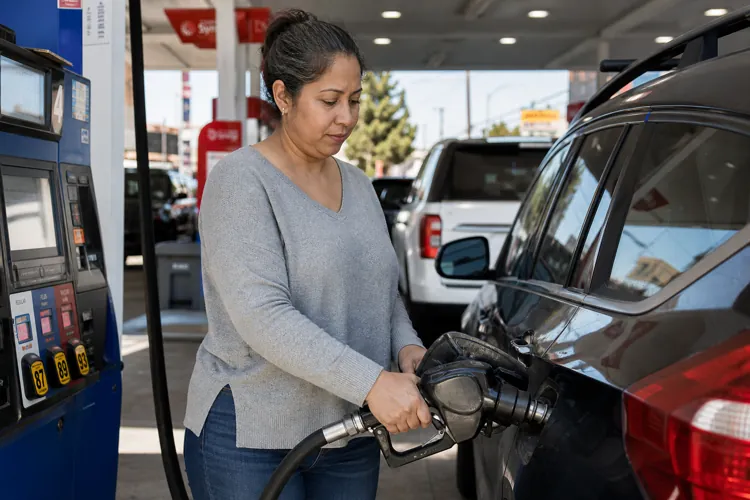

The national average price of gasoline fell for another week, dropping 8.3 cents to $3.08 per gallon, according to GasBuddy.
Gasoline prices are now 11.2 cents lower than a month ago and 32.7 cents below the level seen a year ago.
Analysts warn that Iran’s renewed threat to disrupt shipping through the Strait of Hormuz could quickly reverse the recent decline in oil and gasoline prices.
Motorists continued to see lower gasoline prices over the past week, extending a summer trend that has brought relief to motorists across much of the country. However, a renewed threat from Iran to interfere with traffic through the Strait of Hormuz is creating uncertainty about how long lower prices at the pump will last.
The nation’s average price of gasoline has fallen 14.1 cents over the last week and stands at $3.85 per gallon, according to GasBuddy data compiled from more than 12 million individual price reports covering over 150,000 gas stations across the country.
The national average is down 67.2 cents from a month ago and is 67.3 cents per gallon higher than a year ago. The national average price of diesel fell 19.2 cents in the last week and stands at $4.990 per gallon.
“Average gasoline prices declined in nearly every state over the last week, while all 50 states saw average diesel prices move lower,” Patrick De Haan, head of petroleum analysis at GasBuddy, said in the GasBuddy Blog.
‘Far from settled’
“However, the outlook is far from settled. New uncertainty has emerged after Iran suggested the Strait of Hormuz was closed, along with fresh warnings that the U.S. could again strike Iran, developments that could push oil prices higher in the days ahead. Despite this, gasoline prices aren’t yet at significant risk of a spike, as some vessels have continued to move through the Strait. Still, should the situation worsen or escalate further, motorists could see that risk change quickly.”
The biggest concern for energy markets is the Strait of Hormuz, a narrow waterway between the Persian Gulf and the Gulf of Oman, through which roughly one-fifth of the world’s oil supply passes. Iran has recently warned that it could take action affecting shipping through the Strait, raising concerns about potential disruptions to global crude supplies. Energy analysts have long viewed any threat to traffic through the Strait as a major risk to oil prices.
Oil prices are stable
Despite those concerns, crude oil prices have remained relatively contained in recent trading, as markets weigh both geopolitical risks and broader concerns about global demand. Analysts note that any significant disruption to oil shipments through the Strait of Hormuz could quickly push crude prices higher, eventually leading to higher gasoline prices for consumers.
For now, motorists are benefiting from lower fuel costs. GasBuddy data show that the most common gasoline price in the United States is now below the national average, suggesting many drivers are finding even lower prices at local stations.
De Haan, however, said the situation remains fluid. While current market conditions point to additional near-term relief at the pump, any escalation involving Iran or shipping through the Strait of Hormuz could rapidly change the trajectory of fuel prices.