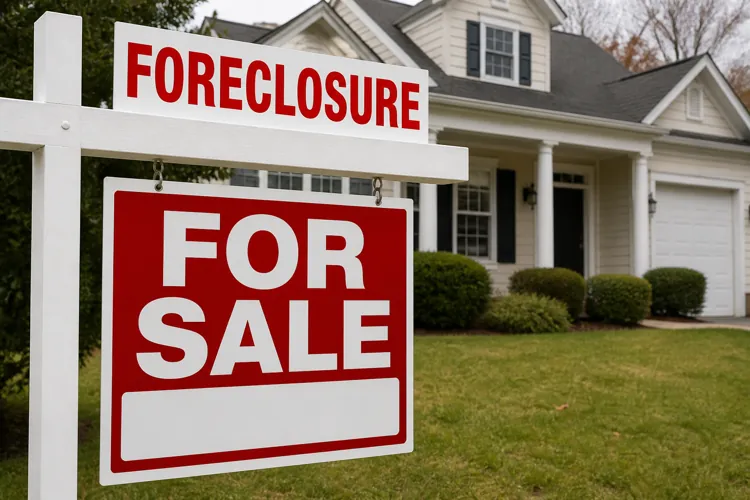

More than 40,000 U.S. properties had a foreclosure filing in August, up 13% from a year earlier.
Lenders began foreclosure proceedings on 25,894 properties, a 7% annual increase.
Completed foreclosures rose 42% from August 2025, though overall activity remains below pre-pandemic levels.
While the rate of foreclosures is nowhere near the level during the housing market crash nearly two decades ago, the rate is beginning to rise, albeit slowly.
South Carolina had the highest foreclosure rate in August, while Texas recorded the most completed foreclosures.
Foreclosure activity continued to climb in August, with 40,277 U.S. properties receiving a foreclosure filing, according to property data firm ATTOM. That was 13% more than in August 2025 and 1% more than in July.
Foreclosure is a process, with only the last stage resulting in a homeowner's loss of a house. However, filings and other steps in the process signal trouble for homeowners trying to pay their monthly mortgage.
The figures cover several stages of the process, including default notices, scheduled auctions and lender repossessions. A filing therefore does not mean a homeowner has already lost the property.
Lenders started foreclosure proceedings on 25,894 properties in August, up 7% from a year earlier but down 3% from July. Florida recorded the most starts, at 3,189, followed by Texas with 3,126 and California with 2,565.
Completed foreclosures rose more sharply. Lenders repossessed 5,794 properties in August, a 42% increase from a year earlier and a 22% increase from July. Texas accounted for 1,835 of those repossessions, the most of any state.
Where foreclosure rates were highest
Nationwide, one in every 3,569 housing units had a foreclosure filing during the month. South Carolina had the highest rate, at one in every 1,547 housing units. Nevada, Florida, Texas and Maryland followed. Among metropolitan areas with at least 200,000 residents, Columbia, South Carolina, had the highest rate.
The annual increases point to more homeowners reaching the foreclosure process, but ATTOM cautioned against reading the figures as a return to the levels seen in earlier housing downturns. The company said overall foreclosure activity remains below pre-pandemic norms.
What to do
Homeowners who are having trouble making mortgage payments should contact their mortgage servicer as soon as possible, even if they have not missed a payment. The phone number is on the monthly mortgage statement. Explain what caused the hardship, whether it is temporary or ongoing, and ask to apply for foreclosure prevention assistance. Waiting until a foreclosure notice arrives can limit the time available to work out a solution.
Depending on the loan and the homeowner’s circumstances, the servicer may offer a temporary payment pause or reduction, a plan to catch up on missed payments, or a loan modification. Some borrowers may qualify to move past-due amounts to the end of the loan. A pause does not erase missed payments, so homeowners should ask how and when those amounts will be repaid before agreeing to a plan.
Homeowners can also get free foreclosure prevention advice from a HUD-approved housing counselor. Counselors can help review the options, prepare an application and communicate with the mortgage company. To find one, call 800-569-4287 or use HUD’s housing counseling search.
Those whose hardship was connected to COVID-19 can also check whether their state or tribal Homeowner Assistance Fund program is still accepting applications. Funding is limited, and the program is scheduled to end in September 2026 or sooner if local funds run out.
Anyone who has received legal papers or a foreclosure sale date should seek help immediately and consider contacting legal aid. Homeowners should be wary of companies that demand an upfront fee, promise to stop foreclosure or tell them to send mortgage payments somewhere other than their servicer.