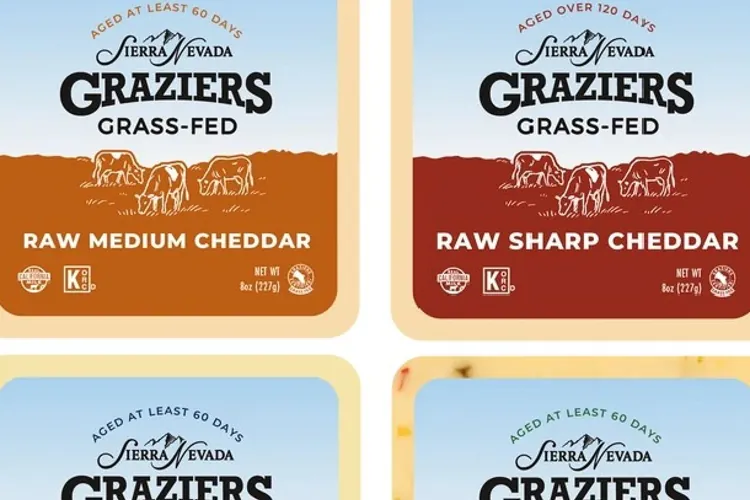

Sierra Nevada Cheese Company has recalled all Graziers grass-fed raw milk cheeses amid a multistate E. coli outbreak.
Federal officials have reported 13 illnesses in nine states, including eight hospitalizations and three cases of a serious kidney complication. No deaths have been reported.
The cheeses were sold at retailers nationwide and online. Consumers should check their refrigerators and freezers.
Sierra Nevada Cheese Company has recalled its Graziers grass-fed raw milk cheeses after health officials linked them to an E. coli outbreak that has sickened 13 people in nine states.
Eight people have been hospitalized, and three developed hemolytic uremic syndrome, a serious complication that can cause kidney failure, according to the Food and Drug Administration (FDA). No deaths have been reported. The Centers for Disease Control and Prevention (CDC) says more than half of those who became ill are children age 5 or younger.
The recall covers all Graziers raw milk cheeses: medium cheddar, sharp cheddar, jalapeño jack, and Monterey jack. They were sold in eight-ounce and 16-ounce retail packages and supplied to food service customers and wholesalers in five-pound loaves. The FDA says the cheeses were sold at retailers nationwide and online.
Cases have been reported in California, Colorado, Georgia, Kentucky, Michigan, Nevada, Oregon, Tennessee, and Utah. Of nine people interviewed about what they ate before becoming ill, all nine reported eating Graziers grass-fed raw milk cheese. The FDA says its investigation is continuing to determine the source of contamination and whether other products are affected.
What consumers should do
Do not eat the recalled cheese. Throw it away or return it to the place of purchase for a refund. Because cheese can be kept for a long time, the FDA advises checking freezers as well as refrigerators. If cheese was removed from its packaging and you cannot tell whether it is part of the recall, throw it away. Wash and sanitize containers, utensils and surfaces that may have touched it. Restaurants and retailers should not serve or sell the recalled products.
E. coli symptoms can include severe stomach cramps, diarrhea that may be bloody, and vomiting. Symptoms may begin a few days after eating contaminated food or as long as nine days later. The CDC advises calling a healthcare provider right away for bloody diarrhea, diarrhea lasting more than two days without improvement, a fever above 102 degrees, persistent vomiting, or signs of dehydration.
The CDC recommends choosing pasteurized milk and dairy products, particularly for children under 5, who face a greater risk of severe foodborne illness.