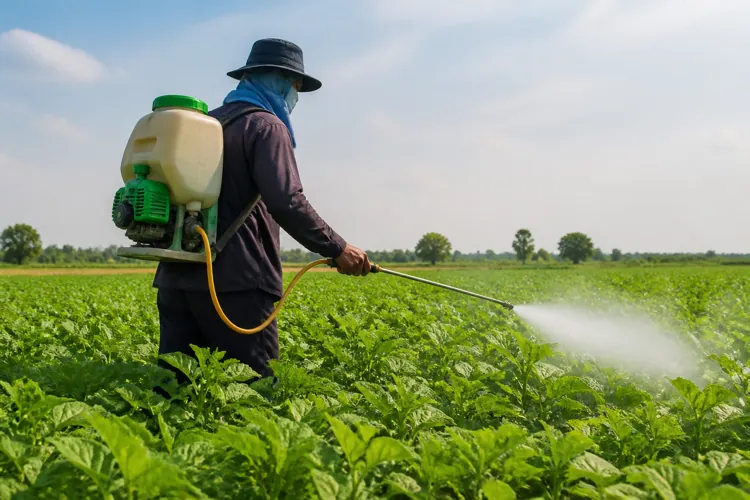

California has passed a new law requiring the state to track and publicly disclose the use of PFAS pesticides on crops.
EWG says more than 2.5 million pounds of PFAS pesticides are applied to California crops each year.
The new tracking system could give consumers, farmers, and regulators more information about where these chemicals are being used.
California is taking a new step toward tracking “forever chemicals” used on crops. Gov. Gavin Newsom signed AB 1603 into law on Sept. 28, requiring the state to monitor and publicly disclose the use of pesticides containing PFAS.
PFAS refers to a large group of chemicals known for being extremely persistent in the environment. Some PFAS have also been linked to health concerns, including cancer, immune system suppression, and reproductive and developmental harm, according to the Environmental Working Group (EWG).
The organization says state agencies previously did not systematically track how much PFAS pesticide was being used on California crops. The new law is intended to change that.
“Signing AB 1603 into law is a vital step toward ensuring California’s agricultural legacy is defined by health and innovation,” Assemblymember Nick Schultz (D-Burbank) said in a news release. “Tracking and monitoring is the crucial first step. You can’t fix what you can’t see.”
What the new law requires
AB 1603 establishes a class-based definition of PFAS pesticides and requires California's Department of Pesticide Regulation to systematically track their use and make that information available to the public.
That could provide a clearer picture of which crops are being treated, where the chemicals are being used, and in what quantities.
EWG says its research found that more than 2.5 million pounds of PFAS pesticides are applied to California crops each year. Its testing also found PFAS pesticides on nine out of 10 California-grown samples of non-organic peaches, nectarines, and plums that were tested by the state. The organization also reported finding PFAS pesticides in local waterways and sediment.
The law is narrower than the original proposal, according to EWG, following lobbying from agricultural and chemical industry groups.
What this means for consumers
For shoppers, the biggest immediate change is more information rather than a ban. The new law does not prohibit PFAS pesticides from being used on California crops. Instead, it creates a system for tracking and disclosing their use.
EWG says the data could eventually help support decisions about pesticide restrictions, assistance for farmers transitioning away from PFAS pesticides, and additional monitoring of water.
California-grown fruits and vegetables are sold both in the state and throughout the country, so the information collected could be relevant to consumers beyond California as well.
For now, consumers who want to reduce pesticide exposure can continue following basic produce-safety practices, including washing fruits and vegetables before eating them. The new tracking requirements should also make it easier for the public to see where and how much PFAS pesticide is being used as that information becomes available.
“Because of their chemical structures, all PFAS share the core characteristics of extreme environmental persistence and potential harm to immune and reproductive systems,” said Varun Subramaniam, EWG science analyst. “That raises serious concerns about the long-term health risks of using PFAS pesticides on food crops.
“Thanks to Gov. Newsom, we’re finally telling it like it is, so farmers, regulators and the public alike can be aware of the extent of this hidden PFAS use. This kind of tracking and monitoring has to come first, before we can talk about what comes next.”