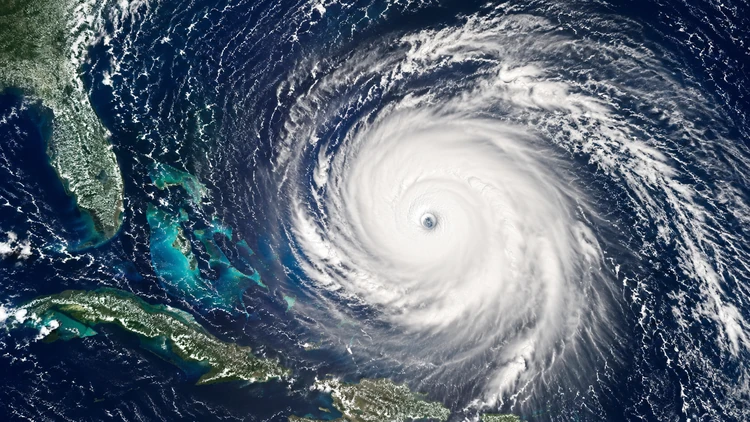

NOAA is predicting a below-normal 2026 Atlantic hurricane season, with eight to 14 named storms expected.
Forecasters say a developing El Niño pattern is likely to suppress storm activity in the Atlantic.
Despite the quieter outlook, officials warn that “it only takes one” major storm to cause catastrophic damage.
The official 2026 hurricane season begins June 1, and the National Oceanic and Atmospheric Administration (NOAA) is forecasting a quieter-than-average six months, marking the agency’s first below-normal outlook in more than a decade.
NOAA predicts the Atlantic basin will produce between eight and 14 named storms this year, including three to six hurricanes and one to three major hurricanes of Category 3 strength or higher. The agency says there is a 55% chance the season will be below average, a 35% chance it will be near normal and only a 10% chance of above-normal activity.
Forecasters say the primary reason for the reduced outlook is the expected development of El Niño conditions in the Pacific Ocean. El Niño typically increases wind shear across the Atlantic, making it harder for tropical systems to organize and strengthen.
NOAA warns against complacency
NOAA officials cautioned, however, that a below-average season does not mean coastal communities are safe from dangerous storms.
“Even though we're expecting a below-average season in the Atlantic, it's very important to understand that it only takes one,” NOAA Administrator Neil Jacobs said during a briefing announcing the outlook.
Meteorologists noted that several devastating hurricanes in past decades formed during otherwise quiet seasons, including Hurricane Andrew in 1992.
NOAA’s forecast aligns with predictions from Colorado State University and other major forecasting groups, all of which anticipate a somewhat less active season than normal. CSU researchers recently projected 13 named storms, six hurricanes, and two major hurricanes for 2026.
New forecasting tools
At the same time, NOAA says it is rolling out new forecasting tools and graphics this season, including updated hurricane “cone” maps designed to better communicate inland storm impacts. Some of the new forecasting technologies incorporate artificial intelligence to improve forecast accuracy and risk assessment.
Emergency officials continue to urge residents in hurricane-prone areas to prepare early, regardless of the seasonal forecast.
Ken Graham, director of NOAA’s National Weather Service, said uncertainty always remains in seasonal predictions and emphasized that preparedness should not depend on the number of storms expected.