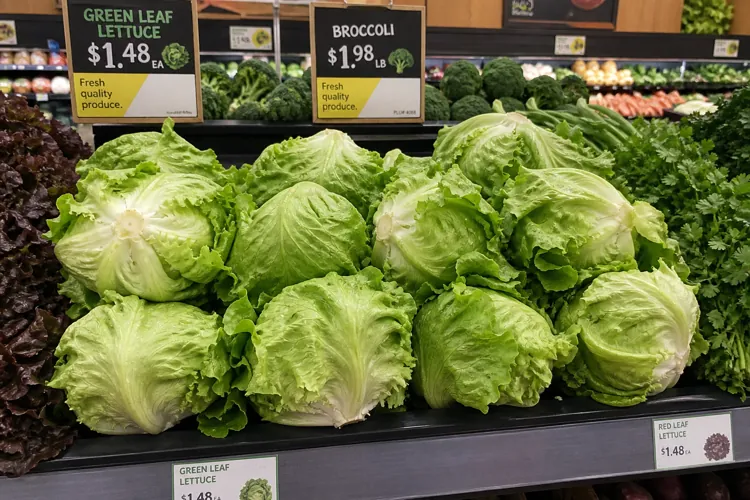

The outbreak sickened 12,883 people in 21 states, hospitalizing 570 and contributing to two deaths.
Health officials linked the illnesses to processed iceberg lettuce supplied by Taylor Farms de Mexico.
The CDC says the contaminated lettuce is no longer available, but the FDA’s investigation into the source of the contamination continues.
The Centers for Disease Control and Prevention has declared an end to a massive Cyclospora outbreak linked to iceberg lettuce, saying the contaminated products are no longer available in stores or restaurants.
In its final update, the CDC said the outbreak caused 12,883 confirmed illnesses in 21 states. At least 570 people were hospitalized, and two deaths were reported in Michigan. Both people who died had significant underlying health conditions that may have been worsened by the infection and resulting dehydration.
The outbreak was traced to processed iceberg lettuce supplied by Taylor Farms de Mexico and sourced from central Mexico. Some of the lettuce was served at Taco Bell restaurants, while other recalled products were distributed to food-service businesses and Walmart stores under the Marketside brand.
Taylor Farms de Mexico recalled the affected lettuce on July 17. All associated best-by dates have now passed, and health officials say the products should no longer be in circulation.
“At this time, there is no risk of people getting sick with cyclosporiasis from this source,” the CDC said in its final outbreak notice.
Infections fell sharply
The outbreak investigation began in July after health officials identified a surge in illnesses and found that many patients had eaten food containing shredded iceberg lettuce.
At the outbreak’s peak, before the recall, more than 1,000 infections occurred in a single day. By August, that number had dropped to an average of fewer than two infections per day, according to the CDC. The most recent illness began on Aug. 17.
Although cases were reported in 21 states, recalled lettuce had a much wider distribution. The FDA said confirmed distribution included 31 states, and the products may have reached several additional states, Washington, D.C., and Puerto Rico.
Virginia was the final state added to the outbreak case count.
The number of reported cases grew substantially during the investigation, even after the recall. Health officials explained that it can take as long as six weeks to interview patients, confirm their infections and determine whether they are connected to an outbreak.
The actual number of illnesses may also have been higher because some people recover without seeking medical care or being tested.
FDA investigation continues
While the CDC considers the outbreak over, the Food and Drug Administration has not closed its investigation.
The agency conducted inspections and collected samples at lettuce-growing operations and a processing facility in Mexico with help from Mexican officials. Some laboratory results were still pending as of the final update.
The FDA said it remains confident that all lettuce associated with this outbreak is off the market. However, it is continuing to investigate how the lettuce became contaminated and may release additional findings.
What consumers should know
Cyclospora is a microscopic parasite that causes an intestinal illness called cyclosporiasis. Symptoms usually begin about a week after exposure but may appear anywhere from two days to two weeks or longer afterward.
Common symptoms include watery diarrhea, loss of appetite, weight loss, stomach cramps, bloating, nausea, increased gas and fatigue. Without treatment, symptoms may last for weeks and can disappear and then return.
Consumers who have continuing symptoms should contact a health care provider. Cyclosporiasis can be treated with prescription antibiotics.
The CDC recommends washing hands and rinsing fresh produce thoroughly under running water. However, washing does not guarantee that Cyclospora will be removed. Cooking produce to at least 158 degrees Fahrenheit can kill the parasite.