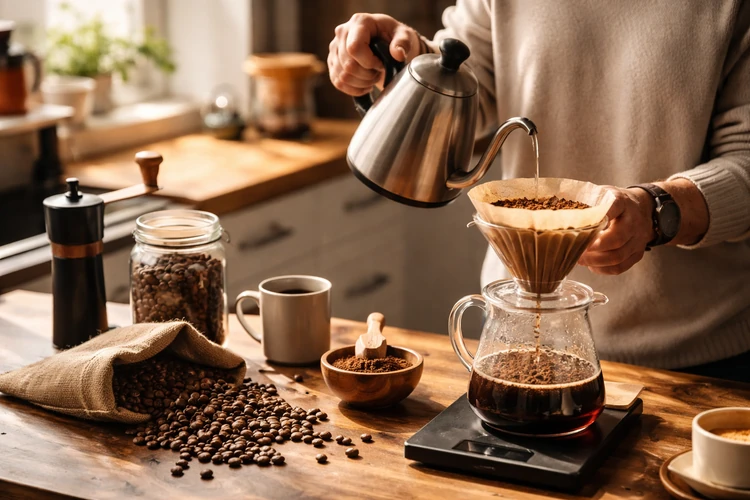

Hot coffee may contain more microplastics than you think. Heat, pressure, and daily use can cause plastic parts inside coffee makers — even BPA-free ones — to shed tiny particles into your drink.
Not all appliances pose the same risk. High-heat brewing and single-use plastic pods are bigger contributors, while cold brew and appliances with stainless steel or glass components tend to shed less.
You don’t have to give up coffee to reduce exposure. Simple changes — like choosing reusable pods, avoiding dishwashing plastic parts, and opting for metal or glass where possible — can help limit microplastic intake.
We worry about what goes into our food — sugar, sodium, additives we can’t pronounce. But what if part of the problem isn’t the ingredients at all, but the tools we use to prepare them?
From coffee makers to blenders, modern kitchens are built for speed and convenience. Push a button, get a hot cup of coffee or a perfect smoothie. But according to new testing from WaterFilterGuru, that convenience may come with an invisible side effect: tiny plastic particles leaching into the drinks we consume every day.
In a real-world analysis of common household appliances, researchers found that heat, friction, and repeated use can cause BPA-free plastics to shed microplastics into liquids — especially hot ones.
To better understand what’s happening inside our appliances — and what it could mean for consumers — ConsumerAffairs spoke with Brian Campbell, founder of WaterFilterGuru.com, about how these tests were conducted, which appliances shed the most, and what practical steps (if any) consumers can take to reduce exposure without throwing out their entire kitchen.
Where are the risks?
If you’re a hot coffee drinker, you may want to think about turning that cup into an iced coffee. According to Campbell, heat is one of the biggest risks to increased microplastic consumption.
“High brewing temperatures, especially those above 170°F, can accelerate plastic components breaking down inside a coffee maker, particularly in water reservoirs, tubing, and internal filters,” he said. “Factor in water pressure, acidic coffee compounds, and repeated daily use, and microplastics can shed very easily.
“When using a cold brew method, there’s minimal heat involved, so there's far less plastic breakdown. If you’re worried about microplastics, cold brew is significantly safer from a leaching standpoint."
Another thing to be aware of: disposable coffee pods. Campbell explained that many single-serve coffee systems use plastic capsules that can leach particles under heat.
His best advice is to look for compostable, plant-based, or reusable metal options, as they're better for both your body and the environment.
The plastics to look out for
If you’re not sure what to be on the lookout for, Campbell said that polypropylene is the most commonly used plastic in coffee makers – especially in the water reservoirs. While polycarbonate is sometimes used, it’s less frequent because of BPA.
“While some brands use BPA-free plastics, that doesn’t mean they’re microplastic-free,” he clarified. “‘BPA-free’ often gets confused with ‘safe from leaching,’ but that’s not always the case.”
The health risks
The long-term health risks associated with ingesting microplastics are still being studied.
However, recent studies have linked hormone disruption, gut health issues, and immunity concerns to daily microplastic ingestion. On top of that, Campbell said that chemical additives in microplastic can attract toxins, which can lead to long-term health risks.
What to do
You don’t have to kick your coffee habit to lower your risk of ingesting microplastics!
Instead, Campbell has some tangible advice for consumers.
“Switch to coffee makers that use stainless steel or glass for all components that come into contact with hot water,” he said. “That means avoiding plastic tubing and reservoirs where possible. Also, run a water-only brew cycle before the first use of any new machine to flush loose particles, and avoid dishwashing plastic parts, as that accelerates wear."