

Types of doors for homes
Homes have two primary categories of doors: interior doors and exterior doors.
Interior doors add privacy between rooms, separate heating and cooling zones or partition parts of your home for safety or convenience. Exterior doors provide access to your living space, keep your home secure and add curb appeal, which can affect property value.
Interior door types
You can choose from several standard interior doors, with hollow-core paneled doors among the most popular.
- Hollow-core doors: Hollow-core doors are the most affordable interior doors, but they’re also the least durable. They’re mostly hollow with a frame made of wood, medium-density fiberboard (MDF) or high-density fiberboard (HDF), and faces of MDF or HDF that resemble wood.
- Solid-core doors: As the name suggests, solid-core doors are not hollow; instead, they have a core made of engineered wood, MDF or HDF. These can also have faces made of wood veneer, MDF or HDF. Solid-core doors feel higher quality and should last longer than hollow-core doors.
- Solid wood doors: Solid wood doors are made of solid wood, so they’re significantly heavier and more durable than hollow-core doors. These may require specialty hinges to support the added weight.
- Flush doors: Flush doors can be hollow-core, solid-core or solid wood. They have a flat face on both sides that sits flush with the wall.
- Paneled doors: Paneled doors are more popular than flush doors and can also be hollow-core, solid-core or solid wood. Paneled doors have built-in panels that look nicer than a flat face.
- Louvered: Louvered doors have louvered frames for privacy. The louvers are usually decorative.
Exterior door types
Exterior doors come in many styles, but they fall into a few main categories.
- Flush doors: Flush exterior doors, like their interior counterparts, are flat on both sides and sit flush with the exterior wall. These are more common on rear and side access doors because they don’t have strong curb appeal.
- Paneled doors: Paneled exterior doors have panels on the inside and outside faces for a nicer appearance. However, they’re still more commonly used for side and rear doors because they aren’t very decorative.
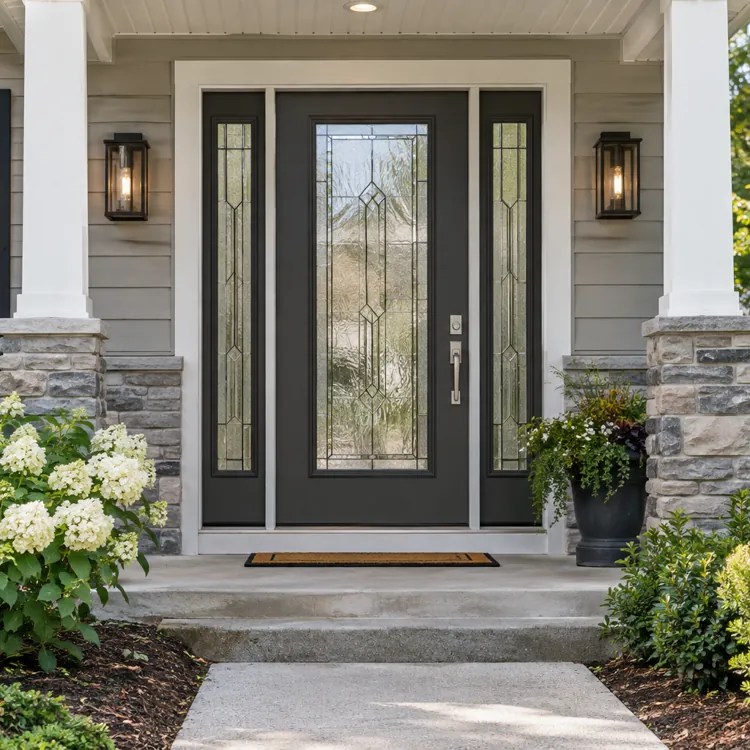
- Decorative doors: Decorative doors come in a wide variety of sizes, styles and glass window shapes, plus sidelight panels that let more natural light into your living space. You’ll most often see these for front doors, as they boost curb appeal. They come with some of the highest installation costs, but are usually worth it.
- Storm doors: Storm doors are usually made of aluminum or glass and sit outside your exterior doors. Glass storm doors are most common over front doors, while aluminum screened storm doors are more common in front of side and rear doors. Storm doors protect your more expensive exterior doors from the elements.
- Screen doors: Screen doors also sit in front of exterior doors, but they have screens — rather than glass or aluminum — stretched across a frame. Screen doors let you open your exterior doors for natural light and ventilation without worrying about bugs or debris entering your home.
» RELATED: Do home warranties cover doors?
Types of doors by operation
Most interior and exterior doors are hinged and swing open in a standard way. Specialty doors often open and function differently to improve utility and fit into spaces with limited clearance.
Here are common door types by how they operate.
Hinged doors
Hinged doors are the most common. They have hinges on one side that let the door rotate around a fixed point. Most interior and exterior doors are hinged doors.
French doors
French doors have two doors that can open and close independently to meet in the middle of the wall opening. They’re usually mostly glass, can be interior or exterior and add a touch of elegance to any space.
Dutch doors
Dutch doors have independently operable top and bottom sections. They can be interior or exterior doors, letting in fresh air and natural light while keeping pets and children inside and debris outside.
Barn doors
Barn doors are wide panels that slide sideways along a wall to cover an opening. They’re most common indoors because they don’t create a tight seal when closed. They’re ideal for covering large openings without needing the clearance a swinging door requires.
Pocket doors
Pocket doors slide laterally, but when you open them, they slide into the wall and disappear completely out of view. These are almost always interior doors, and like barn doors, they offer the privacy and separation of an interior door without needing clearance.
Sliding doors
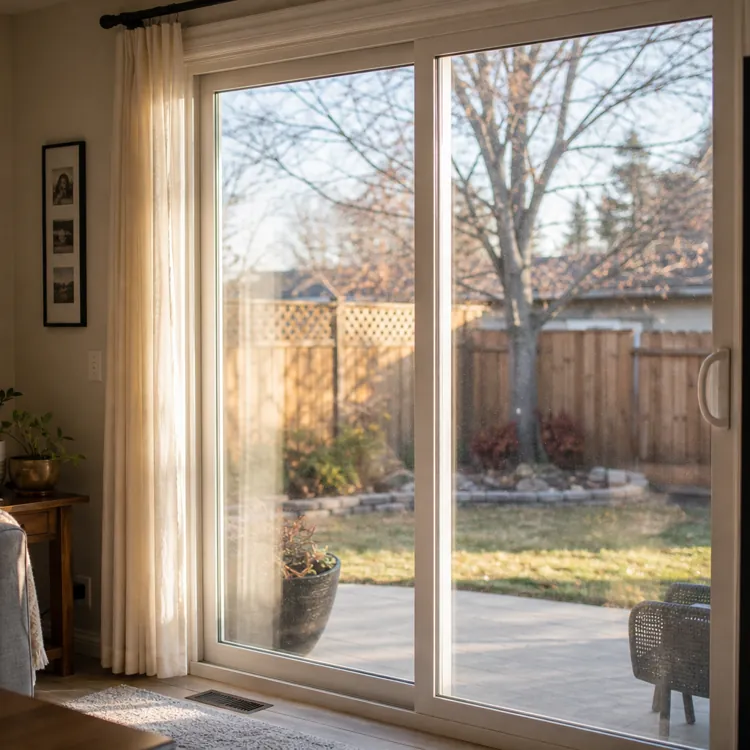
Sliding doors also slide laterally, but they have multiple panels that slide in front of one another when they’re open. These can be either interior or exterior doors, but they’re more common on the exterior. They’re usually made of glass to let in as much light as possible.
Bifold doors
Bifold doors have two panels connected to a track that lets them fold together as they slide sideways. They require about half the clearance of a traditional swinging door. Bifold doors are more common indoors, but glass versions can also be used for exterior openings.
Accordion doors
Accordion doors are like bifold doors, but with additional panels that fold against each other. These are better for wider door openings.
Pivot doors
Pivot doors rotate on a pivot point set inward from the door edge, rather than on hinges along the edge. This design reduces the clearance needed on one side, though the door still needs space to swing on both sides of the opening.
Door operation types compared
Different door styles offer different benefits, from saving space to maximizing natural light. Compare their clearance requirements, key features and best uses to find the right fit for your space.
| Clearance requirements | Features | Best for | |
|---|---|---|---|
| Hinged | Full door width as it swings | Standard swinging operation | Most interior and exterior doors |
| French | Full width of both doors as they swing | Elegant look and abundant natural light | Traditional or elegant interior and exterior spaces |
| Dutch | Full width of both doors as they swing | Ventilation while keeping children and pets in | Exterior doors in moderate climates |
| Barn | A few inches in front; full door width along the wall | Space-saving option for wide openings | Wide interior openings |
| None outside the wall | Disappears into the wall when open | Tight spaces; less practical to retrofit | |
| Sliding | No swing clearance | Natural light and optional ventilation | Patio and other exterior doors |
| Bifold | About half the door width as it folds | Compact folding design | Standard closets and laundry room |
| Accordion | Space for folded panels in front | Folds compactly across wide openings | Large closets and laundry rooms |
| Pivot | Varies by design | Reduced clearance on one side of door | Statement-making interior doors |
Types of doors by construction
You can also choose from several door materials. Wood and MDF are popular for interior doors, while wood, aluminum, steel, glass and fiberglass are common for exterior doors. The material you choose affects durability, appearance, cost and security, so choose one that fits your needs.
For interior doors, MDF or HDF offers an affordable replacement option, while solid wood is a good choice if you prefer a natural look and long-lasting durability.
For a wood exterior door, a sheltered entry can help limit exposure to the elements.
For exterior doors, the right material depends on your budget, maintenance preferences, and priorities for curb appeal, natural light and security.
- Wood: Offers classic curb appeal but requires regular maintenance and can warp
- Fiberglass: Mimics the look of wood with greater durability and minimal maintenance
- Glass: Maximizes natural light but may raise security concerns
- Aluminum: A budget-friendly option for exterior doors
Interior door materials compared
Here’s a quick look at how the different interior door materials stack up. These are the most popular materials, but you may also want to consider options like glass French doors or pocket doors.
| Durability | Cost | Sound dampening | Value | |
|---|---|---|---|---|
| HDF | Moderate | Low | Moderate | Moderate |
| MDF | Moderate | Low | Moderate | Moderate |
| Solid wood | Outstanding | High | Highest | Highest |
Exterior door materials compared
Exterior door materials matter because they also affect curb appeal, energy efficiency and security. Here’s a quick comparison to help you decide what’s best for your home. Note that many exterior doors combine materials — sometimes called composite doors.
| Cost | Security | Sound dampening | Energy efficiency | Curb appeal | |
|---|---|---|---|---|---|
| Aluminum | Low | Moderate | Low to moderate | Low to moderate | Moderate |
| Fiberglass | High | High | High | High | Moderate to high |
| Glass | High | Low to moderate | Moderate | Low | High |
| Steel | Low | High | High | Moderate to high | Moderate |
| Wood | High | High | High | Moderate | High |
Types of doors by room or space
Certain door types suit certain rooms or spaces so that you can narrow your options based on the area of your home you’re looking to renovate. Use the table below to get an idea of which door types might best suit your needs and why.
| Room or space | Best door option | Reason |
|---|---|---|
| Bathroom | Lockable hollow-core door | Standard functionality with reduced risk of warping from bathroom moisture |
| Bedroom | Lockable solid wood door | Increased privacy and improved sound dampening |
| Closet | Hollow-core door or bifold | Standard functionality with no need for privacy |
| Garage interior entrance or mudroom | Insulated steel | Complies with residential building code |
| Home office | Solid wood door | Improved sound dampening |
| Patio | French doors or sliding doors | Allows natural light and provides ample opportunity for ventilation |
| Sunrooms | French doors or sliding doors | Allows natural light and provides ample opportunity for ventilation |
| Utility room or laundry room | Hollow-core door | Standard functionality with reduced risk of warping from moisture or possible leaks |
FAQ
What is the difference between a slab door and a pre-hung door?
A slab door replacement keeps the frame in place and replaces only the door, while a pre-hung door installation replaces both the frame and the door. Slab replacement is cheaper and is usually a better option if your door frame is in good condition. A pre-hung door replacement is best if your door frame is damaged or warped.
Are hollow-core doors a good choice for interior rooms?
Hollow-core doors are an excellent choice for most interior rooms. They’re affordable and lightweight, making them easy to position and install. They’re also less likely to warp with humidity changes, so they’re great for bathrooms and laundry rooms. However, they don’t offer much sound dampening, so solid-core or solid wood doors are better if you want more privacy.
Why are solid wood doors more expensive than solid-core doors?
Solid wood doors are made from large pieces of lumber, which cost more to source than the engineered wood blocks and MDF or HDF faces that make up a solid-core door. Labor costs can also be higher for solid wood doors because they’re heavier and harder to maneuver into place.
How do I choose the right door type for a small space?
If you’re installing a door in a small space, prioritize the minimum clearance requirements to make the most of what you have. Pocket doors are ideal because they require no clearance, but retrofitting them can be problematic. Bifold and accordion doors are usually the next best option, unless you have long walls that may accommodate barn doors when they’re open.
Article sources
ConsumerAffairs writers primarily rely on government data, industry experts and original research from other reputable publications to inform their work. Specific sources for this guide include:
- United States Environmental Protection Agency, “What makes it ENERGY STAR?” Accessed Oct. 20, 2026.
- U.S. Department of Housing and Urban Development, “Doors & Frames.” Accessed Oct. 20, 2026.
- National Library of Medicine, “Frequency domain characterisation of the sound insulation performance of wooden doors and optimal design of high performance wooden doors.” Accessed Oct. 20, 2026.